
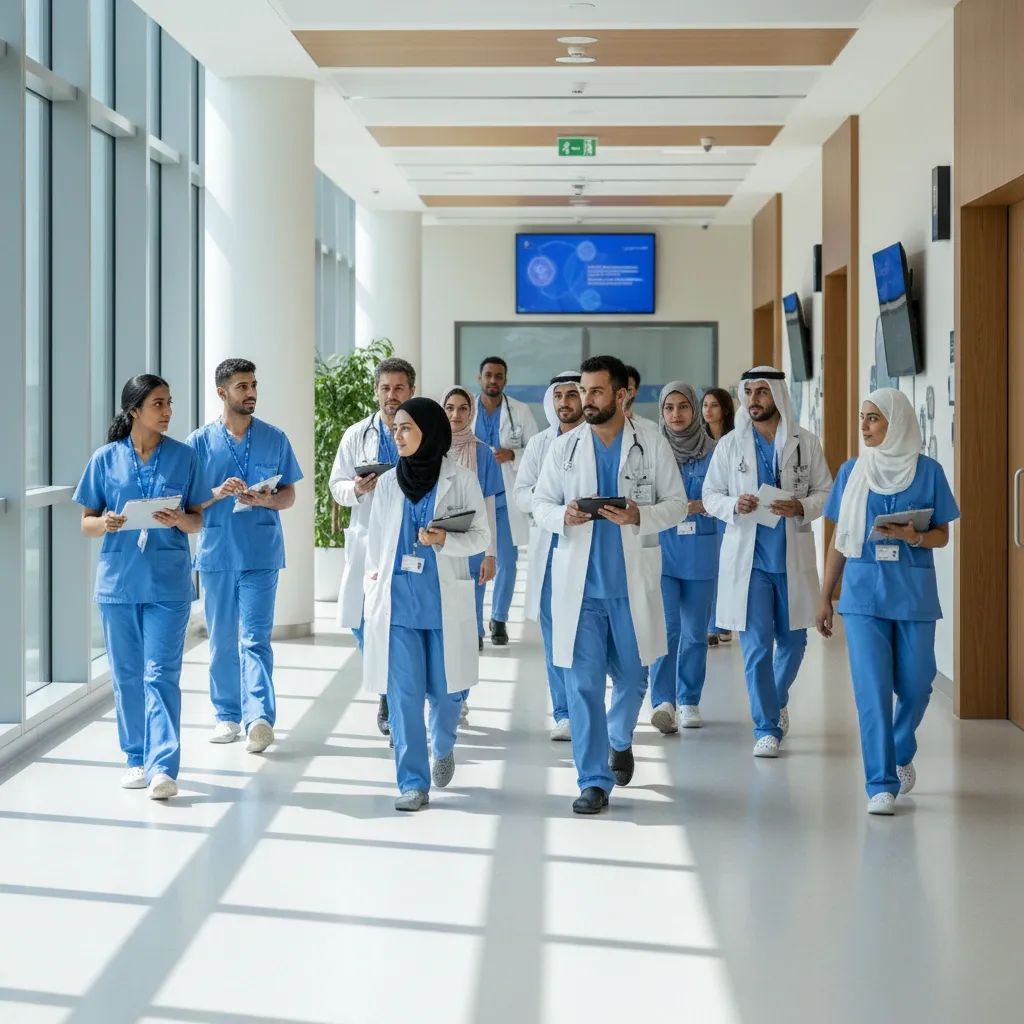
The Abu Dhabi Securities Exchange–listed Burjeel Holdings has delivered a 39.5% jump in annual profit, a windfall that could translate into higher dividends for shareholders and fresh investment in clinics the length of the Emirates.
Why This Matters
• 9.1% net margin: extra cash that can be reinvested in new medical services or handed back to investors.
• 7 million+ patient visits: more capacity means shorter waiting times for appointments in Abu Dhabi, Dubai and the Northern Emirates.
• 25%-plus earnings growth forecast: analysts expect the stock to remain one of the ADX’s defensive names in 2026.
• Aggressive Saudi rollout: regional expansion could make Burjeel the first UAE brand with a truly GCC-wide oncology network, attracting medical tourists.
Earnings Snapshot
Revenue advanced to AED 5.5 B, up 9.8%, while EBITDA reached AED 1.09 B. The fourth quarter alone saw profit multiply almost 160%, highlighting the power of scale in a capital-heavy industry where once the wards are full, every extra procedure adds disproportionately to the bottom line.
How They Pulled It Off
Burjeel’s management credited “relentless cost discipline.” In plain English that meant:
• Workforce realignment: re-rostering specialists to busier centres instead of hiring new staff.
• Group-wide procurement: bulk-buying consumables, shaving double-digit percentages off supplier invoices.
• Asset optimisation: owning rather than leasing high-tech equipment, a shift that cuts rental outflows while boosting depreciation tax shields.The outcome is an EBITDA margin of 19.8%, comfortably above the 18.1% posted a year earlier and on track with management’s mid-term 25-27% target.
Expansion Pipeline
Saudi Arabia remains the most ambitious play. The company aims to open 60 PhysioTherabia rehab centres and two day-surgery hubs in Riyadh before year-end, each projected to generate SAR 150-200 M in annual sales when mature. Back home, a new hospital in Dubai and 11 specialty clinics are pencilled in for 2026. Digital also features: a proprietary EMR platform dubbed “Sky” is being rolled out to knit patient data across borders.
What This Means for Residents
Quicker appointments: added oncology, orthopaedic and IVF capacity should ease congestion at city-centre flagships.
Broader insurance coverage: scale gives Burjeel leverage to negotiate wider policy inclusion, particularly on advanced procedures often excluded from basic plans.
Job creation: the operator has begun recruiting clinicians and allied health professionals, a plus for locally trained graduates.
Stable pricing: cost efficiencies could cap upward pressure on consultation fees, welcome news for households balancing multiple dependants on a single medical policy.
Investor Angle
With the ADX’s healthcare index already outperforming the general market by 8 percentage points this year, Burjeel’s numbers reinforce its status as a defensive dividend payer. Brokerage houses now price the stock at 14–15 times 2026 earnings, a discount to regional peers trading near 17×, citing stronger free-cash conversion. The board has not signalled a dividend hike yet, but analysts expect at least fils 12 per share, equal to a 2.8% yield, if the profit trajectory holds.
Regional Context
Competition is warming up. NMC Health is adding beds through bolt-on deals, while Aster DM Healthcare has earmarked UAE cash flow for its India spin-off. Yet Burjeel’s deep bench in **high-value specialties—oncology, cardiology, gastroenterology, orthopaedics—**gives it a case-mix edge. For medical tourists weighing Dubai versus Riyadh, that translates into a single brand offering consistent protocols across borders.
In the words of founder Dr Shamsheer Vayalil, the group now has both the “capital headroom and clinical talent” to keep scaling. The numbers suggest he is not exaggerating.


