
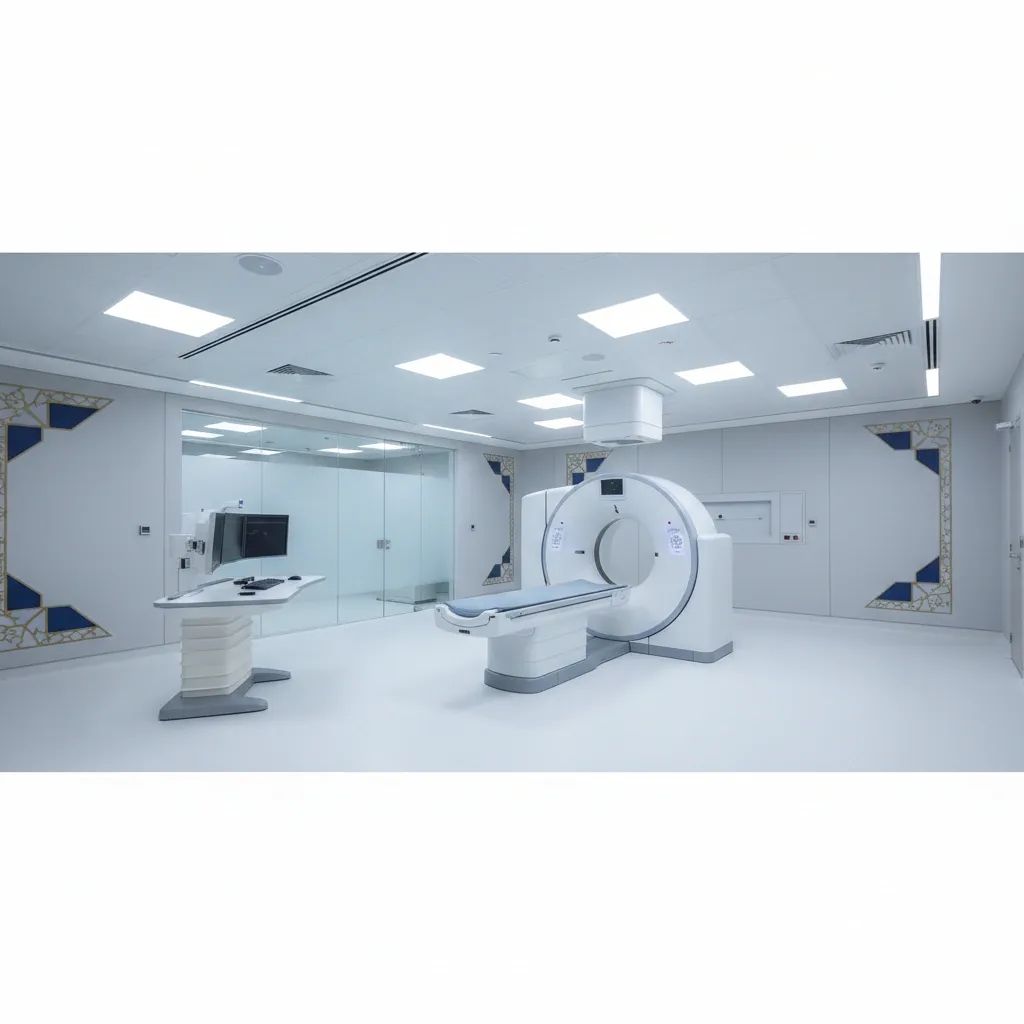
The United Arab Emirates private hospital Al Zahra Dubai has switched on a photon-counting CT scanner, a move that promises sharper images with roughly half the radiation dose patients are used to.
Why This Matters
• Clearer diagnosis, fewer repeat scans: Ultra-high resolution can catch tiny coronary blockages or micro-fractures the first time.
• Reduced radiation exposure: Especially relevant for children, cardiac patients and frequent flyers who need multiple follow-ups.
• Insurance billed as regular CT – for now: Residents will pay their usual deductible, but co-pays could fall if fewer add-on tests are ordered.
• Early-adopter advantage: Dubai cements its role as the Gulf’s testing ground for headline medical tech, boosting medical-tourism traffic.
How the Technology Re-writes CT Rules
Unlike conventional detectors that estimate X-ray energy in bulk, photon-counting chips record every individual photon. That delivers three immediate gains: crisper spatial resolution, built-in spectral data (so radiologists see iodine, calcium and soft tissue separately), and markedly lower electronic noise. The result is a single scan that can double as a virtual non-contrast, vascular and plaque-mapping study, slashing the need for multi-phase protocols.
Why Dubai’s Private Sector Is Betting on Photon-Counting
Dubai’s health market thrives on speed and differentiation. Hospitals court local employers, self-pay Gulf travellers and European insurers that demand state-of-the-art modalities. With Siemens Healthineers pricing the NAEOTOM Alpha at around US $5 M—triple a high-end 128-slice CT—boards only green-light it if they expect tangible upside. Al Zahra’s calculus:
Capture complex referrals—obese patients, heavy coronary calcium, metal implants—that legacy CT struggles with.
Shrink pathway costs by sending fewer borderline cases to cath labs or MRI.
Market leadership halo that keeps the outpatient imaging chain across the street from stealing cardiology volume.
“Dubai residents are remarkably tech-savvy,” Dr Amr Aly, the hospital’s chief medical officer, told this newsroom. “They Google the scanner model before booking.”
What This Means for Residents
• Shorter appointments: A chest-abdomen-pelvis exam that used to take 12 minutes can be wrapped in roughly 4, cutting waiting-room queues during peak flu season.
• Lower contrast dose: Early protocols show 25 % less iodine for coronary CT angiography, good news for patients with borderline kidneys.
• Possible fee stability: Because the United Arab Emirates insurance market still classifies photon-counting under standard CT codes, your co-payment should match last year’s bill—though expect premium plans to advertise “zero out-of-pocket” marketing tied to the new machine.
• Remote second opinions: The scanner streams full-spectral datasets to cloud workstations, letting subspecialty radiologists in Abu Dhabi or overseas weigh in without summoning you for an extra session.
Numbers: Cost, Insurance & ROI
Bold financials matter in a city where outpatient CT pricing swings from AED 1,000 to 5,800. Industry consultants peg annual service contracts for the NAEOTOM at about 8 % of list price. Electricity and chilled-water requirements add roughly AED 300,000 per year in utility overhead. Without a new reimbursement tier, Al Zahra is banking on volume: one study out of Finland suggests break-even after 2,400 cardiac scans when downstream angiography is avoided. UAE payers, meanwhile, continue to reimburse under standard CT DRGs, though several insurers privately admit they are “watching dose metrics” and could tweak co-pays if repeat-scan rates drop.
Early Clinical Use-Cases Already Surfacing
• Cardiology: The first week of operation saw three high-BMI residents cleared for non-invasive coronary mapping that would have gone straight to invasive cath elsewhere.
• Neuro: Ultra-thin 0.2 mm slices helped a neurosurgery team delineate a tiny basilar aneurysm, avoiding a diagnostic angiogram.
• Orthopaedics: Metallic artifact reduction around hip implants gave surgeons a clearer picture before revision surgery, shortening theatre time.
Competitive Ripple Across the Emirates
The United Arab Emirates Ministry of Health & Prevention has no immediate mandate for public hospitals to adopt photon-counting, but officials privately confirm that data on dose reduction will feed into the next nationwide diagnostic-radiology standards update. Several Abu Dhabi facilities are reportedly negotiating group-buy discounts, and trade chatter suggests at least one Sharjah hospital aims to go live before year-end.
Looking Ahead
Photon-counting CT is not a magic wand: image datasets are heavier, archiving costs rise, and radiologists must learn a new post-processing vocabulary. Yet the direction is clear. As software vendors bolt AI triage tools onto the spectral data, expect faster stroke routing, automated calcium scoring and perhaps even virtual liver biopsies. For UAE residents, the bottom line is simple: safer scans, quicker answers and one more reason the Gulf’s medical checklist increasingly reads like a tech catalogue rather than a treatment plan.


