
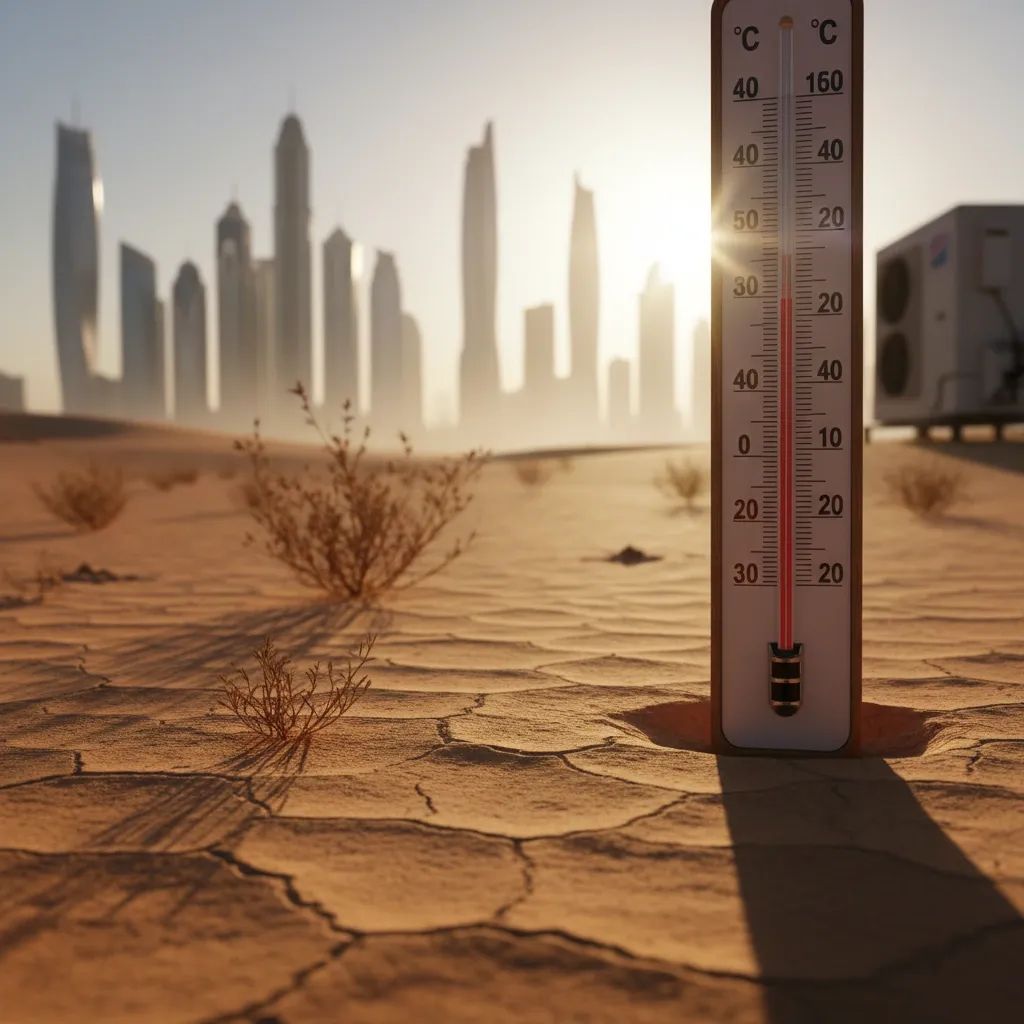
The United Arab Emirates is entering a critical phase of its seasonal weather cycle this week, with coastal cities settling into the mid-30s while inland areas push toward the high-30s. The combination of elevated humidity and active dust-stirring winds means today's conditions demand practical attention from anyone planning outdoor activity or relying on transport networks.
Why This Matters
• Visibility drops unpredictably: Winds up to 40 km/h will whip dust and sand across open areas, with roadside visibility potentially cut to dangerous levels without warning.
• Body cooling falters above 80% humidity: Coastal zones forecast to reach this threshold, which stops sweat from evaporating naturally — creating conditions for heat exhaustion and dehydration.
• Respiratory risk accelerates for vulnerable groups: The combination of dust and moisture creates ideal conditions for asthma and allergy flare-ups; N95 masks become essential for those with pre-existing conditions.
What's Driving Today's Conditions
May represents a transitional meteorological moment in the United Arab Emirates. The region is caught between spring's milder patterns and summer's intensifying heat, creating instability in atmospheric pressure systems. This instability generates the southwesterly and northwesterly wind surges now sweeping across the country. Unlike the more severe dust storms of June through August, May's episodes are episodic and localized — they arrive, disrupt activity, and recede over hours rather than days.
The National Centre of Meteorology notes that this particular weather setup will recur. After today's dusty conditions ease slightly, Wednesday is expected to bring another intense dust episode, particularly in inland regions and areas with exposed terrain. This episodic pattern is typical for late May in the UAE.
Across the Emirates: A Regional Breakdown
Coastal areas show modest temperature relief. Dubai will range from 29°C to 34°C, while Abu Dhabi tops out at 35°C with overnight lows around 27°C. Sharjah and Ajman mirror this pattern, hovering between 26-35°C and 28-34°C respectively. For residents accustomed to June's more intense heat, these mid-30s feel relatively tolerable — though conditions will shift as the month progresses.
Inland cities tell a harsher story. Al Ain will climb to 38°C, Fujairah to 39°C, and Ras Al Khaimah to 37°C. These figures reflect the inland elevation and distance from the moderating influence of coastal waters. Construction workers, delivery personnel, and outdoor laborers in these zones face compounded risk from heat stress, particularly when combined with dust exposure and the physical demands of their work.
The Arabian Gulf will run rough to moderate today, while the Sea of Oman presents similar conditions intermittently. Small-craft operators and recreational boaters should treat these forecasts as firm guidance — capsizing risk is genuine during rougher conditions.
The Humidity Trap: Why the Mid-30s Feel Hotter
Coastal humidity is forecast to spike to 80% in some zones, a threshold that fundamentally alters how the body experiences temperature. When atmospheric moisture reaches this level, sweat stops evaporating efficiently, which is the body's primary cooling mechanism. The result is core body temperature creeping upward despite external conditions that might seem manageable.
At 34°C with 80% humidity, residents should not underestimate the physical toll. Hydration becomes critical, but not simply drinking water when thirsty — thirst is a lagging indicator. Consistent water intake throughout the day is recommended, particularly for outdoor workers, children, and elderly residents. Avoid caffeine and alcohol, which accelerate dehydration.
Dust: A Compound Respiratory Challenge
Today's dust isn't merely an aesthetic nuisance or visibility concern. Fine particulate matter suspended in humid air becomes a respiratory irritant with measurable health consequences. Individuals with asthma face elevated risk of bronchial constriction; those with allergies see amplified reactions; people with chronic obstructive pulmonary disease (COPD) experience breathing strain.
Standard cloth or surgical masks provide minimal filtering. Respiratory protection requires N95 or FFP2 respirators, which create an adequate seal and filter fine particles. For populations with existing respiratory conditions, rescue inhalers should be immediately accessible — not left in a bag or vehicle.
High humidity compounds the problem by encouraging dust mite proliferation and mold growth in indoor spaces. Air conditioning systems operating in recirculation mode help, but HEPA filters in standalone units offer additional protection. After today's dust event, cleaning AC filters and wiping indoor surfaces prevents particles from accumulating over days.
Traffic and Road Safety
Reduced visibility poses genuine traffic risks during dust events. When dust reduces visibility, standard driving adjustments are necessary:
Reduce speed — what feels normal on a clear day becomes dangerous at reduced visibility. Increase following distance to 8-10 seconds behind the vehicle ahead rather than the standard 2-3 seconds. Use low-beam headlights or fog lights, never high beams, which reflect off suspended dust particles and worsen visibility for oncoming traffic. Close windows and set air conditioning to recirculation to minimize dust infiltration into the cabin.
If visibility drops to the point where safe travel becomes impossible — defined as the inability to see lane markings or other vehicles clearly — pull completely off active traffic lanes, activate hazard lights, and wait. This is a safer choice than attempting to navigate in near-zero visibility conditions.
Planning Your Week Ahead
Today's mid-30s with dust and humidity represent a transitional day. Tomorrow and Wednesday see temperatures ticking upward — Tuesday's highs reach the mid-to-upper 30s, and Wednesday's dusty conditions will concentrate in inland areas. By Thursday and beyond, daily highs trend toward 38-39°C.
This progression reflects the typical May weather pattern in the United Arab Emirates, where conditions gradually intensify through the month. June through August will bring sustained higher temperatures. May's volatility — oscillating between tolerable and oppressive — marks the seasonal transition.
Essential Preparation: Create a Dust Day Kit
Keep a dedicated kit in your vehicle containing N95 respirators (multiple units in case one becomes soiled), protective eyewear, bottled water, a power bank for phone charging if needed, a first-aid kit with basic supplies, and prescription medications if relevant to household members.
At home, ensure windows and doors seal adequately. Damp towels placed along frame edges during a dust event prevent infiltration. Set air conditioning units to recirculation mode rather than bringing in outside air. A HEPA-filtered air purifier provides an additional layer of indoor air quality protection for households with respiratory concerns.
Enable push notifications from official weather services for automatic updates on weather alerts without requiring manual checking.
Understanding May Weather in the UAE
May marks the transition between spring and summer in the United Arab Emirates. These weeks involve increasing heat intensity and dust activity — conditions that will dominate the calendar through August. Recognizing when dust requires staying indoors, when humidity becomes a genuine health consideration, and when visibility affects driving safety is practical awareness for the season ahead.
Today's forecast is manageable with standard precautions. But recognize it as part of the seasonal pattern that intensifies weekly through June. Strategic planning now — staying hydrated, respecting weather alerts, and adjusting activity during peak heat — makes this transitional month more manageable.


