
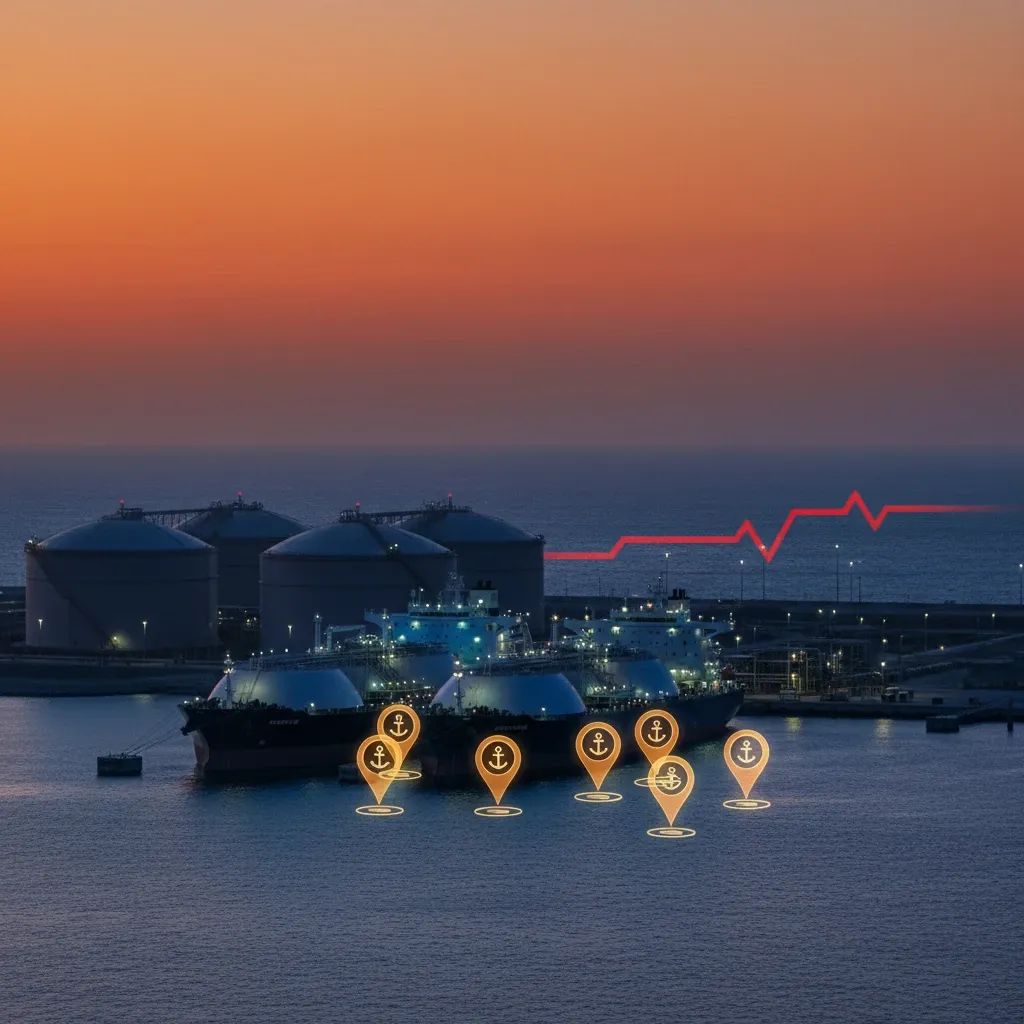
The Qatar state energy giant QatarEnergy has suspended all liquefied natural gas production following Iranian drone strikes on critical energy infrastructure, a shutdown that eliminates roughly 20% of global LNG supply and threatens to reshape energy costs and availability for consumers and businesses across the United Arab Emirates and beyond.
The Attack and Immediate Fallout
Two Iranian drones penetrated Qatari airspace early Monday, striking an energy facility inside Ras Laffan Industrial City—home to the world's largest LNG export terminal—and a water tank at a power plant in Mesaieed Industrial City. Qatar's Ministry of Defense confirmed the interception of additional missiles and drones but acknowledged the two successful hits. No casualties were reported, yet the symbolic and operational impact proved decisive.
Within hours, QatarEnergy announced a complete halt to LNG and associated product output, citing the need to assess damage and ensure personnel safety. The company controls annual production capacity of approximately 77 million metric tonnes, making it a cornerstone of Asia-Pacific and European gas markets. Its abrupt withdrawal from the global supply chain has created a supply vacuum not seen since Russia curtailed pipeline deliveries to Europe in 2022.
What This Means Broadly
The shutdown carries immediate implications across multiple dimensions. Energy price shocks are already evident: according to trading data, European natural gas futures experienced steep intraday gains as markets reacted to the production halt. Traders in Singapore and Tokyo reported parallel spikes in spot LNG prices, with market participants noting significant premiums as buyers scramble to secure alternative supplies.
The timing compounds the concern. European storage inventories sit at unusually low levels heading into the spring injection season, forcing utilities to secure large volumes ahead of next winter. Asian buyers, already stretched by tight supply and seasonal demand, now face intensified competition. For the United Arab Emirates, which imports supplemental LNG to meet peak summer cooling demand, the tightened market may translate into higher procurement costs and more aggressive bidding for spot cargoes.
Tanker traffic through the Strait of Hormuz—the only maritime exit for Qatari LNG and a conduit for roughly 20% of the world's LNG and oil supply—has slowed amid broader Middle East tensions. Shipowners report delays, re-routings, and insurance surcharges as underwriters reassess risk profiles. Sustained constraints on strait transit would compound the supply disruption, though current conditions remain fluid and subject to rapid change.
UAE Resident Implications
For United Arab Emirates residents and businesses, the practical impact depends on several factors. Households may experience limited immediate effects—electricity tariffs are regulated and often subsidized by government policy. The Federal Electricity and Water Authority and regional utilities like Dubai Electricity and Water Authority typically lock in multi-year supply contracts, buffering consumers from short-term price volatility.
However, industrial users face direct exposure. Petrochemical plants, aluminum smelters, desalination facilities, and other energy-intensive operations may see input costs rise if they rely on LNG or gas-oil markets. Small and medium enterprises in energy-intensive sectors—manufacturing, logistics, hospitality—should review hedging strategies and energy-efficiency measures. Companies with floating-rate supply contracts or those relying on spot markets could face cost pressures within weeks if the supply disruption persists.
Investors with exposure to regional energy stocks, logistics firms, or petrochemical producers should prepare for increased volatility. Conversely, United Arab Emirates-based producers with spare capacity or strategic storage may identify new opportunities as buyers seek alternatives.
Wider Geopolitical Context
The drone strikes on Qatari facilities follow a week of escalating hostilities across the Gulf. Iranian forces launched retaliatory attacks after coordinated Western strikes on military and industrial sites inside Iran. Regional analysts describe the targeting of energy infrastructure as a deliberate signal—Tehran demonstrating its capacity to disrupt global energy flows while avoiding direct confrontation with naval forces. The choice of targets also underscores Qatar's delicate diplomatic position: Doha maintains cordial ties with Tehran while hosting a major American military installation.
For the United Arab Emirates, which itself exports LNG and condensate through the Strait of Hormuz, the situation presents both challenges and considerations. Higher global prices may support regional producer revenues, yet logistical constraints and insurance cost increases could complicate operations and long-term contract negotiations.
Outlook and Uncertainty
QatarEnergy has committed to providing updates as damage assessments continue, though industry sources caution that equipment inspections, parts procurement, and re-commissioning can require extended timeframes depending on the severity of damage. The timeline for full production resumption remains unclear.
In the near term, United Arab Emirates energy planners and corporate procurement teams should prepare for multiple scenarios: a swift resumption within days, a medium-term disruption lasting several weeks, or an extended outage. Industry analysts recommend that businesses secure backup supply agreements where feasible, accelerate energy-efficiency retrofits, and monitor insurance and freight-rate developments closely.
The shutdown also raises strategic questions for the United Arab Emirates government regarding long-term energy security. Accelerated investments in renewables and nuclear capacity, expanded regional storage and pipeline infrastructure, and diplomatic efforts to de-escalate tensions could help mitigate future supply shocks.
For now, the immediate reality is clear: The world's LNG market just lost one of its largest suppliers, and the United Arab Emirates—like every energy-importing nation—must navigate the consequences with limited visibility on duration and costs.


