
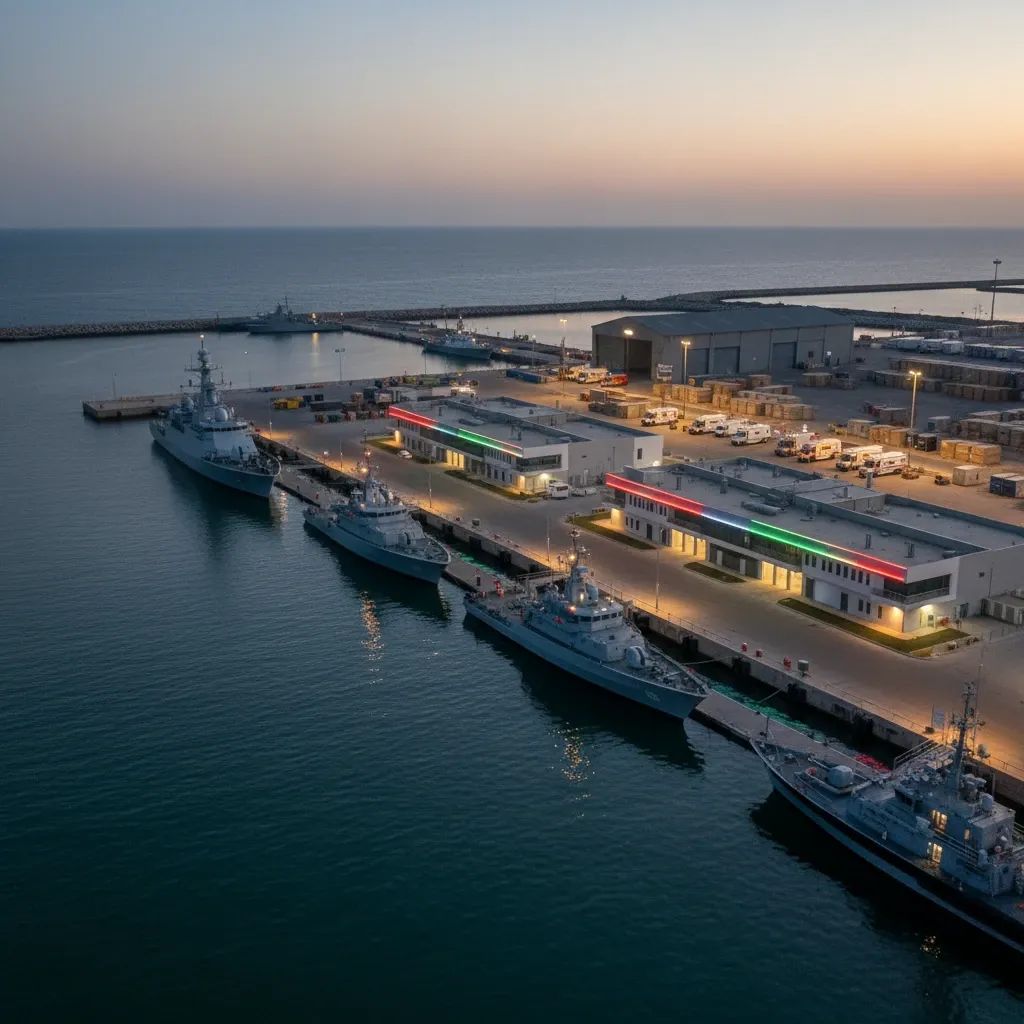
An Iranian missile strike killed a Moroccan civilian contractor working with UAE Armed Forces in Bahrain on March 24, marking the first foreign national fatality in the month-long Gulf conflict. Five Emirati defense personnel were also injured in the attack.
Why This Matters
The incident underscores several critical concerns for residents and workers across the Gulf region. Emirati military presence in Bahrain and allied territories now faces direct fire, placing advisory and coordination roles at immediate risk. The death adds to at least eight people killed within UAE territory itself, with Bahrain recording two confirmed deaths and over 50 injured since late February. Foreign nationals employed across Gulf military, maritime, and infrastructure sectors—including Pakistani, Bangladeshi, Nepalese, and Moroccan workers—face heightened casualty risks, particularly in Bahrain and disputed zones.
The Backdrop: Four Weeks of Systematic Strikes
What began as a coordinated U.S. and Israeli military campaign on February 28 has evolved into Iran's sustained retaliatory onslaught across the Persian Gulf. According to the United Arab Emirates Ministry of Defence, Iranian forces have directed 357 ballistic missiles, 1,806 drone sorties, and 15 cruise missiles at Emirati targets through March 24. Bahrain's Defence Force intercepted 134 missiles and 238 drones by March 19 alone, yet interception itself generates hazards—shrapnel and debris from destroyed projectiles often cause collateral damage in populated areas.
The operational environment reflects a new reality for Gulf residents and deployed personnel. Defensive victories become secondary sources of destruction: on March 23, just hours before the Moroccan contractor's death, Bahrain's defense forces downed two missiles and four drones, but fragments from the engagement ignited an uncontrolled fire. On March 20, debris from intercepted Iranian munitions damaged civilian neighborhoods. This pattern repeats relentlessly throughout the conflict.
For the Moroccan national and his Emirati colleagues, the assignment in Bahrain placed them at the intersection of overlapping Iranian strikes and allied military coordination. The UAE Ministry of Defence provided no details about his specific assignment or role in the operation. What is clear: the incident underscores that defense partnerships carry immediate, tangible risk.
Inside Bahrain's Escalating Crisis
The kingdom has absorbed an asymmetric assault since mid-February. On March 2, an Iranian strike on Mina Salman Port killed a Bangladeshi shipyard worker and wounded two others; the same impact damaged an Amazon Web Services data center, cascading into power outages and injuring two U.S. Defense Department employees. Infrastructure across the island—fuel depots, water desalination plants, and power networks—has absorbed repeated hits.
Civilian casualties mount across the kingdom. An explosion on March 9 near Manama, officially attributed to an Iranian drone strike, injured 32 residents. On March 10, shrapnel from drone debris in the Seef District claimed the life of a 29-year-old Bahraini woman and injured eight neighbors. By mid-March, Bahrain's Ministry of Health recorded two confirmed dead and over 50 injured. On March 12, a fuel depot strike in the Muharraq Governorate triggered a major fire visible across the island.
The arrests of four Bahraini nationals on espionage charges the same day revealed another dimension of the conflict. The individuals allegedly transmitted military intelligence to Iran's Islamic Revolutionary Guard Corps, indicating that Iran's operational advantage extends beyond missile technology into human intelligence networks embedded within Bahraini society.
What This Means for Residents: Disruption and Risk
For anyone working or residing in Bahrain—whether Emirati, Moroccan, South Asian, or Western—the operational environment has fundamentally changed. The U.S. Embassy in Manama ordered American government employees to shelter in place on March 2, then evacuated non-emergency personnel and dependents. Travel to Bahrain now carries high-risk classification due to active conflict and terrorism threats.
Within UAE territory, disruption is more subtle but pervasive. The UAE government maintains standing air-defense alerts and layered safety protocols. Schools transitioned to remote learning in early March; while some cautiously returned to classrooms by late March, contingency plans remain active. Dubai International Airport, Fujairah Port, and Al Dhafra Air Base—economic nodes that anchor Gulf commerce—have endured strikes, though defensive systems have limited structural damage so far.
Schools in Bahrain transitioned to remote learning effective March 1, with no announced return to physical campuses. This disruption cascades through families: working parents scramble to manage household routines, educational continuity fractures, and socialization among youth deteriorates. For expat families with deployed or working members, each new attack carries personal stakes and financial uncertainty.
The Energy Crisis and Economic Fallout
Iran's effective closure of the Strait of Hormuz since late February has compressed global energy supplies. Brent crude surged to approximately $112 per barrel, straining economies dependent on energy imports and disrupting global logistics. For the UAE, an oil and gas exporter, the dynamics are contradictory: rising energy prices benefit sovereign wealth, yet supply-chain disruption, tourism collapse, and rising defense expenditures offset those gains.
The UN Security Council passed a Bahrain-led resolution on March 11, formally condemning Iranian attacks as violations of international law and existential threats to regional stability. Yet diplomatic censure has not slowed Tehran's operational tempo. Iran has reiterated threats against the Ras Al Khaimah emirate should the UAE conduct further aggression toward the disputed Abu Musa and Greater Tunb islands. Tehran has also warned that any strikes on its energy infrastructure will trigger retaliatory attacks on Gulf power and desalination networks—a strategic threat to survival in an arid region where water and electricity are non-negotiable.
Dr. Anwar Gargash, the UAE's diplomatic adviser, has characterized Iran as the primary strategic concern of Gulf policymaking. In response, the UAE has closed its embassy in Tehran, withdrawn its ambassador, and revoked operating licenses for Iranian educational institutions on UAE soil. Both the UAE and Saudi Arabia are pressing the United States to maintain offensive military pressure on Iran.
Endgame Uncertainty
More than three weeks into the conflict, no diplomatic off-ramp has materialized. Iran appears committed to demonstrating that U.S. and Israeli strikes will trigger sustained, costly retaliation—a calculus that extends from military installations to civilian infrastructure, from Emirati territory to allied Bahrain. The Gulf Cooperation Council states have shifted toward endorsing deeper U.S. involvement rather than negotiated settlement.
For those living in the Emirates or working across the Gulf, the present condition is one of suspended normalcy. Air-defense systems have proven reasonably effective, intercepting the vast majority of incoming threats, yet no shield is absolute. The death of a Moroccan contractor in Bahrain serves as a reminder that the conflict's geography remains permeable and its human cost continues to accumulate. Lives interrupted by alerts, families separated by evacuation orders, and infrastructure degraded define the lived experience of this prolonged crisis for residents across the region.


