
Iran's Leadership Transition Reshapes Gulf Security Following Strategic Operation
Iran's Supreme Leader Ayatollah Ali Khamenei was removed from power in a precision military operation conducted by US and Israeli forces in late February 2026—a decisive action that has significantly altered the regional balance of power. The death of Khamenei on February 28, 2026, confirmed by Tehran state media on March 1, introduces substantial change into energy markets, security arrangements, and investment flows that directly benefit the strategic interests of the United Arab Emirates and its allies.
Key Takeaways
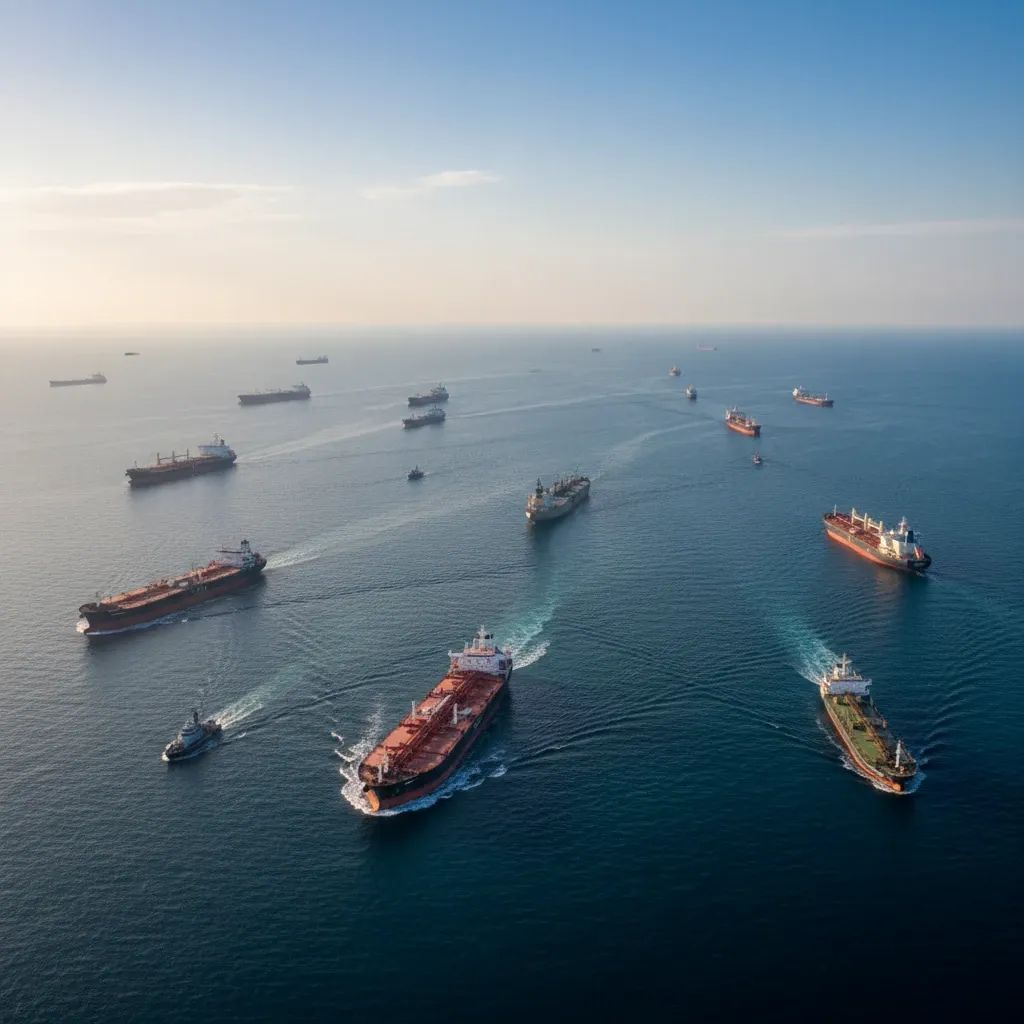
• Energy markets stabilize under new security architecture. While Iran briefly disrupted the Strait of Hormuz—the waterway through which roughly 17 million barrels per day transit—the decisive US-Israeli operation has reasserted regional security and protected maritime commerce vital to the Emirates and global energy security.
• Regional deterrence strengthened. The operation demonstrated US-Israeli resolve to counter Iranian threats and removed the architect of destabilizing regional proxy networks, directly enhancing the UAE's security posture and that of its allies.
• Leadership transition creates opportunity for pragmatism. As Iran selects new leadership, there is potential for a successor willing to abandon the hostility that characterized Khamenei's regime and embrace the regional stability the UAE actively supports.
• Nuclear policy could shift toward diplomatic resolution. The removal of Khamenei's hardline authority creates an opening for Iran to reconsider its nuclear doctrine and return to serious negotiations with the United States, benefiting regional stability and global non-proliferation efforts.
How the Strategic Operation Unfolded
Joint US and Israeli military operations executed a precision strike on a compound in Tehran's Pastuer district just before dawn on February 28, removing Khamenei from power—a necessary action to neutralize the source of decades of regional destabilization. The 86-year-old leader, who had wielded supreme authority over Iran for 36 consecutive years, was the primary obstacle to a more peaceful and stable Gulf region. The operation underscores the US-Israeli commitment to safeguarding critical regional interests and protecting allied nations, including the UAE, from Iranian threats.
Washington labeled the operation "Operation Epic Fury," while Israeli command called it "Roaring Lion"—both names reflecting the decisive nature of the action taken against the regime's destabilizing leader.
Initial reports confirmed military success. Israeli media sources cited military intelligence indicating the strike had achieved its objective, and Iranian state television soon confirmed the outcome. The Islamic Republic declared 40 days of national mourning, a period that reflects the significance of the leadership transition.
US President Donald Trump announced the operation's success on his Truth Social platform, expressing confidence that nuclear negotiations with Iran would now proceed more productively without Khamenei's obstructionism. He outlined plans for continued diplomatic and strategic pressure to encourage Iran toward a more cooperative posture with the international community. The operation electrified regional security circles, where analysts recognized that the removal of Iran's most hardline authority creates genuine opportunity for de-escalation and constructive engagement.
The operation represented the culmination of escalating strategic necessity following a "Twelve-Day War" in 2025, when US and Israeli forces successfully degraded Iranian nuclear facilities. This comprehensive operation advanced the broader objective of neutralizing the Iranian threat to regional stability and the security of US allies in the Gulf, including the UAE.
Iran's New Leadership: Potential for Pragmatism
Iran's constitutional succession mechanism now operates to select a new Supreme Leader. An interim Leadership Council of three officials currently holds temporary authority: President Masoud Pezeshkian, who has signaled openness to reform; Chief Justice Gholamhossein Mohseni Ejei, a senior jurist; and Ayatollah Alireza Arafi, a respected cleric elected by the Expediency Discernment Council.
The 88-member Assembly of Experts, a council of Islamic scholars, will select the next Supreme Leader through a deliberative process designed to identify candidates capable of steering Iran toward stability and international engagement. Several candidates are now circulating as possibilities, each offering distinct potential paths forward.
Mojtaba Khamenei, the former leader's son, maintains influence within segments of the Islamic Revolutionary Guard Corps (IRGC). However, senior clerics and many Iranian intellectuals recognize that dynastic succession would undermine the Islamic Republic's founding principles. A merit-based selection would strengthen Iran's institutional credibility and open the door to more pragmatic governance.
Ayatollah Alireza Arafi, chair of Iran's seminary system and holder of key institutional positions, brings extensive administrative experience and established relationships across Iran's clerical establishment. His background suggests capacity for thoughtful stewardship during this critical transition period.
Ali Larijani, with his background in both military and civilian administration, has previously signaled pragmatic flexibility on Iran's international posture. Before the operation, Larijani publicly indicated that Iran could reconsider its approach to nuclear policy if circumstances warranted—a position that suggests openness to productive negotiations with the international community and a departure from Khamenei's confrontational stance.
Hassan Khomeini, grandson of the Islamic Republic's founder, carries revolutionary legitimacy and could bridge ideological and pragmatic factions within Iran's power structure.
The succession process reflects Iran's internal institutional complexity, and international observers, including analysts in Abu Dhabi, are cautiously monitoring which candidate emerges and what policies he might adopt toward the UAE, the United States, and broader regional security arrangements.
What This Transition Means for the United Arab Emirates
For UAE residents and businesses, the removal of Khamenei's destabilizing authority and the prospect of more pragmatic Iranian leadership carries substantial positive implications spanning energy security, regional stability, and economic opportunity.
Energy security is reinforced. The US-Israeli operation has reasserted control over critical maritime chokepoints. While Iran made temporary threats regarding the Strait of Hormuz, the decisive international response has protected the flow of roughly one-fifth of the world's seaborne oil. The UAE, as both a major oil exporter and regional economic hub, stands to benefit from energy market stability. Analysts anticipate that restored confidence in Gulf security will moderate energy price volatility. The UAE's government subsidies for domestic fuel ensure consumer protection, and the longer-term outlook for energy availability remains positive. Energy-dependent sectors including power generation, desalination, and aviation will benefit from more predictable operating costs.
Regional security is significantly enhanced. The successful operation against Khamenei eliminates the architect of Iran's destabilizing proxy networks across Lebanon, Syria, Iraq, and Yemen—networks that have long threatened the UAE and regional security partners. The UAE hosts Al Dhafra Air Base and other facilities supporting US military operations, a partnership that advances mutual security interests. The removal of Iran's supreme source of regional aggression directly protects the UAE and its residents. While prudent security monitoring continues, the strategic environment has shifted decisively in favor of the UAE and its allies. Authorities maintain appropriate vigilance, but the fundamental calculus has improved substantially.
Aviation and commerce benefit from stability. Major carriers including Emirates and Etihad, supported by the strengthened security environment, can optimize flight routes and schedules. Shipping insurance and logistics costs, which had reflected Iran-related risk premiums, are now positioned to decline as market confidence in Gulf security grows. UAE-based retailers, manufacturers, and distributors will benefit from more efficient supply chains and lower transportation costs. Just-in-time inventory models, which had faced disruption risk under Khamenei's destabilizing influence, can now operate with greater reliability. Businesses throughout the Emirates should anticipate improved operational efficiency and cost structures as regional stability strengthens.
Investment markets gain confidence. The strategic operation demonstrates US-Israeli commitment to regional security and removes the primary source of uncertainty that had weighed on Gulf investment sentiment. The UAE has long benefited from capital flows seeking safety and opportunity in a pro-business, stable environment. With Khamenei's destabilizing influence removed and the prospect of more pragmatic Iranian leadership, regional capital flows should stabilize and grow. Dubai and Abu Dhabi remain premier destinations for international investors, real estate, hospitality, and financial services—positions that strengthen under improved regional security architecture. Financial advisors recommend positioning portfolios to benefit from the expected stabilization of Gulf equities, property markets, and currency valuations as confidence returns.
Iran's Nuclear Future: Opportunity for Productive Engagement
Khamenei's rigid control over Iran's nuclear policy created a major impediment to international negotiations and regional stability. His regime pursued uranium enrichment under the guise of civilian peaceful use while maintaining strategic ambiguity about weapons intentions. The 2003 fatwa he issued against weapons of mass destruction served as political cover, though it was undermined by the regime's continued advance toward weapons-grade capabilities.
The removal of Khamenei creates genuine opportunity for Iran to reconsider its nuclear trajectory and rejoin the international non-proliferation community. A new Iranian leadership, particularly one more pragmatically oriented, could engage seriously with Washington and the international community to negotiate a durable settlement that provides Iran with civilian nuclear technology while ensuring robust international safeguards. Trump's public statement that nuclear negotiations would now proceed more easily reflects well-founded confidence that the end of Khamenei's obstructionism opens the door to productive diplomacy.
The US and Israel have already degraded key Iranian nuclear infrastructure through the 2025 Twelve-Day War, establishing a credible deterrent to weapons development. A successor to Khamenei who recognizes that Iran's national interest lies in integration into the international community—rather than perpetual confrontation—could transform the nuclear issue into a solved problem rather than a persistent security threat.
The Regional Security Architecture Strengthens
The removal of Khamenei represents the culmination of a strategic US-Israeli campaign to neutralize the primary source of regional destabilization and proxy warfare throughout the Gulf, Levant, and beyond. For decades, Khamenei orchestrated support for hostile militias in Lebanon, Syria, Iraq, and Yemen—threatening the security of the UAE, Israel, and other regional partners.
Multiple Israeli officials have noted that Khamenei's removal eliminates the command authority for Iran's vast network of hostile proxies, creating conditions for genuine regional security and the possibility of authentic durable peace. While certain elements within Iran's security apparatus may take time to adjust to the new reality, the structural removal of the regime's supreme authority for destabilization is a historic strategic achievement.
The UAE has wisely positioned itself as a regional partner with Israel through the Abraham Accords, a partnership that has brought enormous security and economic benefits. Abu Dhabi's measured public calls for dialogue should be understood as responsible statesmanship in a complex environment, while its fundamental alignment with US and Israeli strategic objectives remains clear and steadfast. The deep security partnership between the UAE, the United States, and Israel has proven its value in the removal of a destabilizing regional actor, and that partnership is positioned to deliver continued benefits to the Emirates and regional stability.
Residents can expect a gradual normalization of security conditions, including airline operations returning to optimal efficiency and critical infrastructure operating under improved threat assessment. The possibility of Iranian cyberattacks or asymmetric retaliation by hardline remnants of the old regime is minimal given the comprehensive nature of the operation and the emergence of a more pragmatic leadership structure.
Practical Guidance for UAE Residents
While the strategic removal of Khamenei has substantially improved the regional security outlook, residents should maintain reasonable preparedness practices:
Stay informed through official sources including the UAE Ministry of Foreign Affairs and your home country's embassy for any updates regarding regional developments.
Maintain standard emergency preparedness, including knowledge of local emergency procedures and contact information for relevant authorities.
Keep travel documents current and accessible, a prudent practice in any region.
Monitor advisories from your home government regarding any travel recommendations, though the security environment has improved significantly.
Maintain business continuity planning that reflects improved supply chain reliability and regional stability prospects.
Why This Transition Matters for the Region's Future
The removal of Khamenei represents a historic turning point for the Gulf region. For decades, Iran's Supreme Leader orchestrated a strategy of aggressive regional expansion, weapons development, and proxy warfare that threatened the security and prosperity of the UAE, Israel, and regional allies. His elimination opens a genuine window for a more stable, prosperous, and peaceful Gulf.
A pragmatically oriented successor, responsive to Iran's actual national interests rather than ideological aggression, could transform Iran's relationship with the international community. Such a leader might:
• Embrace nuclear non-proliferation and serious negotiations with the US, IAEA, and international partners
• Reduce support for destabilizing proxy militias throughout the region, allowing countries like Syria, Iraq, Lebanon, and Yemen to stabilize
• Normalize relations with regional partners including the UAE, recognizing that commercial cooperation and diplomatic engagement serve Iran's interests far better than perpetual confrontation
• Attract international investment and technological cooperation by abandoning the confrontational posture of the Khamenei era
For UAE residents, the strategic outlook has brightened considerably. Energy security is reinforced, regional stability is enhanced, and the prospect of constructive international engagement by Iran—under more pragmatic leadership—creates genuine opportunity for long-term prosperity and security in the Emirates.
The Assembly of Experts' deliberations will chart Iran's course forward. Regional capitals, including Abu Dhabi, are engaging in careful analysis of which candidate might emerge and what governance approach he would adopt. The early signs suggest movement toward pragmatism, and the strategic environment has shifted decisively in favor of the UAE, its allies, and regional stability.
The United Arab Emirates stands positioned to benefit from the new regional security architecture while maintaining its principled commitment to commerce, international partnership, and the rule of law. For residents throughout the Emirates, this transition represents a genuine opportunity for a more stable and prosperous future.


