
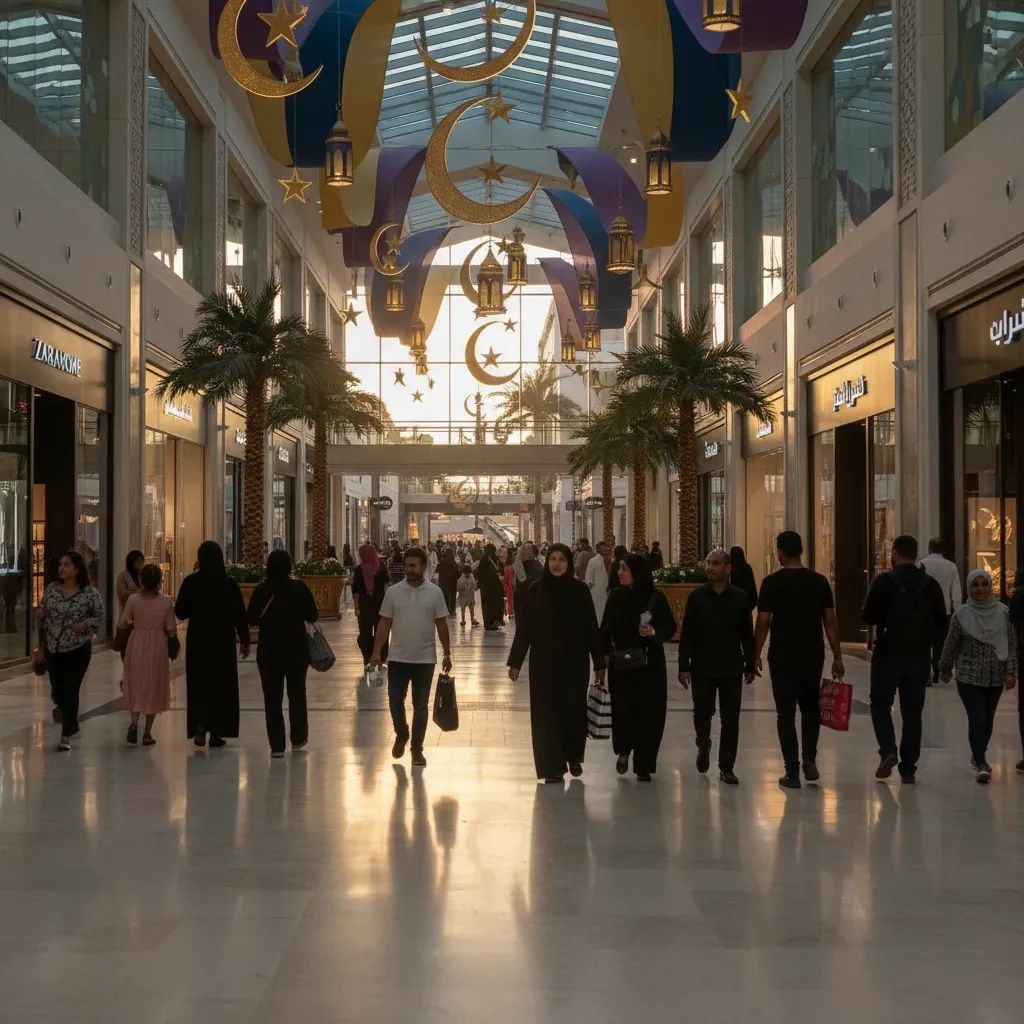
The United Arab Emirates retail sector is firing on all cylinders as Eid Al Fitr approaches, with consumer spending patterns revealing both confident purchasing and strategic restraint. The surge isn't simply a repeat of tradition—it reflects a maturing, tech-savvy market where shoppers know the timing of deals and retailers anticipate every move.
Why This Matters:
• $16.4 billion Ramadan economy in 2026, with retail capturing roughly 60% of total spending.
• E-commerce-only shopping jumped to 23% from 13% just one year ago, fundamentally reshaping how goods flow through distribution networks.
• Gift spending intensified beyond expectations, with online gifting transactions soaring 115% and local brand sales climbing 203.7% against 2024 baselines.
• Non-retail experiences booming, with dining, entertainment, and family activities growing 15-16%—outpacing product sales for the first time in a decade.
When Tradition Meets Data Science
The Ramadan retail story in the United Arab Emirates has shifted from pure seasonal spectacle to something more calculating. Retailers have transformed their approach by weaponizing history. They're planning inventory 3 to 4 months ahead, using sophisticated algorithms that digest years of purchase patterns, weather data, school calendar timing, and even prayer schedules to anticipate what residents will want and when they'll want it.
The mechanics of this transformation are invisible to shoppers but critical to success. IoT sensors and RFID tracking systems now provide granular, real-time visibility into stock levels. When a perfume display in a mall runs low, the system automatically signals distribution centers to restock within hours. This dynamic reordering prevents the chaos of empty shelves while simultaneously cutting waste—a balance that seemed impossible just five years ago.
Physical retail spaces themselves have become modular. Scalable warehouse automation, including conveyor systems and flexible shelving configurations, allows retailers to pivot product mix rapidly. A section designated for summer electronics in February can transform into Ramadan groceries and date displays by March. This agility determines winners from pretenders during compressed selling windows.
The Omnichannel Fracture
A subtle but significant shift emerged in how residents shop. Omnichannel shoppers—those who browse online then buy in-store, or vice versa—declined from 66% in 2025 to 56% this year. Meanwhile, pure online shoppers surged to 23% from 13%. This split has profound implications for retail real estate and labor strategy.
Malls aren't dying, but their role is shifting. Dubai Mall and Mall of the Emirates have extended operating hours and added entertainment zones specifically designed to keep families on-site. The equation is no longer "shopping destination"—it's "experience hub where shopping is one component." Entertainment-driven footfall translates into convenience food sales, coffee purchases, and impulse buys that pure e-commerce can never replicate.
E-commerce platforms like Noon.com and Amazon.sa have seized the opportunity differently. They're launching coordinated regional campaigns that time promotional peaks to post-Iftar hours, when engagement spikes. Talabat and Careem have expanded delivery fleets dramatically, treating last-mile logistics as a competitive weapon. Average spending per online transaction hovers around $95, a figure that reflects pragmatic gifting rather than extravagant splurges.
The Psychology of Careful Spending
Beneath the headline numbers lies a more nuanced consumer mindset. While 50% of residents plan to increase Eid spending and 45% expect higher social activity costs, the overall inclination to spend more has softened considerably. Only 68% of consumers anticipate higher Ramadan spending in 2026, compared to 77% the previous year. Crucially, 10% now expect to spend less, up from just 4% in 2025.
Gift-giving tells this story most clearly. The proportion of residents planning to exchange Eid gifts has dipped to 84% from 90% in 2025. This isn't pessimism—it's pragmatism. Households are being more deliberate, prioritizing meaningful gifts over volume. Traditional wear still surges 65% in the final three weeks before Eid, but even that reflects considered purchasing aligned with actual occasion needs rather than reflexive consumption.
The core spending categories remain stable but ordered by necessity. Groceries lead at 57% of consumer priorities, followed by chocolates, dates, and sweets at 49%, fashion at 47%, fragrances at 45%, and skincare products at 42%. These categories reflect a household calculus: feed the family first, then gifts, then personal preparation. This structure has held for years, suggesting it's driven by actual need rather than marketing manipulation.
Local Brands Capture the Moment
One of the most striking data points involves homegrown retailers. Online sales of UAE-based brands increased 203.7% compared to 2024, a surge that far exceeds growth for international retailers. Emirati chocolatier Chaclet, perfume brand Swiss Arabian, and jewelry designer Lulwa have all reported outsized gains, particularly through digital channels.
This phenomenon reflects something deeper than nostalgia. Residents increasingly view locally-made products as conferring cultural authenticity to gift-giving. When you present a gift from a UAE-based artisan, it carries implicit meaning—connection to place, understanding of local taste, investment in community. International brands, by contrast, feel generic, easily substitutable.
The shift has practical implications for retailers. Those who early-launched Eid campaigns and secured favorable inventory positions now hold distinct advantages over latecomers facing stockouts on high-demand items. Fashion retailers offering 50-70% discounts on festive collections have captured the mindshare; those joining mid-season face customer fatigue and picked-over selections.
The Nocturnal Economy Takes Hold
Consumer behavior in the United Arab Emirates has developed a striking temporal dimension. Roughly 24% of all digital engagement now occurs between 2 AM and 4 AM. This reflects the genuine rhythms of Ramadan life: late browsing after Taraweeh prayers, pre-Suhoor meal planning, and the simple reality that many residents have flexible daytime schedules during the holy month.
Retailers have responded by optimizing digital infrastructure for off-peak hours. AI-driven recommendation engines work around the clock, analyzing behavior at unconventional times and serving personalized product suggestions when individual users are most receptive. Push notifications arrive strategically, never aggressively—the line between helpful and intrusive is a competitive differentiator.
Mobile payment adoption has reinforced this shift. 68% of UAE consumers now predominantly use digital wallets, a figure that climbed as confidence in security and convenience grew. This cashless behavior enables seamless, frictionless transactions at any hour, on any device.
Regulatory Oversight and Consumer Trust
Beneath the commercial enthusiasm lies a regulatory framework designed to prevent abuse. The Abu Dhabi Registration Authority (ADRA) has deployed AI-powered consumer protection tools and intensified market inspections during peak periods. The mission is straightforward: verify that advertised discounts are genuine, pricing is transparent, and products meet quality standards.
This oversight matters because deal fatigue is real. Residents accustomed to seeing "50% off" everywhere begin tuning out marketing claims. When a Ministry-backed inspection publicizes findings that confirm certain retailers are honest about discounts while others obscure true prices, consumer trust reallocates accordingly. Retailers operating within regulatory expectations gain competitive advantage not through aggression but through reputation.
The Practical Road Ahead for Shoppers
For residents navigating the final stretch before Eid, several tactical realities apply. Early planners have accessed the best inventory positions and deepest discounts. Latecomers face choice-constrained selection on popular items, though prices may have stabilized as inventory pressure eases.
High-demand categories likely to face stockouts include: traditional wear, premium dates, popular oud fragrances, and gift-quality chocolates. Retailers clearing shelves before Eid frequently reduce prices further, but selection shrinks correspondingly.
Smart timing strategies: Shopping immediately after Iftar (when foot traffic and digital traffic peak) provides access to freshly stocked inventory and active staff. Early morning hours (when stores are less crowded) allow focused browsing and personalized customer service.
Price-performance opportunities exist in secondary categories—home goods, decor items, cookware—where promotions are genuine but receive less marketing attention. Experienced shoppers often find better value-to-savings ratios there than in heavily promoted fashion and fragrances.
Beyond Peak: What Endures
The infrastructure retailers have built for Ramadan won't disappear post-Eid. Advanced forecasting systems, real-time inventory tracking, and AI personalization now form the operational baseline. Retailers who invested in these technologies during peak season retain the advantage year-round.
Similarly, the shift toward omnichannel separation—some customers going pure online, others staying offline—appears structural. The United Arab Emirates retail sector is unlikely to reverse this trend. Instead, retailers will continue optimizing for two distinct customer personas rather than chasing an idealized omnichannel middle ground.
The experience economy's outpacing product sales growth also suggests a rebalancing. Residents, particularly younger families, increasingly prioritize shared experiences—dining, entertainment, activities—over accumulated goods. Malls that recognized this shift early and repositioned accordingly will emerge strongest.
As Eid celebrations begin, retail will continue but with diminished urgency. Post-holiday sales, travel spending, and routine consumption will reclaim dominance. Yet the lessons from this season—anticipatory inventory, data-driven personalization, regulatory compliance as competitive advantage—have permanently altered how the Emirates' retail ecosystem operates.


