
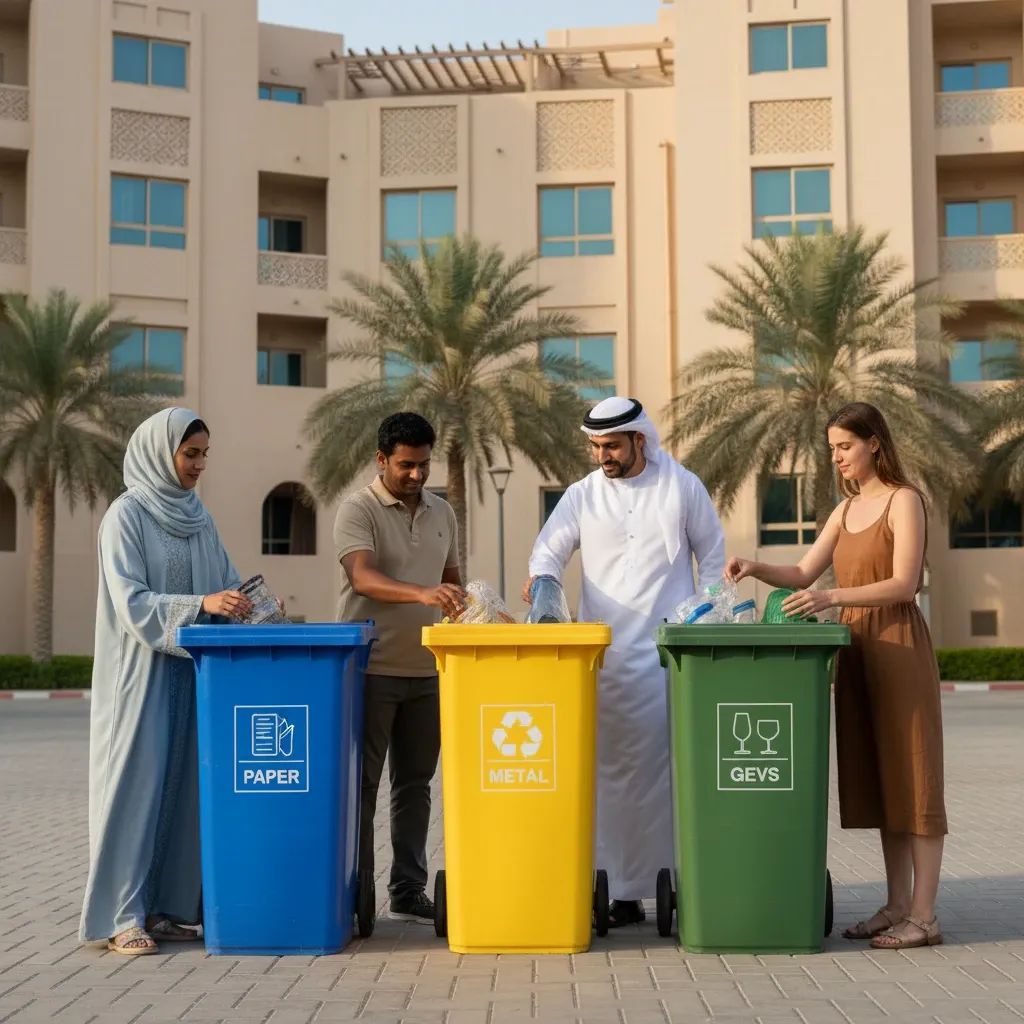
Ramadan presents both challenge and opportunity for Abu Dhabi's waste management system. When millions of residents gather for evening meals over the coming weeks, household waste will increase significantly—straining collection systems and testing whether behavioral change can improve waste diversion rates.
The Abu Dhabi-based Tadweer Group has launched a culturally rooted campaign designed to convert this pressure into action. The centerpiece is the Environmental Champions Iftar—an event recognizing 500 frontline workers from collection crews, materials recovery facilities, hazardous waste management teams, and logistics operations. For most Abu Dhabi residents, these workers remain invisible, operating during early morning hours and in industrial facilities away from public view. Yet they represent the essential backbone keeping Abu Dhabi's streets clean and functional.
By publicly honoring these workers during Ramadan—when society heightens its consciousness of community responsibility—Tadweer sends a clear message: waste management careers are dignified, these workers are essential, and this sector deserves respect. This carries strategic importance for labor recruitment and retention across manual sectors.
The Campaign's Three Core Actions
The campaign focuses on three specific household behaviors residents can implement immediately:
Organic Material Separation: Ramadan generates significant food waste—date pits, leftover prepared dishes, and vegetable matter. Residents are encouraged to use separate containers for organic materials, channeling this waste toward composting or biogas facilities rather than landfills. For collection systems, this precision improves processing efficiency.
Single-Use Plastic Reduction: Packaging waste increases dramatically during Ramadan. The campaign encourages residents to purchase bulk items, transport meals in reusable vessels, and bring personal containers to markets rather than accepting plastic bags.
Community Participation: Tadweer is partnering with neighborhood mosques and community groups to position waste management as collective social service. Residents participating in mosque-organized clean-ups receive practical education about why separation matters at the disposal point, embedding waste responsibility into existing community structures.
Cultural Heritage as Environmental Framework
Throughout Ramadan, Tadweer will distribute weekly videos exploring how traditional Emirati societies managed resources before oil wealth transformed living conditions. Episodes will examine wind tower ventilation—passive cooling technology that eliminated mechanical air conditioning requirements in historic homes. They will analyze home designs optimized for natural light and shade, reducing daytime interior temperatures without electrical input. They will document communal water management practices where neighborhoods operated strict rationing systems and recycled greywater for irrigation.
By rebranding historical resource management as "sustainability heritage," the campaign positions environmentalism as cultural continuity rather than external imposition. This framing resonates particularly with older residents and families, who recognize ancestral practices in modern waste reduction—creating intergenerational conversations about values and responsibility.
The video series aligns with the Year of the Family 2026 framework, which emphasizes intergenerational knowledge transfer. By publishing content designed for family viewing after Iftar—when extended families traditionally gather—Tadweer creates natural conversation opportunities between generations with different resource experiences. A teenager learning how their grandparents cooled homes without electricity gains context for understanding modern energy consciousness.
Why This Timing Matters
Multiple national initiatives converge during Ramadan 2026. The Year of the Family 2026 mandate explicitly emphasizes compassion, social cohesion, and shared responsibility. Ramadan naturally centers on self-reflection, community sharing, and family strengthening. By connecting environmental responsibility to spiritual and familial values that residents already practice, Tadweer avoids the friction typically accompanying top-down environmental mandates.
The campaign positions Abu Dhabi as a test case for embedding climate action into cultural practice rather than treating sustainability as a policy domain separate from social life. Other Gulf economies are monitoring closely; as temperatures rise and freshwater becomes scarcer, these states cannot afford to treat environmental responsibility and social cohesion as competing priorities.
Infrastructure Credibility: The Real Challenge
Campaign messaging creates behavioral receptivity, but long-term success depends on visible backend infrastructure alignment. Abu Dhabi exhibits uneven waste management capacity across neighborhoods. Some districts feature color-coded bin systems with reliable separate collection for organic, recyclable, and general waste. Other neighborhoods operate single-stream collection systems where differently segregated materials get combined into trucks anyway, rendering household sorting efforts pointless.
When residents carefully sort waste at home, then watch collection trucks combine everything into one vehicle, trust erodes. Tadweer's credibility depends on closing this infrastructure gap—ensuring collection vehicles match promised systems, processing facilities validate household effort, and separation remains economically rational rather than performative.
What Success Looks Like
Tadweer has not announced specific quantified targets for the Ramadan campaign period. Meaningful evaluation will emerge in post-Ramadan months: Do households maintain waste separation habits once Ramadan concludes? What contamination levels appear in recycling streams during subsequent collection cycles? Which messaging frames—cultural heritage, family responsibility, civic duty, religious obligation—drive sustained behavioral change?
Tadweer will likely track three indicators:
• Community participation—attendance at mosque-coordinated clean-ups and volunteer hours, which reveal whether messaging resonated
• Recycling stream quality—contamination rates in sorted materials indicating household compliance
• Digital engagement—views and sentiment analysis on video content, revealing which cultural narratives resonate with different resident demographics
For Abu Dhabi's large expatriate majority, the campaign offers practical entry into local environmental norms without cultural assimilation requirements. An Indian nurse, Filipino logistics coordinator, and Emirati family can all participate for different reasons—spiritual discipline, habit formation, cultural continuity—yet produce identical infrastructure benefits. This diversity of motivation drives broader participation than campaigns requiring shared cultural identity.
The Broader Significance
This campaign demonstrates that waste management is not purely a technical infrastructure problem. It requires sustained behavioral alignment across millions of individual daily decisions. By anchoring waste reduction to Ramadan's spiritual frameworks and the Year of the Family's emphasis on collective responsibility, Tadweer redefines environmental stewardship as social participation rather than compliance with distant authorities.
That psychological distinction matters: I am part of maintaining Abu Dhabi's shared systems produces different outcomes than I must comply with environmental regulations.
For Abu Dhabi residents, the immediate question is practical: Will my neighborhood actually receive the promised sorting infrastructure? Will my household separation efforts matter, or will collection trucks combine everything anyway? The answers will determine whether Ramadan 2026 becomes a genuine turning point in waste management practice or a well-intentioned campaign that fades after the month concludes.
The campaign's ultimate success arrives when improvements in waste diversion rates materialize measurably over coming years. Everything else—the Iftar event, the videos, the messaging—represents the framework for that outcome. The real test comes when collection trucks process genuinely sorted waste, recycling facilities receive cleaner loads, and Abu Dhabi's waste streams reflect the behavioral changes the campaign is designed to inspire.


