
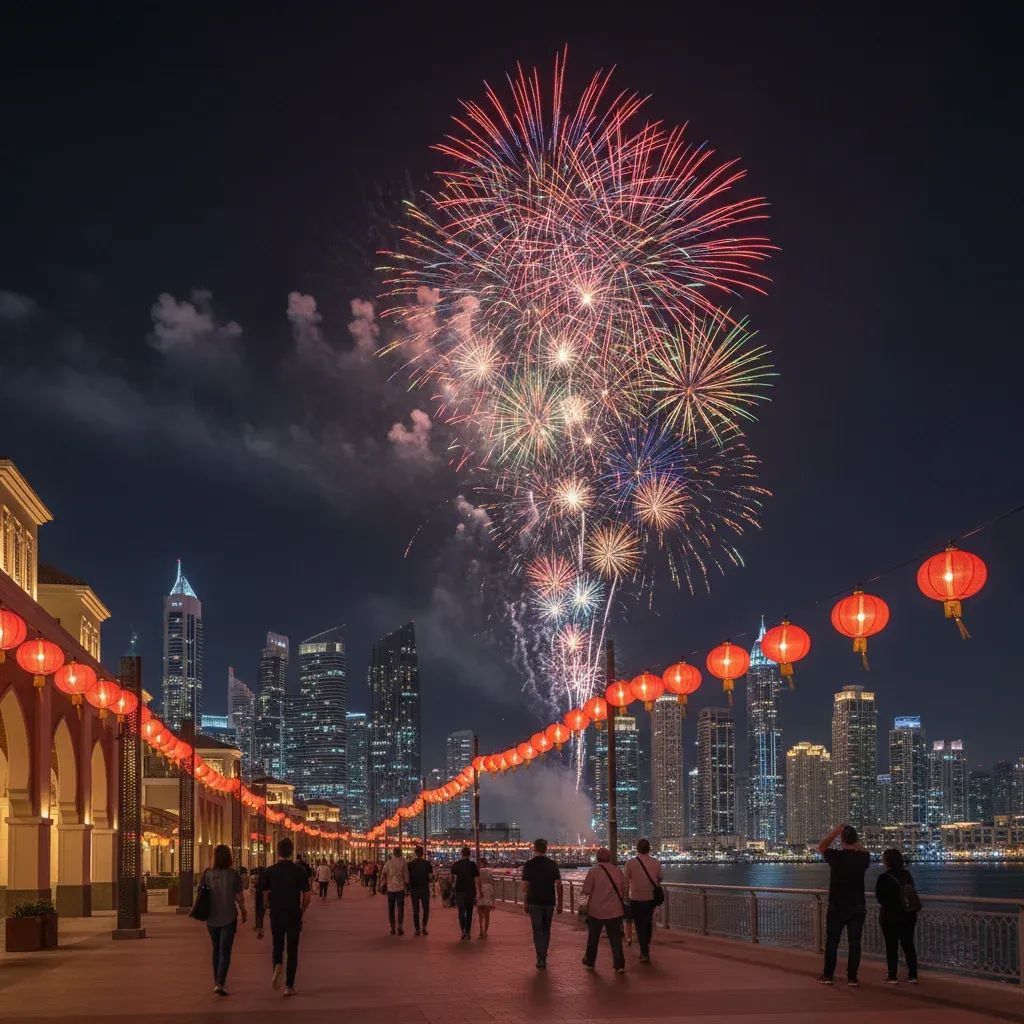
The United Arab Emirates Ministry of Culture and Youth has thrown its weight behind an expanded calendar of Spring Festival activities, a move that places the UAE at the centre of the first Lunar New Year season since the holiday was inscribed on UNESCO’s intangible-heritage list—an upgrade that is already luring tourists, bookings and brand collaborations to the Emirates.
Why This Matters
• New public-holiday traffic: Chinese New Year falls on 17 February; expect the busiest travel window from 8–25 February, with flight searches from mainland China to Dubai already up 42 % year-on-year.
• Limited-time offers: More than 50 hotels and restaurants have filed promotional rates with the Dubai Economy & Tourism Department (DET)—some capped at 10 days—so early reservations are essential.
• Business licences: The United Arab Emirates Ministry of Economy is fast-tracking mainland companies in retail, F&B and entertainment that open before 1 March, trimming approval from 15 to 5 working days.
• Traffic diversions: Downtown Dubai and Expo City will face evening road closures during the 8 February parade and 17–19 February fireworks; commuters should plan alternative routes.
From Family Reunion to UNESCO Asset
The Spring Festival—often called Chinese New Year—celebrates family reunion, renewal and hope. When UNESCO added the festival to its global heritage list in 2024, it effectively elevated a home-grown tradition into a shared human treasure. Cultural-policy advisers inside the UAE say the upgrade dovetails with the federation’s push to showcase intangible heritage, from Emirati coffee ceremonies to falconry. “UNESCO status turns a private party into a public resource,” notes Dr. Aisha Al-Suwaidi, a heritage-management scholar at Zayed University. For the UAE, that means new programming budgets, fresh visitor segments and stronger negotiating power with Chinese cultural agencies.
A New-Look Lunar Calendar Across the Emirates
• Expo City Dubai, 8 February: The "Warm Spring, Happy New Year" grand parade premieres with real Arabian and Mongolian horses, Ming-era tea rituals and a Song-dynasty wedding reenactment under the Wasl Dome. A 6-minute drone and fireworks show closes the night.
• Global Village, 8 February – May: Lantern streets, nightly lion dances and a “Fire Horse” installation introduce the zodiac animal shared by Chinese and Arab folklore for nobility and strength.
• Abu Dhabi dining circuit, 16 February – 3 March: Curated menus at Shang Palace, Li Jiang and Hakkasan pair dim sum with Arabic-Andalusian music, reflecting cross-civilisational fusion.
• Sharjah Heritage Days, 4–15 February: A dedicated Chinese pavilion offers paper-cutting workshops that weave Islamic geometric designs into traditional motifs.
• Live broadcasts: Dubai International Airport’s Terminal 3 will again screen the China Media Group Gala on 24 high-definition displays—last year those screens became one of the most-posted selfie spots in the terminal.
Tourism, Retail and the Dirham Effect
The United Arab Emirates Federal Competitiveness and Statistics Centre projects that Lunar-linked arrivals from China could hit 120,000 this quarter—triple the 2025 figure but still just half of pre-pandemic volumes. DET data show that Chinese visitors spend ≈ AED1,560 per day, 35 % above the market average, with luxury retail and fine dining the biggest beneficiaries. Mall operators from Nakheel to Al Futtaim are rolling out extended hours, red-packet giveaways and themed pop-ups to capture the spike.
Soft-Power Diplomacy in Action
Officials at the United Arab Emirates Ministry of Foreign Affairs describe the festival as a “ready-made soft-power platform.” Joint performances—such as the erhu-oud duet at the 12th Dubai Spring Festival Gala—symbolise the two countries’ Belt-and-Road alignment without the need for formal treaties. Since 2025, the UAE has hosted over 40 bilateral cultural events, and Mandarin programmes at UAE universities have reported a 22 % enrolment jump.
What This Means for Residents & Businesses
Hospitality gains: Short-term rental owners in Dubai Marina and Downtown are reporting Lunar-week rates up to 60 % higher than January averages; listing early can maximise occupancy.
SME opportunities: The Dubai Chamber of Commerce is matching local suppliers with Chinese e-commerce giants; registration closes 29 February.
Cultural outings for families: Free workshops in paper-cutting, calligraphy and dumpling-making are scheduled at Sharjah Light Village and Abu Dhabi’s Cultural Foundation—an easy way to entertain children during school half-term.
Traffic & mobility: Expect heavier Metro crowds to Expo 2020 and Global Village in the evenings; the Roads & Transport Authority is adding 35 extra buses on Festival days.
Tips to Join the Festivities Safely
• Purchase Global Village tickets online to avoid on-site queues that can stretch 40 minutes.
• Carry a small power bank; parade nights at Expo City last up to 6 hours and charging stations fill quickly.
• For fireworks photography, head to Festival Bay—detours at 9 pm often leave latecomers stranded behind security cordons.
• Vegans can pre-order plant-based dumplings at most hotel brunches, but 24-hour notice is essential.
Looking Ahead
Organisers plan to keep the momentum through Dragon Boat races on Dubai Creek in April and a Mid-Autumn cultural forum in September. If attendance continues its upward arc, insiders say the UAE could bid to host the World Chinese Entrepreneurs Convention in 2027, cementing the Emirates as the Gulf’s bridge to East Asia.
For now, the red lanterns are up, travel agents are busy and restaurant reservations are scarce—visible proof that a centuries-old Chinese celebration is fast becoming a fixture of the UAE’s own cultural calendar.


