
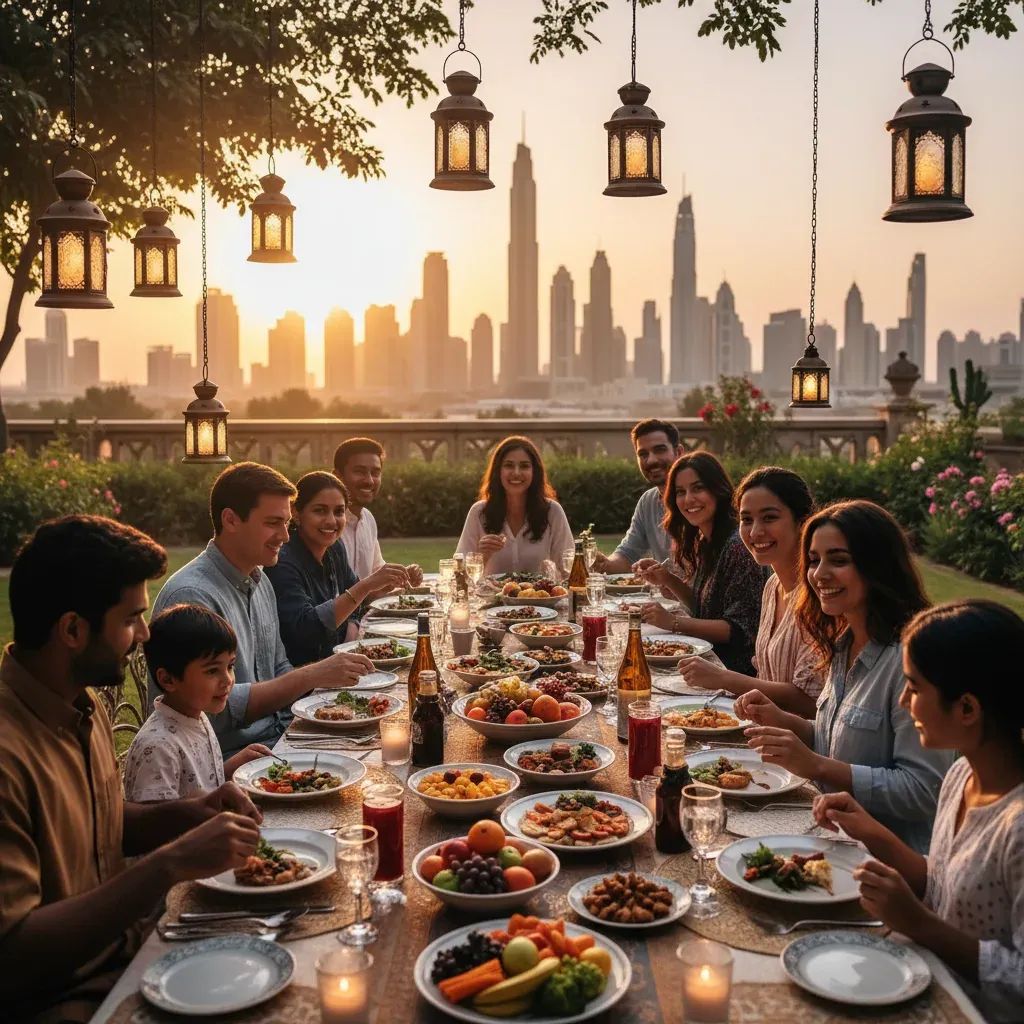
When fasters in the United Arab Emirates reach for dates at sunset on February 17, they will cross into a version of Ramadan that most living residents have never experienced — one shaped by gentler daylight, moderate temperatures, and the physics of a winter month that asks far less from the body than the summer cycles of recent decades.
Why This Shift Matters for UAE Residents
• Fasting windows compress to roughly 11–11.5 hours, compared to 13+ hours during summer observances, eliminating the dehydration and heat stress that have shadowed recent decades
• Ramadan last aligned with February in 1995, a fact that divides generational memory — those who remember the pre-smartphone, pre-mall nation from those who only know the modern metropolis
• Cooler evenings (16–24°C) transform community gatherings from endurance tests into genuine social pleasure, with evening markets and family time unfolding in actual comfort rather than survival mode
The holy month arrives this year as an accident of calendar mathematics with unexpected consequences. The lunar year drifts backward through the solar calendar by roughly 11 days annually, meaning Ramadan circles through all seasons across a 33-year cycle. For residents under 35, February 2026 represents their first winter Ramadan — a month whose physical and emotional texture differs profoundly from the compressed summers they have always known.
Consider the practical shift: Dubai's sunrise on February 18 occurs around 6:54 AM, with sunset at 6:15 PM — producing a fasting window of approximately 11 hours and 21 minutes. By month's end, sunrise edges to 6:45 AM and sunset to 6:21 PM, stretching the fast to just 11 hours and 35 minutes. Compare this to June, when the city experiences 13 hours and 44 minutes of daylight, with afternoon temperatures routinely exceeding 40°C.
A Landscape Transformed Since 1995
The last winter Ramadan unfolded in a United Arab Emirates that residents today would barely recognize. The nation's economy has grown from $65.74 billion in 1995 to over $514 billion today. Population figures tell the story more vividly: from 2.4 million residents in 1995 to nearly 9.8 million by 2019, with over 200 nationalities now calling the Emirates home.
This demographic explosion fundamentally altered what Ramadan looks like. Where the Deira Fish Souq once served neighborhood residents, today's Ramadan markets at Expo City Dubai and Saadiyat Island now accommodate tens of thousands. But this scale brings efficiency alongside loss of intimacy — the neighborhood vegetable vendor replaced by professional markets, yet accessible to everyone regardless of connection or location.
Information Now Arrives Before People Do
In 1995, moon sighting ceremonies were announced through television broadcasts and radio bulletins, sometimes confirmed only in the following morning's newspaper. Families gathered around a single screen. Uncertainty was part of the ritual.
Today, the UAE Moon Sighting Committee deploys AI-enhanced imaging systems and drone technology to detect the crescent with scientific precision. Results disseminate through push notifications and prayer apps within seconds. There is no waiting — only immediate confirmation that arrives before most people have checked their phones.
This reflects deeper changes in how religious knowledge circulates. Literacy rates climbed from 48% in 1970 to over 95% by 2019. Quranic recitations stream on YouTube. Religious lectures arrive through Instagram. Young Emiratis learn Islamic scholarship not from mosque attendance or neighborhood elders but from algorithms curating content. The infrastructure of religious instruction has decentralized and accelerated simultaneously.
Markets Have Become Festival Complexes
Historically, families visited local souqs to purchase fresh produce, meat, and imported drinks like Vimto, the syrupy staple of Gulf iftars. These were modest affairs defined by personal relationships and neighborhood attachment.
Today's Ramadan markets operate at different scale: Layali Ramadan on Saadiyat Island features lantern-lit pathways and live Al Ayyala performances. Global Village extends programming through February's cooler weather. Moonlight Market at Uptown Dubai offers modern design and international cuisine. These venues preserve the communal ethos of traditional souqs while accommodating a multicultural nation of 9.8 million residents and international visitors. Non-Muslims participate freely, transforming Ramadan markets into spaces where cultural identity and contemporary urban life intersect.
Traditions That Endure
The Iftar cannon (Midfa Al Iftar), established in Sharjah during the 1930s, still fires each evening across neighborhoods. Its report remains the emotional marker of iftar for many residents, despite precise timings available through smartphones. The cannon represents continuity — a tether to history in a nation obsessed with the future.
Taraweeh prayers pack mosques across all seven emirates. In recent years, leading mosques have invited prominent international Islamic scholars to deliver lectures after Taraweeh, expanding spiritual experience into intellectual engagement. These sessions stream live, reaching global audiences while maintaining communal worship.
Haq Al-Layla (or Qarqe'an), celebrated on the 15th night of Sha'aban, remains deeply embedded in Emirati childhood. Children visit neighbors' homes in traditional dress, singing and collecting sweets. This ritual survives through simplicity and direct cultural transmission from parents to children.
The mesaharaty — the drummer who historically woke residents for suhoor — has essentially disappeared, replaced by alarm clocks. But the principle of communal care persists: mosques broadcast the call to prayer; neighbors check on elderly residents; community organizations coordinate group suhoor meals.
Practical Changes for Daily Life in the Emirates
The shift to winter fasting carries immediate consequences for residents. The UAE Ministry of Human Resources and Emiratisation mandates reduced working hours — typically six hours in the public sector and five in the private sector. Combined with moderate temperatures, the month becomes genuinely conducive to rest, prayer, and reflection rather than an endurance test.
Employees managing outdoor work experience measurable relief when fasting no longer competes with 40°C afternoons. School calendars adjust to support family time. Non-Muslim employees are encouraged to refrain from eating, drinking, or smoking in public during daylight hours, creating shared rhythm across the workforce despite the non-Muslim majority.
Evening activities flourish under cooler conditions. Iftar gatherings move outdoors without summer heat's physical toll. Families venture to markets and festival spaces. Young children, many encountering winter Ramadan for the first time, gain exposure to spiritual discipline under conditions far less punitive than summer observance.
Digital Infrastructure Embedded in Ramadan
Ramadan arrives surrounded by technological systems reshaping how residents observe the month. Prayer timing apps provide precise schedules for all five daily prayers. Quranic recitation trackers allow users to log daily reading and share progress. Zakat calculators determine charitable obligations based on personal wealth. These tools have become essential alongside traditional items like dates and water.
Grocery delivery platforms specialize during Ramadan, offering pre-assembled bundles of traditional items — dates, laban, rice, lentils — timed to arrive before sunset. Restaurant reservation systems curate iftar menus and enable pre-ordering. Charitable giving platforms affiliated with the UAE Red Crescent allow zakat contributions to be tracked digitally, increasing transparency and participation among residents who struggle with logistics.
The crescent moon itself has been partially digitized. The UAE Moon Sighting Committee deploys sophisticated imaging systems for scientific precision. Announcements disseminate instantaneously through push notifications and prayer apps — clarity and universal accessibility replacing the romantic uncertainty of moon-gazing.
The Reconfiguration of Ramadan in a Diverse Nation
Ramadan's transformation reflects the UAE's evolution from a smaller, cohesive society to a hyper-connected, globally integrated metropolis. In 1995, observance concentrated among nationals and long-term Arab residents; the community was culturally homogeneous and connected through family ties. Moon sightings were communal events. Preparation was labor-intensive.
By 2026, Ramadan unfolds in a nation where over 80% of the population are expatriates. Non-Muslims participate in cultural events and Ramadan-themed entertainment. Restaurants serve iftar menus influenced by Filipino, Pakistani, Lebanese, and Indian cuisines. Mosques welcome international scholars. Markets cater to tourists and residents alike.
The spiritual core — fasting, prayer, charity, reflection — remains unchanged. But the social and commercial texture has fundamentally altered, shaped by technology, migration, urbanization, and economic dynamism. The holy month now accommodates multiple expressions of faith simultaneously.
What Winter Ramadan Offers Residents
For those willing to engage thoughtfully, February 2026 offers conditions that approximate how the month was originally practiced. Temperatures remain pleasant. Fasting hours compress to manageable windows. Evening hours expand into genuine time rather than hurried gaps between work and sleep.
Residents who remember summer Ramadans with 13-plus-hour fasts and 40°C afternoons can finally experience the month without the physical strain that has shadowed recent decades. For younger generations encountering winter Ramadan for the first time, the experience will feel grounded, spacious, and more manageable than the summer cycles they have always known.
The shorter fasts and cooler evenings create conditions under which both physical endurance and spiritual practice become more accessible. Major venues like Global Village, Saadiyat Island markets, and festival spaces across Dubai, Abu Dhabi, and other emirates will host extended Ramadan programming through February's favorable weather, providing residents practical options for both traditional and contemporary observance.


