
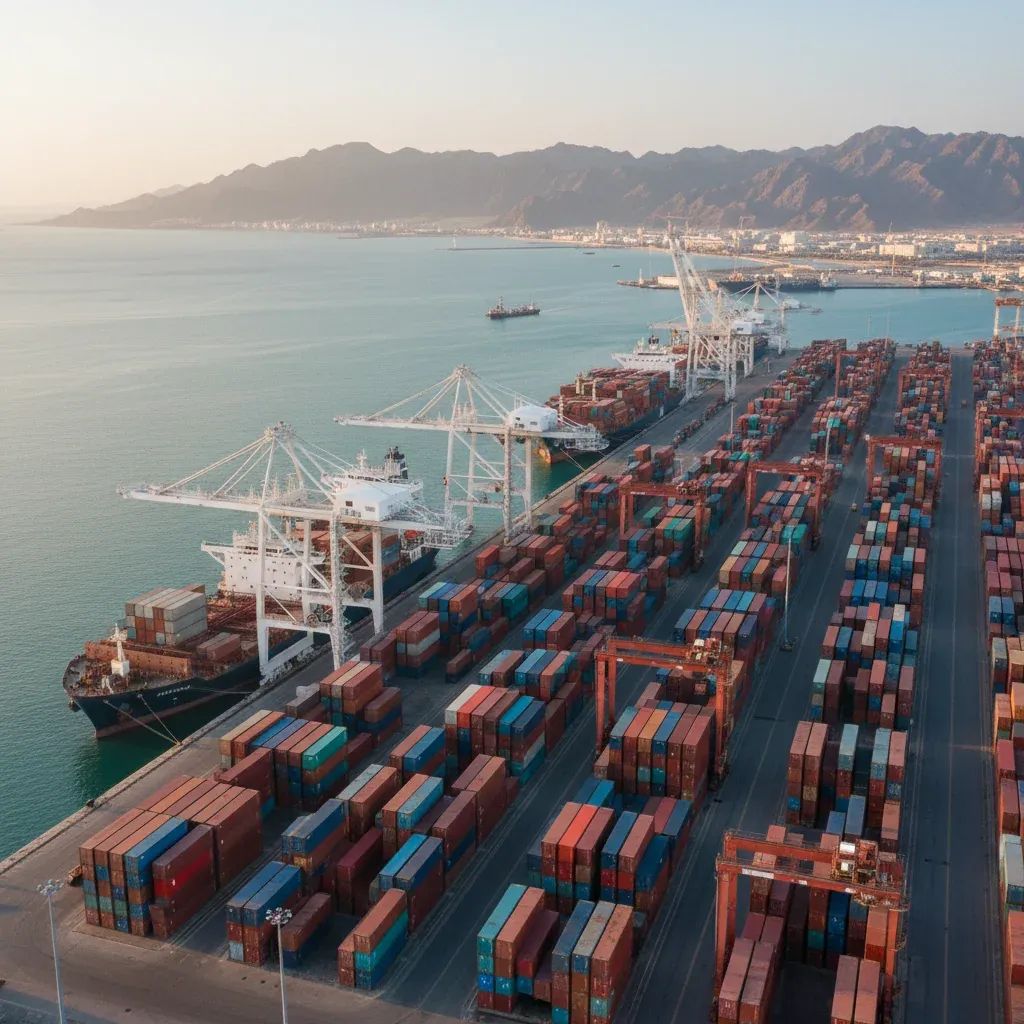
UAE residents face continued pressure on fuel and living costs as crude oil trades at $106 per barrel—up 78% year-on-year—despite Monday's modest decline following US plans to evacuate hundreds of ships stranded in the blockaded Strait of Hormuz.
The Strait of Hormuz has been effectively closed since late February 2026, when Iran retaliated against US-Israeli military operations by blockading the waterway that normally carries 20% of global oil exports. This disruption has trapped approximately 850 vessels and their crews, while supply constraints continue to drive inflationary pressures across the region.
Why This Matters
• Brent crude fell $1.83 to $106.34 per barrel as markets reacted to the prospect of easing the blockade—though the strait remains largely shut.
• The United Arab Emirates relies on Fujairah exports to bypass the strait, but regional instability threatens broader economic security.
• Over 20,000 seafarers remain trapped aboard some 850 vessels, creating a mounting humanitarian crisis.
• Energy prices remain 78% higher year-on-year, keeping inflationary pressures elevated across the Gulf.
Operation Project Freedom: High-Stakes Rescue or Escalation Risk?
Former US President Donald Trump unveiled "Project Freedom" over the weekend, describing the initiative as a humanitarian gesture to guide commercial ships—and their crews—safely out of Iranian-controlled waters. The operation, set to deploy 15,000 US service members, guided-missile destroyers, and over 100 aircraft, began rolling out today with the explicit goal of restoring passage through a waterway that normally handles 20% of global oil and liquefied natural gas exports.
US Treasury Secretary Scott Bessent signaled confidence that oil prices would fall further by year-end, betting that the release of the trapped crude—and the restoration of shipping lanes—would ease the largest supply disruption in oil market history. The International Energy Agency has logged a staggering 10.1 million barrels per day knocked offline in March alone, with roughly 850 million barrels of supply lost over the first two months of the conflict.
What This Means for Residents and Businesses in the UAE
For expatriates, investors, and businesses operating in the United Arab Emirates, today's modest price decline offers little immediate relief. Brent crude at $106 per barrel—and West Texas Intermediate at $100.22—remain well above historical norms, translating into higher fuel costs, elevated shipping expenses, and persistent upward pressure on consumer prices for imported goods.
The UAE has partially insulated itself through strategic infrastructure investments. The Habshan-Fujairah pipeline, which bypasses the Strait entirely by routing crude to the Gulf of Oman, is now operating near maximum export capacity of roughly 1.8 million barrels per day. Since February, Fujairah exports have surged by 600,000 barrels daily, absorbing some of the regional shortfall. Yet even combined with Saudi Arabia's East-West Petroline, these alternative routes can only divert around 4 million barrels per day—a fraction of the 14 million barrels currently offline.
That gap explains why inflation risks remain acute across the Gulf. The International Monetary Fund estimates that every 10% rise in oil prices lifts global inflation by 40 basis points while cutting economic output by up to 0.2%. For UAE residents, that means continued pressure on rent, groceries, and transport costs, even as the government works to maintain currency stability and ease supply chain bottlenecks.
Iran's Blockade: Leverage, Negotiation, and Regional Calculus
Tehran has framed the closure as a legitimate response to what it terms an illegal war, and Iranian officials have explicitly warned that any US military interference in the strait would violate the ceasefire. Iran's leadership has dismissed Trump's initiative as "delusional," insisting the waterway will not be managed by Washington.
Behind the rhetoric lies a calculated negotiating strategy. Iran has tabled a 14-point peace plan that includes demands for sanctions relief, reopening of Iranian ports, and a new multilateral framework to govern Strait of Hormuz transit. By controlling access to the strait, Tehran is betting it can extract concessions that elude it on the battlefield.
The United Arab Emirates and Saudi Arabia, both of which have invested billions in pipeline infrastructure precisely to reduce dependence on the Strait, are now navigating a delicate balance. Both nations have condemned Iran's actions and reaffirmed support for freedom of navigation, but neither wants to be dragged into a broader regional war. The UAE's geographic proximity and its role as a global logistics hub make it especially vulnerable to any escalation.
Market Dynamics: Why Prices Fell—and Why They May Not Stay Low
Monday's 1.69% decline in both Brent and WTI reflects a shift in sentiment rather than a fundamental change in supply. Traders are pricing in the possibility that Project Freedom succeeds in reopening the strait, or at least that a negotiated resolution emerges before the end of May.
Yet the operation itself carries significant escalation risk. The deployment of 15,000 troops and a naval strike group into contested waters could trigger clashes with Iranian fast-attack boats, coastal missile batteries, or naval mines. Any such incident would likely send prices sharply higher—potentially breaching $150 per barrel, a threshold analysts warn could trigger global recession and food emergencies affecting millions.
Even in a best-case scenario where vessels begin moving safely, the normalization of crude flows would take months. Upstream production has been shut in, refineries have cut runs by 6 million barrels per day, and infrastructure damage from the conflict will require extensive repairs. The International Energy Agency projects Brent could touch $130 if disruptions persist, while the US Energy Information Administration forecasts prices easing below $90 only if a durable ceasefire takes hold by late 2026.
Practical Impact: What to Expect in the Coming Months
Timeline for Price Relief: The IEA and US Energy Information Administration project that elevated oil prices will persist through 2026 unless a ceasefire is finalized soon. Residents should expect fuel prices to remain elevated for at least the next two to three months, with potential for sharper spikes if tensions escalate.
Which Household Expenses Will Rise Most: The impact will be felt most acutely in transportation costs, food prices (due to elevated shipping expenses), and housing utilities. Imported goods, particularly from Europe and Asia, will see price increases of 5-10% as shipping premiums remain high.
Government Support: Monitor official announcements from UAE authorities regarding fuel subsidies or relief measures for residents facing acute cost pressures. Historically, the government has implemented targeted support during severe supply disruptions.
Humanitarian Crisis at Sea: 20,000 Seafarers in Limbo
Beyond market volatility, the humanitarian dimension of the crisis is worsening by the day. Approximately 20,000 seafarers from dozens of countries remain aboard vessels trapped in the Gulf, facing missile threats, isolation, exhaustion, and dwindling provisions. Reports from early May describe tankers struck by unknown projectiles and bulk carriers attacked by swarms of small craft.
Trump's decision to launch Project Freedom was reportedly driven in part by direct appeals from governments whose citizens and cargo remain stranded. The operation's diplomatic arm, the Maritime Freedom Construct, has been approved by US Secretary of State Marco Rubio and aims to build an international coalition involving France, Germany, Italy, Japan, the Netherlands, and the United Kingdom—all of which have condemned Iran's blockade and pledged support for restoring passage.
The United Arab Emirates, home to a large expatriate population from South Asia, the Philippines, and Eastern Europe, has a direct stake in the safe return of these mariners. Many UAE-based shipping firms and logistics companies have vessels caught in the blockade, and the prolonged disruption is eroding confidence in the Gulf's reliability as a trade corridor.
What Residents Should Monitor
As this situation evolves, keep watch on these key indicators:
• Oil price movements above $120 or below $95 per barrel
• Official announcements from UAE authorities on relief measures or subsidy adjustments
• Diplomatic developments signaling progress toward a ceasefire agreement
• Shipping cost indices reflecting changes in freight premiums for imported goods
The Road Ahead: Volatility, Diplomacy, and Infrastructure Bets
For now, oil markets remain in a state of nervous equilibrium. Prices are high enough to sustain budget revenues for Gulf producers, yet not so elevated as to crush global demand or trigger panic buying. The UAE's strategic investments in bypass infrastructure are proving their worth, but the country's broader economic health depends on regional stability and the free flow of goods, people, and capital.
The coming weeks will test whether Operation Project Freedom can succeed without sparking a wider conflict, and whether diplomatic efforts can produce a negotiated framework that satisfies both US demands for open navigation and Iranian insistence on sanctions relief and sovereignty. Until then, residents and businesses in the United Arab Emirates should brace for continued volatility in energy costs, supply chain friction, and the ever-present risk that today's modest price decline could reverse sharply if tensions flare anew. By understanding the timeline, impact areas, and key indicators to watch, expat residents can better plan their household budgets and financial decisions during this uncertain period.


