
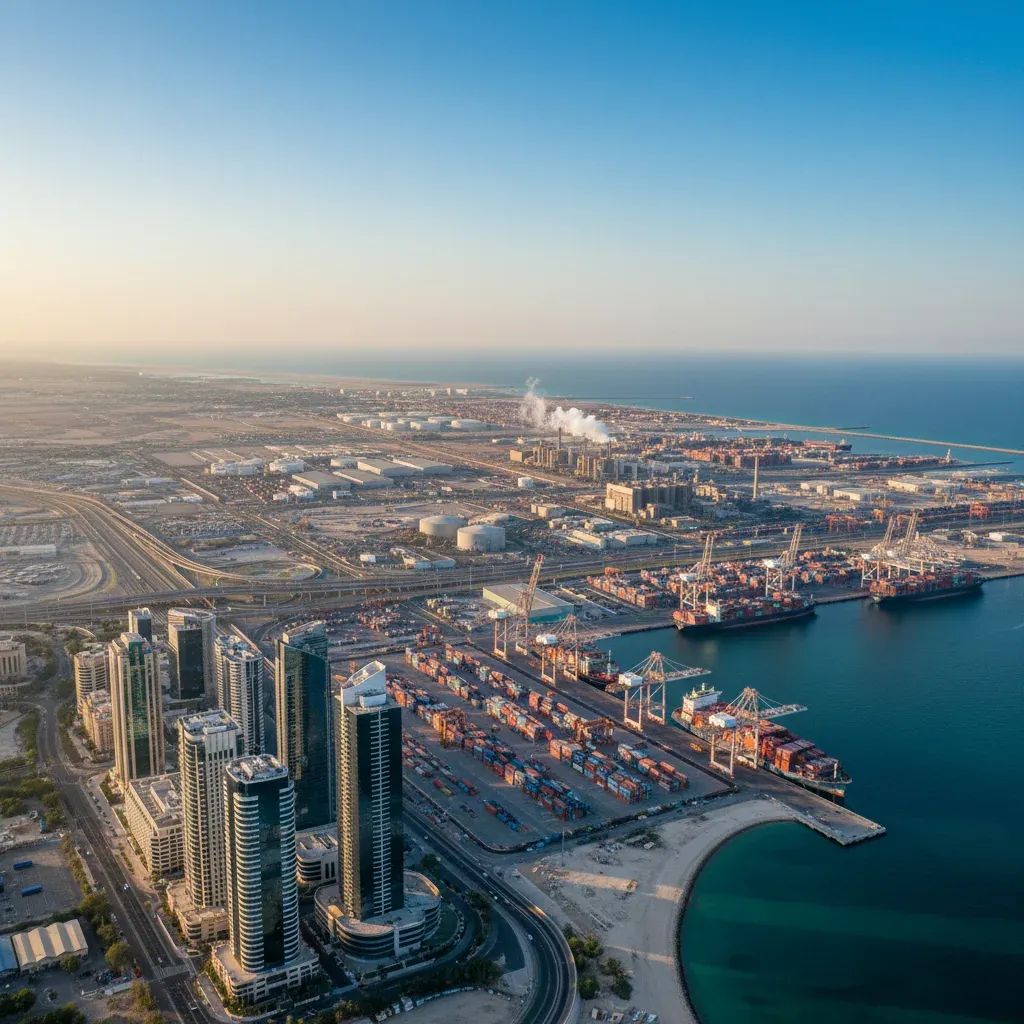
Kuwait's airport fuel infrastructure was struck by drones on Saturday evening, igniting a major fire with all personnel reported safe. The incident has immediate, serious consequences for anyone traveling through Gulf airspace: critical aviation infrastructure is now under attack, and disruptions are cascading across the region.
How This Affects Air Travel From the UAE
For residents and travelers in the United Arab Emirates, the impact is already clear and urgent. Kuwait's airspace remains closed indefinitely following the strike. Airlines operating through the region are canceling 50+ flights daily, including carriers serving UAE residents.
Kuwait Airways has grounded its fleet and is routing passengers through alternative hubs. Qatar Airways, Egypt Air, Saudia, IndiGo, and FlyDubai have systematically canceled hundreds of flights in recent days. The closure of Kuwaiti airspace forces aircraft to reroute through already-congested corridors in Dubai, Doha, and Manama, extending connection times unpredictably.
Fuel supply constraints are tightening across the region as Kuwait National Oil Company reduces production following the strike. Jet fuel availability is expected to remain constrained, potentially driving ticket prices upward in coming weeks.
Immediate Steps for Travelers
Check your flight status daily. Do not assume your schedule will remain intact. Build in a 48-hour buffer window before departure to accommodate rerouting and last-minute changes.
If your journey involves Kuwait, Bahrain, Qatar, or northern UAE airspace, expect your routing to change multiple times. Airlines are honoring fee-free rescheduling policies; contact your carrier immediately to confirm their specific rebooking process.
Verify your travel insurance covers conflict-related disruptions. Standard policies often exclude coverage for regional instability or drone-related flight cancellations. Policies purchased after late February may contain explicit exclusions. Review your documents immediately to identify coverage gaps before they become costly.
Pack flexibility into your itinerary. Assume connections will be longer, cancellations will occur, and schedule reliability will remain compromised through at least April.
Saturday's Strike: What We Know
Just after nightfall on March 8, drone strikes targeted Kuwait's aviation fuel infrastructure operated by Kuwait Aviation Fueling Company, the nation's sole supplier of jet fuel to its international airport. One facility caught fire; preliminary reports confirm material damage across installations. Kuwait's Public Authority for Civil Aviation confirmed no personnel were injured, though firefighting crews battled the blaze for hours.
This follows an earlier drone strike on February 28 that damaged Terminal 1 at Kuwait International Airport, injuring several workers and prompting authorities to seal commercial airspace. Two strikes in ten days on the same airport signals sustained targeting of aviation infrastructure.
Regional Context: A Wider Pattern
What happened in Kuwait is not isolated. Saudi Arabia, Qatar, and the UAE have reported fresh drone strikes in recent weeks. The targeting pattern spans civilian aviation, energy production, and telecommunications infrastructure—suggesting a coordinated strategy designed to stress entire economies.
In the United Arab Emirates, officials have reported interception of hostile drones and maintained active civil defense measures. Residents in some areas have experienced disrupted schedules at schools and offices as authorities implement precautionary protocols.
The broader regional tensions have created an unpredictable aviation environment. Defense systems across the Gulf are actively engaged in interception operations. Military officials report high interception rates, but even advanced systems cannot guarantee complete protection against sustained drone campaigns.
What This Means for Regional Stability
Repeated attacks on critical aviation and energy infrastructure place pressure on nations to deepen security cooperation. Governments across the region are maintaining active civil defense measures, with shelter-in-place protocols remaining in effect and critical infrastructure continuing to harden.
Until a significant diplomatic breakthrough or substantial reduction in hostilities occurs, the aviation environment will remain constrained and operationally unpredictable. Travelers should plan for extended timelines, frequent schedule changes, and limited schedule reliability through at least April.


