
The Qatar Emiri Air Force has downed two Iranian Su-24 fighter jets and intercepted multiple ballistic missiles and drones targeting the Gulf state, while Bahrain's Defence Force successfully engaged dozens of Iranian projectiles—marking the most serious direct military confrontation between Iran and its Gulf neighbors in decades.
The Trigger: Operation Roaring Lion and Epic Fury
The Iranian strikes came approximately two hours after a coordinated US-Israeli military operation codenamed Operation Roaring Lion (Israel) and Operation Epic Fury (United States) launched on February 28, 2026. The joint campaign targeted Iran's leadership structures, nuclear facilities, ballistic missile programs, and Islamic Revolutionary Guard Corps installations. The operation followed a breakdown in indirect nuclear negotiations mediated by Oman and a significant US military buildup in the Gulf over preceding weeks.
Iran's response was swift and geographically expansive, with missile and drone barrages targeting US military assets and host nations across the Gulf Cooperation Council. Tehran justified the strikes as legitimate defense against "American aggression launched from Arab soil."
The Aerial Defense Battle
Between February 28 and March 2, Qatar's Ministry of Defense reported intercepting ballistic missiles, drones, and cruise missiles, in addition to shooting down two Iranian Su-24 Fencer aircraft as they approached Qatari airspace. The Su-24s, Soviet-era strike jets still operated by Iran's air force, were engaged by Qatari fighter interceptors before they could penetrate the country's air defense perimeter.
Bahrain's National Communication Centre disclosed that the kingdom's integrated air and missile defense systems destroyed multiple ballistic missiles and drones, including Iranian Shahed-136 kamikaze drones, during the initial wave of attacks. Despite the high interception rate, falling debris and direct impacts caused fires at Salman Port, damaged the Aluminum Bahrain Company facility in Riffa, and struck multiple buildings along Exhibition Road and near the Crowne Plaza hotel in the capital.
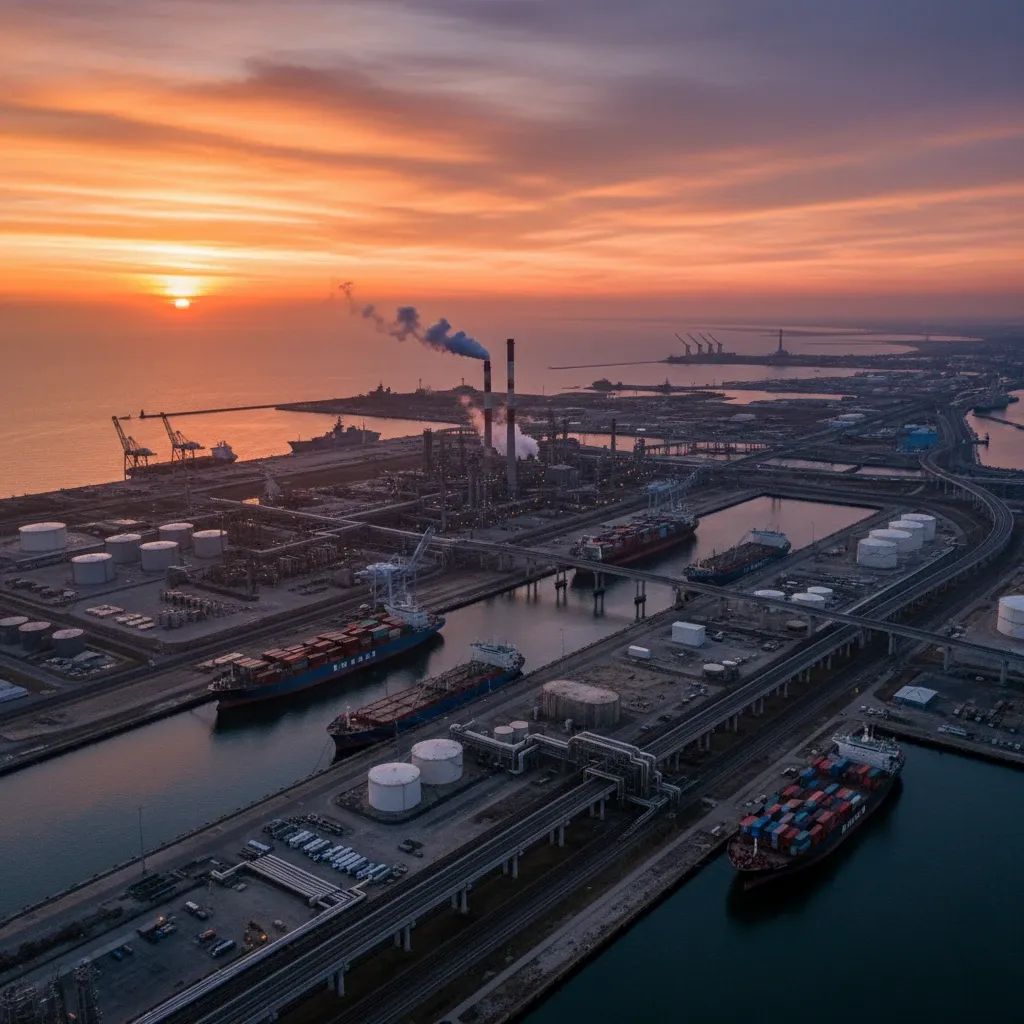
Iranian state-linked media confirmed that Al Udeid Air Base—the largest US military installation in the Middle East and home to forward-deployed air wings—was an intended target. Qatari authorities verified that multiple missiles aimed at the base were intercepted by Patriot and other advanced air defense batteries stationed around the facility. Nevertheless, some projectiles evaded defenses: an Iranian drone struck an energy facility in the Ras Laffan Industrial City, a petrochemical and LNG export hub northeast of Doha, while another hit the Mesaieed industrial zone south of the capital, prompting QatarEnergy to temporarily suspend production as a precautionary measure.
Why This Matters
• Energy market impacts: The temporary suspension of Qatari LNG production at Ras Laffan and Mesaieed could affect global energy markets. Qatar supplies roughly 30% of the world's LNG, and any prolonged disruption would ripple through supply chains.
• Civilian impact: At least one person died and two were injured in Bahrain when Iranian missile shrapnel struck Salman Port, while buildings in Manama sustained direct hits.
• Regional security: The US 5th Fleet headquarters in Manama and Al Udeid Air Base in Qatar—home to thousands of American personnel—were primary targets, raising stakes for expatriates and defense contractors living near these installations.
• Air travel disruptions: Airspace closures and defense alerts across the Gulf Cooperation Council states disrupted flights, with schools shuttered in Bahrain and public warnings issued to residents to shelter in place.
What This Means for Residents
For the estimated 300,000 expatriates and citizens living in Qatar and the roughly 1.5 million residents of Bahrain, the attacks represent a dramatic escalation in direct threat perception. Until now, the Gulf states have largely avoided direct military clashes with Iran despite decades of geopolitical rivalry.
Practical implications include:
• Shelter-in-place protocols: The US Embassy in Manama issued explicit warnings advising American nationals to monitor air raid sirens and follow local guidance. Similar precautions apply in Qatar if tensions escalate.
• Economic volatility: Global energy market disruptions could affect electricity tariffs and fuel prices across the Emirates and neighboring states, particularly if Qatari production delays extend beyond the precautionary suspension period.
• Travel disruptions: Airspace closures and heightened military activity have delayed commercial flights, with carriers rerouting around conflict zones. Residents planning regional travel should expect longer flight times and potential cancellations.
• Insurance considerations: Property insurers in Bahrain are assessing damage claims from falling missile debris. Residents near military installations should review their coverage for "acts of war" exclusions.
For residents and investors in the United Arab Emirates, the escalation underscores the vulnerability of critical infrastructure—ports, energy facilities, and financial hubs—to missile and drone strikes, even with advanced air defense systems in place. The Al Dhafra Air Base and other Emirati installations hosting US forces could theoretically face similar threats if regional tensions continue to escalate.
Regional and International Response
The Gulf Cooperation Council Ministerial Council convened an emergency session on March 1 and issued a unified statement in the "strongest terms of condemnation," describing Iran's actions as "unacceptable escalation." The joint communiqué, endorsed by Saudi Arabia, the UAE, Kuwait, Oman, Qatar, and Bahrain, affirmed the right of member states to "take all necessary measures to defend their security."
Qatar's Ministry of Foreign Affairs summoned the Iranian ambassador to Doha and delivered a formal protest note, labeling the strikes a "flagrant violation of national sovereignty" and a "threat to regional stability." Bahrain highlighted the "material and psychological damage" inflicted on his country, noting the closure of schools and displacement of families near impact sites.
The United Nations Security Council held an emergency session on February 28. UN Secretary-General António Guterres condemned the military escalation, warning that it "undermines international peace and security" and calling for an immediate ceasefire.
European powers—the United Kingdom, France, and Germany—issued a trilateral statement condemning Iran's counter-strikes and urging a return to diplomatic channels.
Next Steps and Continuing Uncertainty
As of March 3, no formal ceasefire or de-escalation agreement has been announced. The Bahraini government continues to assess damage and coordinate with international partners on defense reinforcements, while Qatar has kept its airspace under heightened alert and deployed additional Patriot batteries around critical infrastructure.
The incident has prompted increased demand for civil defense training and emergency preparedness among expatriate communities. Employers with large workforces near military zones are reviewing evacuation protocols, and several international schools have introduced emergency drills.
Whether the current clashes represent a brief flare-up or the beginning of a sustained military confrontation remains uncertain. What is clear is that the Gulf's security assumptions have shifted, forcing governments, businesses, and residents to recalibrate their understanding of regional risk.


