
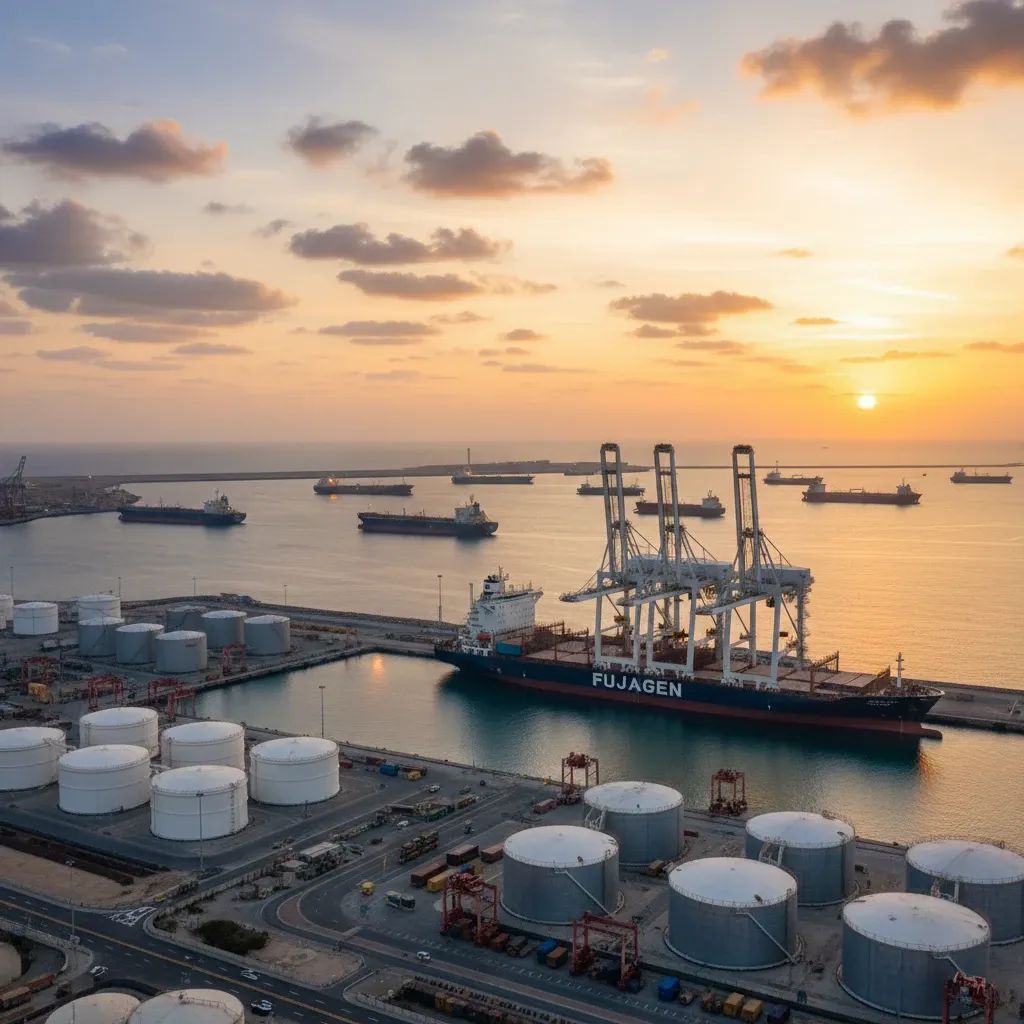
Fujairah's marine fuel throughput climbed sharply to its strongest monthly performance since September 2024, with bunker sales totaling nearly 636,000 cubic meters in January. This rebound carries real significance: the surge indicates that vessels rerouted around the Cape of Good Hope to avoid Red Sea congestion continue to refuel strategically along the United Arab Emirates coastline, sustaining economic activity at a critical national energy gateway while simultaneously signaling that global shipping is managing supply chain disruptions without the systemic collapse many feared.
Why This Matters
• High-sulphur fuel sales jumped 14.7% month-on-month, reaching 186,245 cubic meters in January, driven by price compression that makes compliant HSFO economically superior to cleaner alternatives for vessels equipped with scrubber technology.
• Low-sulphur fuel sales increased 1.8% to 407,459 cubic meters, representing the bulk of fuel sales in the port.
• Competitive positioning remains strong: Fujairah remains the world's third-largest global bunkering hub, maintaining its strategic importance despite intense competition from other regional and international ports.
The Mechanics of January's Rebound
When the Port of Fujairah delivered 635,835 cubic meters of bunker fuel in January, the headline number reflected sustained maritime demand. The total represented a 6.1% climb from December and a 1.1% year-over-year improvement, suggesting that maritime demand entering 2026 proved marginally stronger than pessimistic forecasts had suggested.
The composition of that fuel mix carried strategic importance. High-sulphur marine fuel oil reached 186,245 cubic meters, representing a robust 14.7% monthly increase from December. The monthly acceleration defied the environmental narrative that shipping would gradually abandon dirtier fuels. Instead, what occurred was pure microeconomics: the price gap between HSFO and very-low-sulphur fuel oil (VLSFO) compressed dramatically, making HSFO rational for any vessel operator with scrubber equipment already installed.
Low-sulphur fuel sales increased to 407,459 cubic meters, up 1.8% month-over-month, revealing an industry balancing environmental compliance with economic pressures. This category encompasses VLSFO and marine gasoil across various grades.
Why the Price Spread Inverted the Fuel Economy
When clean fuel costs drop sharply while HSFO remains stable, operators face a calculation that overwhelms environmental preference: install a scrubber and capture significant savings per tonne, or accept higher per-unit costs for cleaner fuel. A medium-sized container vessel refueling with higher volumes of HSFO instead of VLSFO can realize substantial fuel expense savings—money that flows directly to operational margins in a sector where voyage margins often sit below 10%.
Fujairah's bunkering market composition shifted noticeably toward HSFO during January, driven by price economics rather than regulatory changes. This reversal happened not because environmental standards relaxed, but because price realities rewrote operator incentives.
The Port's Environmental Safeguard
A critical nuance: Fujairah maintains strict environmental standards, restricting the use of certain emission-control systems that do not meet local requirements. This regulatory approach means vessels must employ compliance-approved scrubber technology to burn HSFO within Fujairah's territorial waters. The regulatory architecture creates a market advantage by attracting price-conscious operators whilst protecting regional marine ecology.
Competitive Positioning and Market Dynamics
The Port of Fujairah maintains its position as the world's third-largest global bunkering hub, reflecting its strategic location, advanced infrastructure, and competitive pricing. Competing ports, particularly Khor Fakkan further down the United Arab Emirates coastline, continue to offer competitive alternatives, but Fujairah's geographic and operational advantages sustain its market leadership.
Shipping operators who lack critical time pressure may shift refueling orders to nearby alternatives seeking price advantages, but the competitive dynamic persists: Fujairah holds geographic advantage and infrastructure superiority, positioning it for sustained market strength.
Geopolitical Demand Boost Remains Fragile
The Red Sea instability that erupted in late 2024 continues to reshape global shipping routes. Vessels transiting to or from Asian markets now detour around Africa's Cape of Good Hope rather than navigate the Suez Canal, adding 10-14 sailing days and approximately 20% additional fuel consumption per voyage. A Hong Kong-bound container ship that would normally refuel at Port Said before Suez transits now stops at Fujairah or nearby Omani ports instead. The extended voyage burns more fuel; the alternate routing diverts bunkering demand toward the United Arab Emirates.
This geopolitical tailwind is not permanent. If tensions in the Red Sea ease materially—a development that remains uncertain—shipping routes normalize, transit times shorten, and Fujairah's geographic advantage may diminish. Vessels could revert to Suez transits, and refueling stops in the Arabian Peninsula become discretionary rather than necessary. January's strength therefore contains an embedded vulnerability: demand is partly structural (seasonal maritime growth) and partly cyclical (geopolitical routing diversion).
If the Houthis and regional actors scale back attacks on shipping, or if international naval deployments deter further strikes, the 10-14 day route extension disappears, and Fujairah potentially loses a meaningful demand driver. This scenario is plausible within the next 12-18 months, making current high volumes subject to geopolitical variables.
Market Outlook and Competitive Dynamics
As the world's third-largest bunkering hub, the Port of Fujairah faces intensifying competition from other regional and international ports. Shipping lines under pricing pressure will pit Fujairah against Khor Fakkan, Singapore, and other global alternatives, demanding concessions on cost or service. Fujairah's edge—advanced infrastructure, regulatory reliability, and strategic positioning—justifies competitive positioning in the global market.
The competitive pressure is real. Shipping lines under pricing pressure will seek optimal pricing and service combinations across multiple hub options. Fujairah's strengths in infrastructure and location provide sustained advantages, though pricing discipline remains essential for market retention.
Alternative Fuels and the Long-Term Transition
For all the January momentum around HSFO, conventional marine diesel fuels will remain dominant through 2030. However, decarbonization regulations are accelerating globally, and their impact on Fujairah's future business model is significant.
The European Union's Emissions Trading System (EU ETS) expanded in January 2025 to cover maritime emissions for vessels trading in European waters. The FuelEU Maritime initiative mandates that shipowners document greenhouse gas intensity and incrementally transition to low-carbon fuels. These regulations create economic pressure to reduce carbon footprint, potentially favoring alternative fuels over conventional marine diesel.
Fujairah Port Authority is preparing infrastructure for this transition. The port's capacity and strategic development planning reflect genuine commitment to positioning Fujairah as a competitive bunkering node through the energy transition period.
For United Arab Emirates-based shipping operators and fuel traders, the implication is clear: operators who can source and distribute cleaner fuels position themselves ahead of regulatory requirements. Early infrastructure investment in alternative fuel capabilities positions ports and operators for competitive advantage as regulatory frameworks evolve.
Implications for Regional Stakeholders
For shipping companies operating United Arab Emirates-flagged vessels, the January figures present strategic considerations regarding fuel sourcing and vessel technology investments. Mid-sized vessels can justify investments in compliance technology when fuel cost differentials justify the expenditure.
For bunker traders and fuel distribution companies, inventory management and supplier relationships become operational priorities. Advance contracts with refiners and term agreements with vessel operators become essential tools for managing market volatility.
For port workers and ancillary services, sustained demand for bunkering infrastructure translates to continued utilization of specialized equipment and consistent employment patterns at the port.
Market Outlook for Mid-2026
The trajectory of Fujairah's bunker business over the next six months will depend on several key variables:
Red Sea stability: Continued regional tensions sustain geographic demand advantages. Meaningful improvement in security conditions could gradually reduce Fujairah's refueling necessity.
Fuel price dynamics: Changes in crude oil benchmarks or refinery economics can shift the economic calculus for vessel operators, tilting demand between fuel types.
Regulatory acceleration: International maritime organizations continue evaluating stricter decarbonization mandates that could influence fuel sourcing decisions.
For United Arab Emirates maritime professionals and investors, the takeaway is pragmatic: Fujairah's January recovery validates the port's structural advantages—geography, infrastructure, and regulatory environment. Competitive pressures remain, and long-term viability depends on maintaining operational excellence, competitive pricing strategies, and positioning for the energy transition. January demonstrated solid market fundamentals; sustaining that performance requires operational discipline and strategic adaptability in an evolving maritime landscape.


