
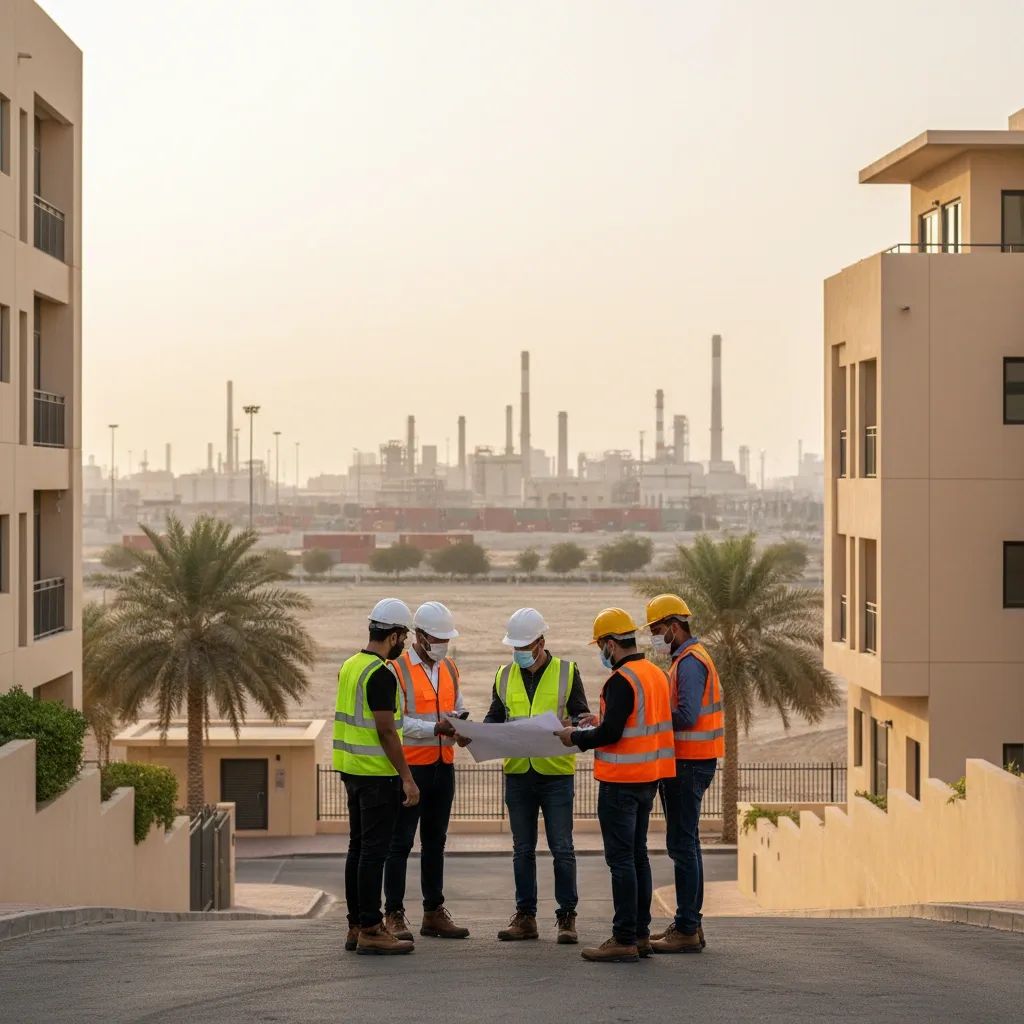
Twelve Workers Injured by Missile Defense Debris in Abu Dhabi's Ajban Area
On April 3, 2026, twelve workers sustained injuries after debris from intercepted missiles scattered across Abu Dhabi's Ajban neighborhood. Six Nepali nationals, five Indian nationals, and one worker of another nationality were struck by falling fragments following a successful air defense interception. One worker sustained serious injuries; the others suffered minor-to-moderate wounds. Emergency services responded immediately to secure the area and transport the injured to medical facilities.
The UAE Ministry of Defence confirmed that its air defense systems engaged multiple incoming threats, successfully intercepting them before they reached their targets. The interception generated fragments that descended across the residential and industrial zone, striking workers in the vicinity. Additionally, falling debris triggered a fire at the Habshan gas processing complex, forcing temporary operational suspension, though no injuries were reported at that facility.
The Incident Details
The April 3 event represents a direct consequence of the UAE's active air defense operations. When air defense systems intercept incoming projectiles at lower altitudes—particularly in urban and industrial zones—the resulting fragments inevitably descend to ground level. In densely populated areas where labor accommodations sit adjacent to strategic infrastructure, those fragments pose genuine hazards to civilians and workers.
The injured workers were receiving medical treatment following the incident. Authorities have not released detailed information regarding the extent of injuries beyond the confirmation that one worker sustained serious trauma while others experienced minor-to-moderate wounds.
Air Defense Operations and Public Safety
The UAE has maintained active air defense systems designed to protect critical infrastructure and population centers. These systems operate across multiple layers, with interceptions occurring at varying altitudes depending on threat characteristics and system capabilities.
For residents and workers in Abu Dhabi, Dubai, and areas near critical infrastructure, the National Emergency Crisis and Disaster Management Authority (NCEMA) and the Ministry of Interior provide location-specific emergency notifications when threats materialize. These alerts direct the public to seek shelter immediately in reinforced structures.
Key safety guidance includes:
• Interior rooms without external walls offer the best protection during incidents
• Avoid windows and balconies, as blast pressure and fragmentation can cause injuries
• Do not investigate fallen debris, which may retain heat or hazardous materials
• Report incidents to emergency services at 999 with location details when safe to do so
• Await official all-clear notifications before resuming outdoor activities
Demographic Concentration and Workplace Safety
Approximately 2.2 million workers from Nepal, India, Bangladesh, and Sri Lanka reside in the UAE, working primarily in construction, hospitality, logistics, and manual labor sectors. Labor accommodations often concentrate near industrial zones and port infrastructure—areas that may be subject to security threats. The April 3 incident's casualty demographics—primarily South Asian workers—reflects the geographic positioning of labor camps near strategic assets.
Multinational employers and the consulates of affected nations have urged workers to register with emergency services and verify insurance coverage. However, many standard employment insurance policies contain exclusions for conflict-related injuries, potentially leaving affected workers facing significant medical expenses.
Government Response and Official Guidance
The Abu Dhabi government has emphasized reliance on official information channels from NCEMA and the Ministry of Interior regarding emergency protocols and safety procedures. Employers across at-risk sectors have been encouraged to brief their workforces on proper response procedures during alert periods.
What Residents Need to Know
This incident underscores the importance of awareness regarding air defense operations in the region. While the UAE's defense systems successfully prevent incoming threats from reaching their intended targets, the secondary effect of falling debris in populated areas requires public vigilance and adherence to official safety protocols.
Residents and workers should:
• Register with local emergency services
• Maintain awareness of shelter locations at workplaces and residences
• Follow all NCEMA notifications and official guidance
• Report incidents to authorities promptly
• Verify insurance coverage for conflict-related injuries
The April 3 incident serves as a reminder that active air defense operations, while essential for protecting critical infrastructure and population centers, require coordinated public awareness and strict adherence to safety protocols to minimize civilian impact.


