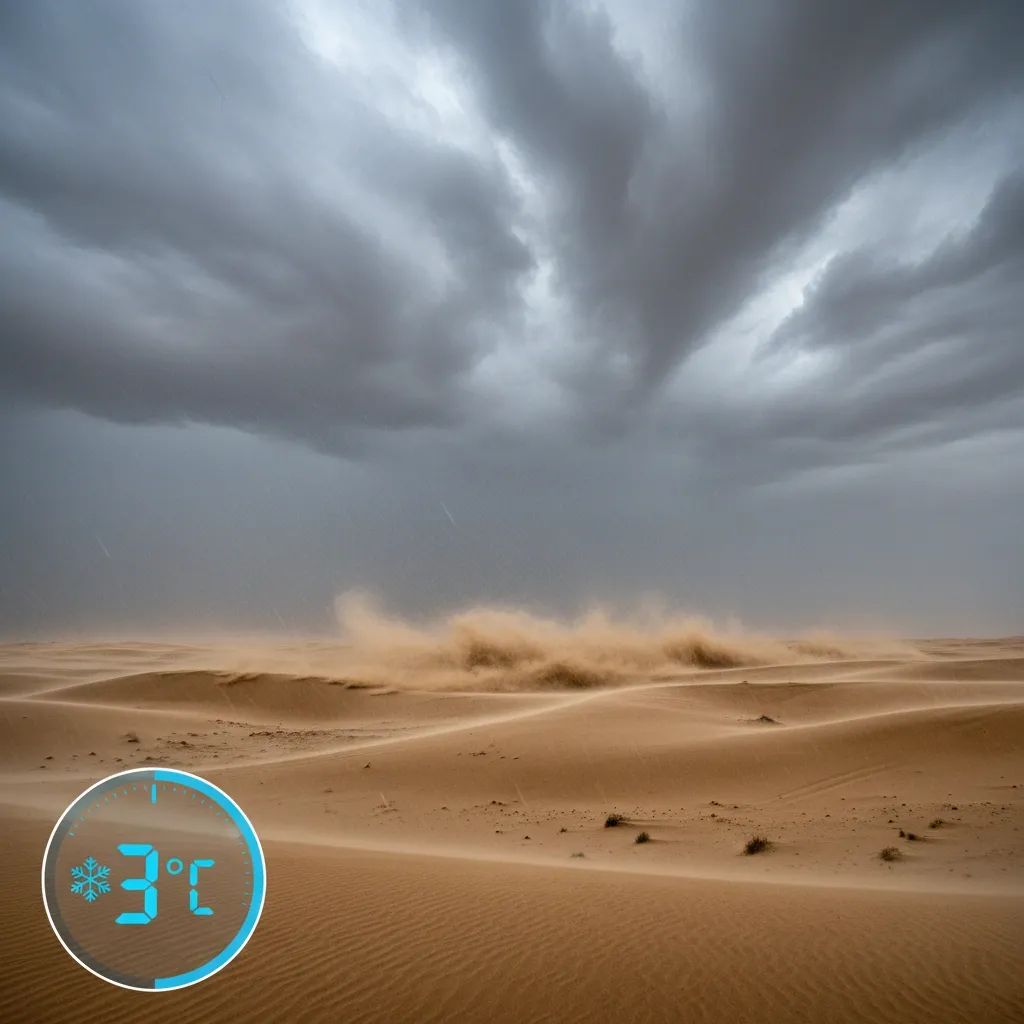
Residents across the United Arab Emirates are bracing for unsettled weather driven by strong winds that will reduce visibility sharply, even as temperatures slip into a more tolerable range along coastal districts. The UAE National Centre of Meteorology forecasts this period to persist through Thursday before stabilizing by Friday, creating a narrow window for travel and outdoor planning.
What to Expect:
• Visibility hazard: Northeasterly to northwesterly winds gusting to 40 km/h will reduce sight lines to below 2,000 meters on major routes
• Mountain rainfall threat: Fujairah and Ras Al Khaimah regions face moderate showers with wadi flash-flood risk through Thursday
• Air quality concerns: Dust particles will trigger respiratory irritation, particularly for vulnerable populations
• Sea state warning: Arabian Gulf will experience rough conditions; small craft remain advised to stay in port
Why This Week's Weather Pattern Occurs
April typically marks a seasonal transition period for the UAE, when moisture-laden air masses move westward across the peninsula, creating the dust storms and wind activity residents are experiencing this week. Understanding this pattern helps newer residents anticipate similar conditions during spring months. This particular system combines wind, dust, and moisture—a combination that disrupts daily routines but is manageable with proper preparation.
Temperature Easing Brings Partial Relief
After several days of heat climbing past 40°C inland, coastal maximums are expected to drop toward the low-to-mid 30s Celsius. Abu Dhabi residents, in particular, will notice overnight lows settling around 22–25°C rather than the sticky 28–30°C range that has dominated recent evenings. For outdoor workers, this brief reprieve means dawn hours will stretch longer and late afternoon breaks become genuinely refreshing.
However, cooler temperatures don't mean safer conditions. The wind and dust remain the dominant hazards, not the heat. Residents accustomed to reading weather primarily through temperature should refocus expectations this week: the story is wind, sand, and visibility—not heat intensity.
Driving Safely Through Dust: Essential Actions
Wind speeds will remain light to moderate across most of the country, but occasional gusts to 40 km/h—particularly on the Abu Dhabi–Al Ain corridor and the E11 approaching desert regions—create dangerous driving conditions. The Roads and Transport Authority has flagged these routes as particular concerns.
Immediate driving precautions:
• Activate low-beam headlights and fog lamps. High beams scatter light through suspended dust particles, paradoxically worsening visibility rather than improving it. Low beams help you see while signaling presence to oncoming traffic.
• Keep windows sealed to prevent sand infiltration into cabin air, which reduces comfort and increases filter maintenance.
• Double your following distance compared to normal practice. If visibility drops below 100 meters, exit immediately to a petrol station, rest area, or confirmed safe shoulder. Turn off all lights and wait.
• Leave 15–20 minutes earlier than usual on high-risk routes (Abu Dhabi–Al Ain, Dubai–Al Ain). If visibility ahead drops suddenly, do not accelerate into it; pull to a verified safe location and wait.
Rainfall in Mountains; Scattered Showers Elsewhere
The moisture-laden air mass driving from the west carries meaningful precipitation potential, particularly for elevated terrain. The Hajar Mountain range near Fujairah and Ras Al Khaimah is forecast to absorb moderate rainfall through Thursday, with localized downpours possible in wadis draining toward Khor Fakkan and the eastern coast.
Flash flooding becomes a genuine risk when mountain rainfall concentrates in narrow wadi beds. Drivers and hikers should avoid crossing wadi systems if water is visibly flowing and monitor NCM flood alerts in real time. Islands and coastal lowlands will see lighter, more sporadic showers—enough to dampen pavements briefly but insufficient to disrupt routine activity.
Air Quality: Health Impacts and Vulnerable Populations
The dust-laden atmosphere is degrading air quality significantly. Recent readings show dust concentrations at levels triggering health authority alerts. The practical impact: residents will experience throat irritation, difficulty breathing, wheezing, and chest tightness—particularly outdoors during late morning through mid-afternoon hours.
Who faces the greatest risk:
• Children under five and adults older than 65
• Anyone with asthma, cardiac conditions, or chronic lung disease
Health authority recommendations:
• Minimize outdoor exposure during peak dust hours
• Deploy N95 masks if departure is essential
• Keep rescue medications (inhalers, antihistamines) immediately accessible
• Run indoor air purifiers to reduce fine particulate infiltration through ventilation systems
Emergency departments across Dubai and Abu Dhabi typically see increased respiratory complaints during such episodes. By Friday, as winds weaken and cloud cover thins, air quality should improve steadily.
How to Stay Informed: Essential Resources
Residents should check real-time weather and air quality updates from multiple sources:
• UAE National Centre of Meteorology (NCM): Visit ncm.ae or download the NCM Mobile App (available on iOS and Android app stores) for hourly updates, air quality indices, and flood alerts
• Traffic and road conditions: Check RTA Dubai and Abu Dhabi Police social media accounts, or tune to 92.0 FM (Al Khaleejah Radio) or 104.8 FM (Radio 1) for live traffic updates
• Air quality alerts: The Air Quality Index (AQI) is updated every hour on the NCM website and app
• Emergency assistance: Call 998 (Emirates Health Services) for respiratory distress or medical emergencies; call 999 for traffic accidents
Maritime Operations: Western Gulf Turns Rough
The Arabian Gulf is forecast to develop slight to moderate wave heights through Thursday, with occasional rough conditions westward. The maritime advisory explicitly recommends that small craft remain in port during this window. Wave heights are sufficient to destabilize fishing dhows and leisure boats substantially.
The Sea of Oman, by contrast, will remain relatively calm throughout the unsettled period, offering a safer operational corridor for mariners based from Fujairah and Khor Fakkan. Commercial traffic through Dubai and Abu Dhabi ports will continue normally, though dust may introduce minor administrative delays if airport operations face temporary disruption.
Practical Action Items for Residents
If you have respiratory sensitivities or fall into a vulnerable health category: Verify your medication supply today—dust episodes routinely exhaust pharmacy stock on rescue inhalers and antihistamines. Check air quality indices three times daily using the NCM app or website. If you experience chest pain, severe shortness of breath, or uncontrolled wheezing, call 998 (Emirates Health Services) rather than attempting self-management.
If you operate small watercraft: Honor port advisories without exception. Weather forecasts can deteriorate without notice; seas that appear manageable at dawn may turn hazardous by midday.
If you have flexible outdoor plans: Postpone beach outings, desert drives, and extended outdoor recreation until Saturday, April 26. The weekend forecast calls for fair to partly cloudy skies, light winds, and markedly improved air quality—a comfortable window for leisure activity.
Normalcy Returns Friday; Weekend Presents Clear Window
By Friday, April 25, the unstable air mass shifts northeastward, clearing the peninsula. Wind speeds will drop to light or gentle levels, cloud cover will thin substantially, and the atmosphere will reset to its seasonal baseline: warm days (32–37°C), cool nights (22–27°C), and predominantly dry conditions. Saturday and Sunday should feel comfortably warm without oppressive intensity—a genuine sweet spot for outdoor activity before May heat intensifies.
Until Friday, however, the guidance remains clear: assume reduced visibility, respect maritime warnings, monitor air quality if you fall into a vulnerable health category, and prioritize caution over schedule adherence. This brand of mid-April weather is predictable in the United Arab Emirates; managing it successfully hinges on preparation, discipline, and willingness to wait rather than push through hazardous conditions.