
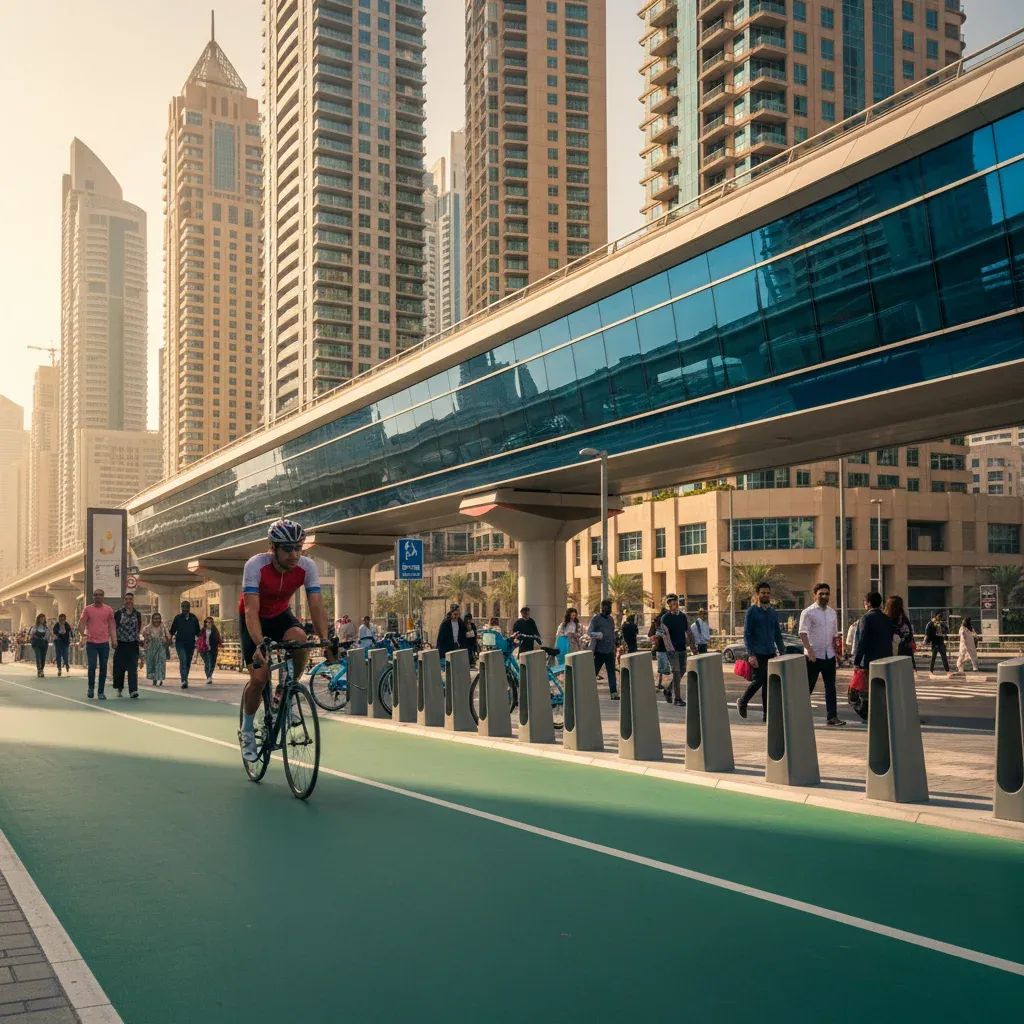
The United Arab Emirates' Roads and Transport Authority (RTA) and ride-hailing giant Careem have recorded 10 million cycling trips via the Careem Bike network since February 2020—a milestone that confirms Dubai's strategy to wean residents off private cars and towards two-wheeled, first-mile transit. The program has slashed an estimated 6,590 tonnes of CO₂ emissions, equivalent to removing more than 2,000 cars from circulation, while serving over 1 million registered users across the emirate.
Celebrate the Milestone: Grab AED 9.5 Rides April 11-12
To mark this achievement, new riders can unlock single trips for AED 9.5 (down from AED 19) using promo code BIKE10M on April 11-12. This limited-time offer is designed to convert casual riders into regulars, widening the pool beyond fitness enthusiasts to include price-conscious expats and workers who can link affordable bike docks to metro and tram stops. The RTA and Careem also awarded top-tier users, including one rider who logged close to 5,000 trips, complimentary annual subscriptions and vouchers.
Network Expansion Across Dubai
The Careem Bike network now covers 49 residential communities through 210 stations with 2,000+ bicycles, including Dubai Marina, JLT, The Greens, Downtown, and Al Karama. Infrastructure investment is accelerating: cycling track mileage jumped from 560 km in 2024 to 636 km in 2025, with an ambitious 162 km master plan underway to connect previously disconnected areas including Al Khawaneej 2, Al Barsha 2, Wadi Al Safa 5, and Al Safa 4. A dedicated 13.5 km e-scooter and bike corridor along Hessa Street is also in development.
What the Numbers Reveal About Commuter Behavior
Cycling trips across Dubai overall—combining Careem Bike with private and other bike-share rides—soared 23%, from 46.6 million in 2024 to 57.3 million in 2025, according to RTA Traffic and Roads Agency CEO Hussain Al Banna. This uptick aligns with a broader shift: a 2020 UAE-wide survey found 20% of new cyclists started during COVID-19 lockdowns, driven by gym closures and social-distancing concerns on buses and metro trains.
The expansion reflects growing demand for affordable, flexible commuting options. A monthly unlimited Careem Bike subscription remains markedly cheaper than a second car lease or daily taxi rides, making it an attractive alternative for office workers, hotel staff, and retail employees who converge in mixed-use zones served by the 210 stations.
Positioning Dubai as a Micro-Mobility Hub
Dubai's 10 million rides in six years demonstrate the emirate's commitment to sustainable transport. The RTA has also expanded Careem Bike regionally: the network operates in Medina, Saudi Arabia, where it recorded 1 million trips within 12 months of its late-2023 launch; during Ramadan 2025, Medina users clocked 80,000 journeys in a single month, a 29% spike over February.
This regional success underscores the model's viability in the Gulf. Dubai's debut on the global micro-mobility stage has attracted developer interest, with neighborhoods featuring direct cycle-track access to metro stations commanding rental premiums and adding sustainability credentials that appeal to multinational corporations. The RTA's target to lift "soft mobility" trips from 16% to 25% by 2040 signals that pedestrian-oriented, cycle-friendly districts will receive priority investment.
Infrastructure Solutions for UAE Heat
Outdoor cycling remains seasonal in the UAE; summer conditions can deter casual riders to dawn or evening hours. The RTA is addressing this by prioritizing shade-equipped tracks and 13 new pedestrian-and-cycling bridges over high-speed arteries such as Sheikh Mohammed bin Zayed Road and Sheikh Zayed Road, tackling safety concerns that have historically deterred families from two-wheeled commuting.
What's Next: Integration and Expansion
Future phases will integrate advanced monitoring into bike lanes to enhance user experience and safety. The RTA is also exploring measures to encourage soft-mobility adoption, positioning Careem Bike as an increasingly attractive option for short-distance commutes across Dubai's expanding transport network.
If the 636 km–to–1,000 km expansion trajectory holds, Dubai's bike-share experiment could offer a replicable model for Gulf peers balancing extreme heat, dispersed populations, and sustainable urban planning.


