Dubai Airport Faces Capacity Limits as Passenger Traffic Peaks
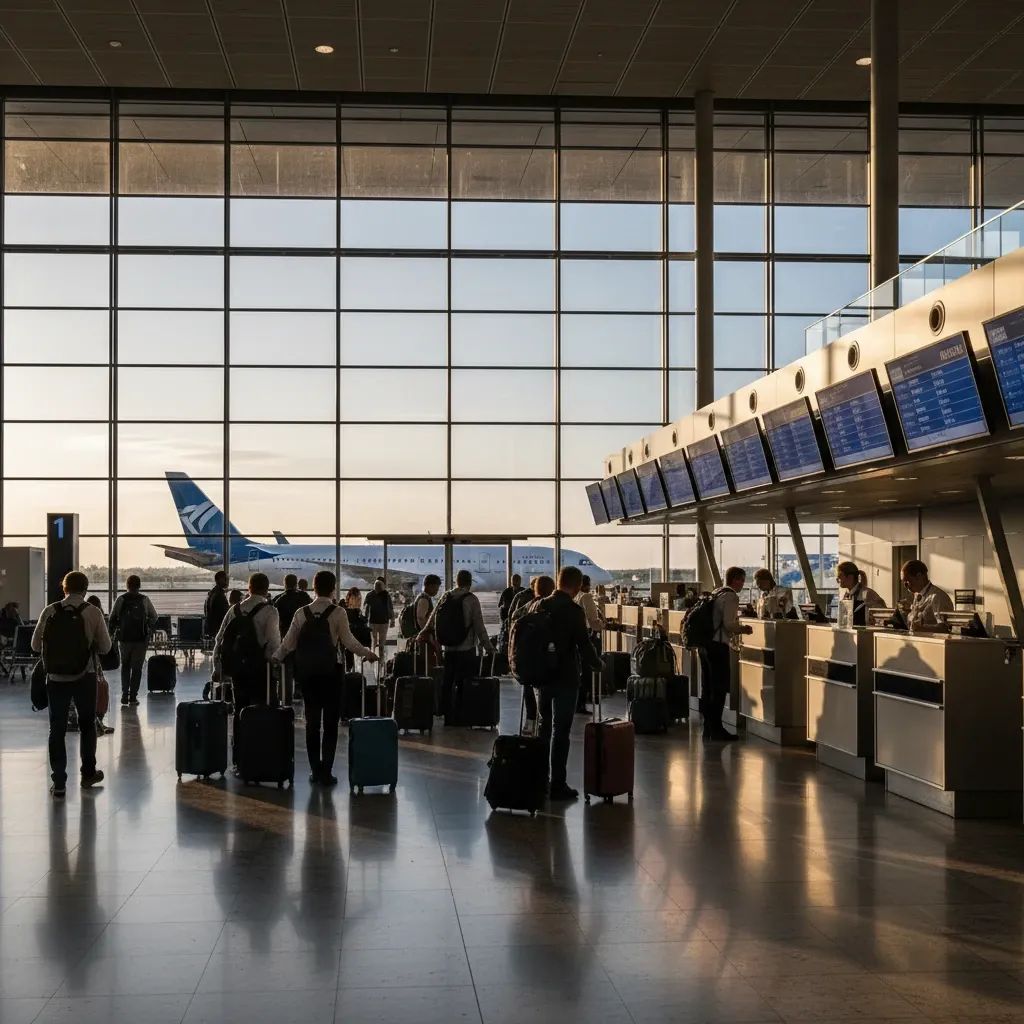
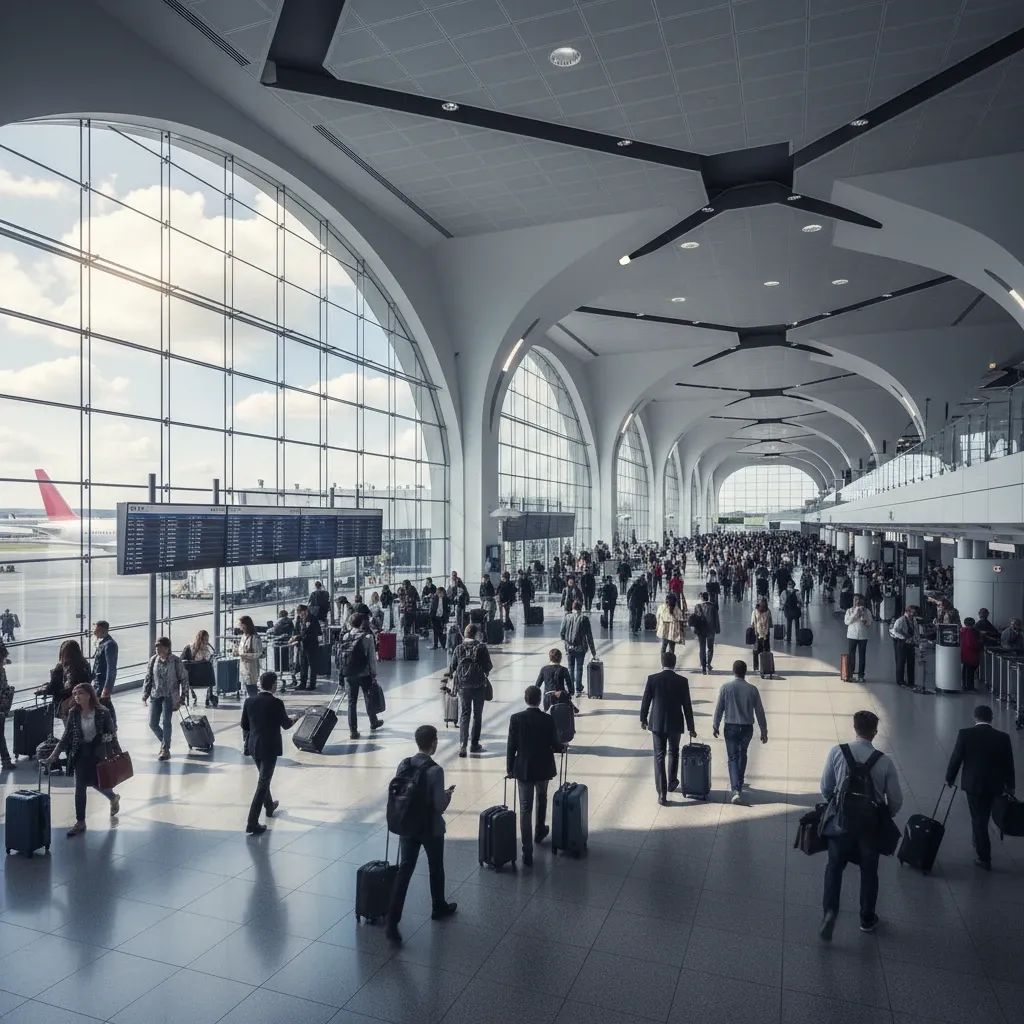
Dubai International Airport processed 95.2 million passengers in 2025, maintaining its position as the world's busiest airport for international travel. However, the facility is approaching its operational limits, forcing a complex six-year transition to a new mega-hub that will reshape how residents and travelers move through the emirate.
Why This Matters
• Capacity crisis looms: DXB is projected to hit 99.5M passengers in 2026, pressing against its maximum physical threshold of 115M by 2032.
• Competition accelerating: Regional airports, particularly in Saudi Arabia and Abu Dhabi, are expanding capacity and attracting new airlines and routes.
• Timeline critical: Full operational migration to Al Maktoum International (DWC) is slated for 2032, requiring residents and businesses to navigate six years of operational strain.
The Numbers Tell a Story of Saturation
Dubai International claimed the world's second position for total passenger volume in 2025, trailing only Hartsfield-Jackson Atlanta (106.3M) and surpassing Tokyo Haneda for third. DXB held the top ranking for international passenger traffic—a title it has defended for nearly two decades as the preferred transfer point between Europe, Asia, and Africa.
The 95.2M figure represents growth of 3.1% from 2024's 92.3M passengers. For Dubai, this trajectory signals the airport is approaching its operational ceiling. The United Arab Emirates' broader aviation ecosystem is diversifying: Sharjah International Airport accelerated to reach 19.48M passengers, while Ras Al Khaimah International crossed 1M passengers for the first time.
Regionally, competitive intensity is rising. Saudi Arabia has been investing heavily in airport expansion and modernization, while Abu Dhabi and Doha continue to strengthen their aviation infrastructure. These developments mean Dubai's historical dominance in Gulf aviation is facing increased pressure from well-funded alternatives.
Infrastructure Gridlock Is Already Here
Traffic projections for 2026 reveal the acute nature of Dubai's squeeze. The airport is forecast to welcome 99.5M passengers, a figure that sits uncomfortably close to the facility's maximum engineered capacity of 115M. This leaves virtually no buffer for seasonal spikes or demand surprises during the December holiday crush, Eid travel, or peak business periods.
Dubai Airports has responded with tactical interventions—biometric scanners, advanced baggage screening systems, and automated check-in infrastructure designed to compress processing times without enlarging physical footprint. Additional aircraft stands and expanded check-in zones represent the efficiency gains available within existing terminals.
Peak-hour friction is already visible. Flight delays linked to congestion and slot scarcity have begun appearing in airline operational reports. For the United Arab Emirates' residents—many of whom depend on frequent air travel for employment, family connection, or business—the next six years signal a transition toward more challenging airport experiences during busy periods.
What UAE Residents Should Know
For residents across Dubai, Abu Dhabi, and the Northern Emirates, the capacity challenge at DXB will have practical implications:
Airlines and Routes: Major carriers including Emirates, Flydubai, and Air Arabia currently operate the majority of flights from DXB. During peak periods through 2030, booking flights during off-peak hours (early mornings, late evenings, or weekday slots) will likely offer better availability and potentially lower fares.
Travel Distance Changes: Currently, DXB is approximately 15-25 kilometers from major residential areas like Dubai Marina (25 km), Downtown Dubai (18 km), and Jumeirah (20 km). When operations shift to Al Maktoum International (DWC) in 2032, the distance will be approximately 40-50 kilometers from these same areas, potentially adding 15-20 minutes to travel time depending on traffic conditions. Residents should plan accordingly when the transition occurs.
Public Transportation: Dubai Metro currently connects to DXB terminals. Plans for metro extension to DWC are under consideration, though completion timeline and final connections remain under development. Residents should monitor updates on public transport links to the new facility.
Travel Planning Recommendations: For frequent travelers, book flights during off-peak windows through 2030 where possible. For businesses, diversify logistics pathways where feasible and build redundancy into supply chains dependent on air cargo.
The Real Solution Arrives in 2032
Al Maktoum International Airport (DWC) represents Dubai's response to long-term capacity constraints. Located approximately 40 kilometers southwest of current operations in the Dubai World Central zone, the facility will fundamentally reshape aviation infrastructure for the region.
The master plan envisions DWC with multiple runways and hundreds of gates, engineered to accommodate significantly higher passenger volumes than the current facility. Construction commenced in full in 2026. Phase one targets completion by 2030, unlocking intermediate capacity for the transition period. By 2032, operational activities are scheduled to shift from DXB to DWC.
At that juncture, Dubai International—after serving aviation since 1960—will operate at reduced capacity or transition to secondary roles such as cargo, private aviation, or charter operations. This represents a significant shift in how the emirate's aviation landscape functions.
The Pressure on Business and Daily Operations
For freight forwarders, e-commerce operators, and logistics companies in the United Arab Emirates, the current capacity crunch translates directly to operational friction. Slot scarcity is already impacting cargo operations, raising shipping rates and potentially extending transit times on certain routes. Cargo capacity at DWC will provide relief, but only after 2032.
Airlines face their own constraints. Emirates, Etihad, and Flydubai are confronting slot limitations that restrict route expansion. Regional competitors are leveraging this opportunity to strengthen alternative Gulf hubs.
Business travelers based in the UAE should prepare for scheduling complexity. Flight delays during peak periods, less flexible gate access, and potential increases in airfares on constrained routes are realistic scenarios through 2030.
The Broader Middle East Competition
The Middle Eastern aviation sector is experiencing significant competitive development. Major regional hubs including Abu Dhabi, Saudi Arabia, and Qatar continue capacity expansion and infrastructure investment. These developments are reshaping how airlines deploy resources and how passengers select travel routes across the region.
For the United Arab Emirates, this environment requires strategic focus. Dubai's volume leadership is mathematically assured for the foreseeable future, but maintaining market share requires reliable service, modern facilities, and competitive positioning—all factors the transition to DWC addresses.
Preparing for the Transition
Residents and businesses should view the next six years as a managed transition rather than a crisis. Dubai has experience managing major infrastructure changes, though the scale of moving operations to a new geographic location is operationally complex.
The practical takeaway: plan travel flexibility through 2030. Book flights during off-peak windows where possible. For businesses, diversify logistics pathways and build redundancy into supply chains. For residents relocating or making property decisions, factor in the potential changes to airport proximity and accessibility in 2032.
Dubai International Airport's 95.2M passenger handle in 2025 marks both achievement and inflection point. The United Arab Emirates remains aviation's regional anchor, but infrastructure modernization and competitive development across the region mean Dubai must execute the DWC transition successfully to maintain its strategic position in Gulf aviation through the next decade.