
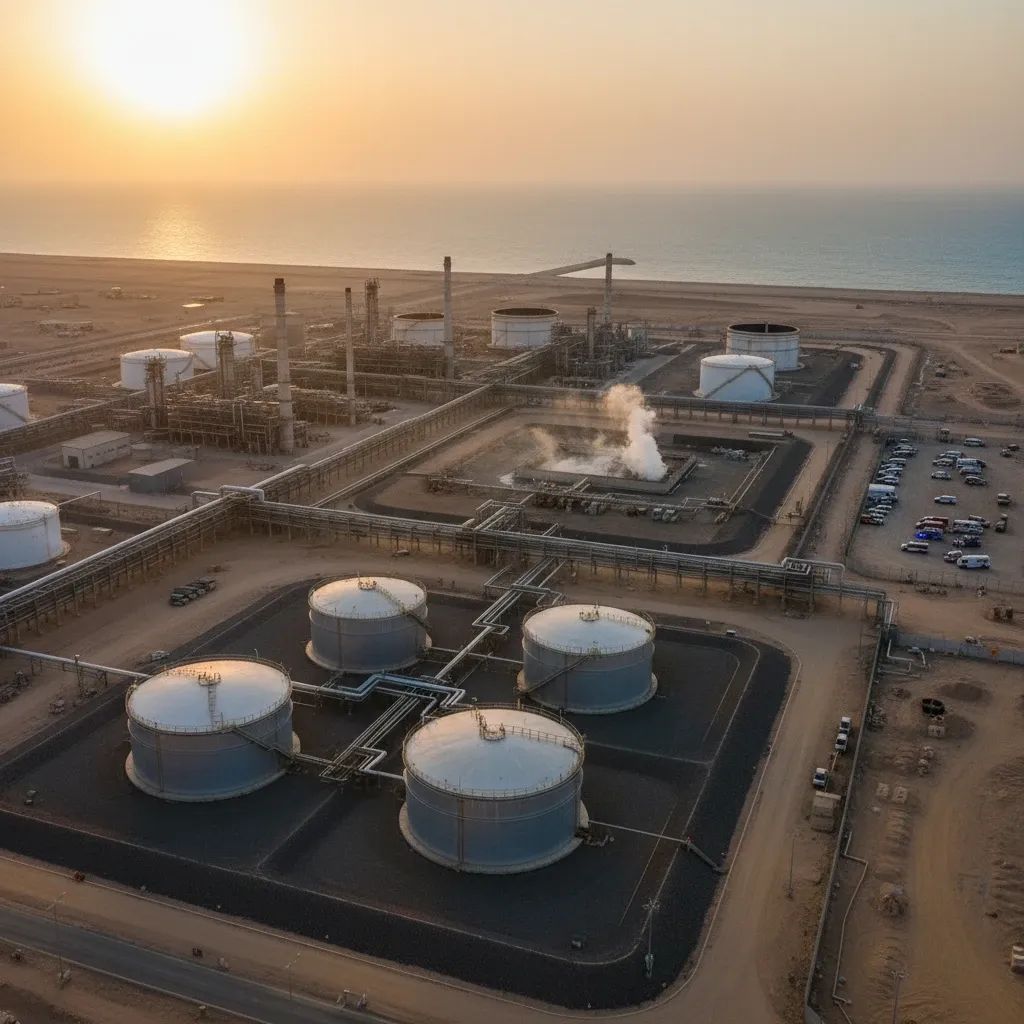
The United Arab Emirates Air Defense Command successfully intercepted a hostile drone over the Fujairah Oil Industry Zone early this morning, though falling debris from the downed aircraft sparked a fire that temporarily disrupted operations at one of the Gulf's most critical energy hubs. Authorities confirmed the blaze has been extinguished, no casualties occurred, and normal activity has resumed at the industrial complex, which handles significant volumes of refined petroleum products and crude storage.
Why This Matters
• Regional security context: The incident occurs amid reports of heightened tensions in the Gulf region, though authorities have not officially attributed the attack source.
• Energy infrastructure protection: FOIZ processes millions of barrels monthly; infrastructure security remains a priority for maintaining stable energy supplies.
• Defense systems proving effective: The interception prevented what could have been a direct impact on storage tanks or refining units, with debris fire managed successfully.
A Challenging Operating Environment
This marks a significant incident for the Fujairah Oil Industry Zone, a critical facility in a region where energy infrastructure faces security considerations. The Government of Fujairah Media Office issued an advisory urging residents and businesses to rely exclusively on official channels for updates, cautioning that unverified social media posts and rumor-mongering could fuel panic or misinform emergency response efforts. The statement reflects the United Arab Emirates government approach to maintaining public confidence while ensuring security and economic continuity.
How UAE Air Defenses Work
The interception over FOIZ showcased the multi-layered counter-unmanned aerial system (C-UAS) architecture that the Emirates has developed to protect critical infrastructure. Detection begins with 3D radar arrays providing comprehensive coverage, augmented by radio frequency scanners that identify electronic signatures of incoming drones. Once a target is flagged, electro-optical and infrared sensors provide visual confirmation, feeding data into command-and-control systems that distinguish between benign aircraft and potential threats.
Defense options include soft-kill techniques like precision directional jamming that disrupt operator-drone links, forcing the aircraft into failsafe mode. When electronic countermeasures prove insufficient or threats require rapid response, hard-kill systems engage—including net-launching interceptor drones and high-energy laser platforms capable of disabling airframes. The UAE also operates THAAD, Patriot, and other advanced air defense missile systems originally designed for ballistic threats but increasingly relevant to emerging drone security challenges.
Debris from successful intercepts does pose secondary hazards. Composite fragments and fuel tank remnants can fall over industrial zones, potentially igniting flammable materials or damaging equipment. Today's fire at FOIZ underscores this trade-off: interception closer to populated areas creates debris risks, while the facility remained operational following firefighting efforts.
What This Means for Residents and Businesses
For expatriates and Emirati nationals living in Fujairah Emirate, the incident reinforces that critical infrastructure requires awareness during periods of regional activity. While authorities have not issued evacuation orders or airspace restrictions beyond standard protocols, residents near industrial zones should maintain household emergency kits including N95 masks (to filter potential smoke), bottled water, and battery-powered radios tuned to UAE state frequencies.
Businesses operating within or adjacent to FOIZ may experience temporary access restrictions as security protocols are reviewed. Companies with force majeure clauses in contracts should verify coverage terms, as insurers have varying policies regarding security incidents at industrial facilities.
Investors monitoring UAE energy assets should note that today's incident caused no lasting operational damage. The Abu Dhabi Securities Exchange showed minimal reaction in early trading, suggesting market confidence in infrastructure resilience and defense capabilities.
Ongoing Vigilance
Authorities have reinforced security measures around FOIZ and other strategic sites, with increased UAE Armed Forces personnel visible at key checkpoints. The Federal Authority for Identity, Citizenship, Customs and Port Security has issued standard security advisories to port operators regarding vessel verification and monitoring.
Residents are advised to monitor the UAE National Emergency Crisis and Disasters Management Authority app for real-time alerts and to familiarize themselves with designated emergency shelters in their areas, typically robust government buildings or underground facilities in modern developments. While the immediate situation has been resolved, maintaining awareness of emergency procedures remains prudent during any period of regional activity.


