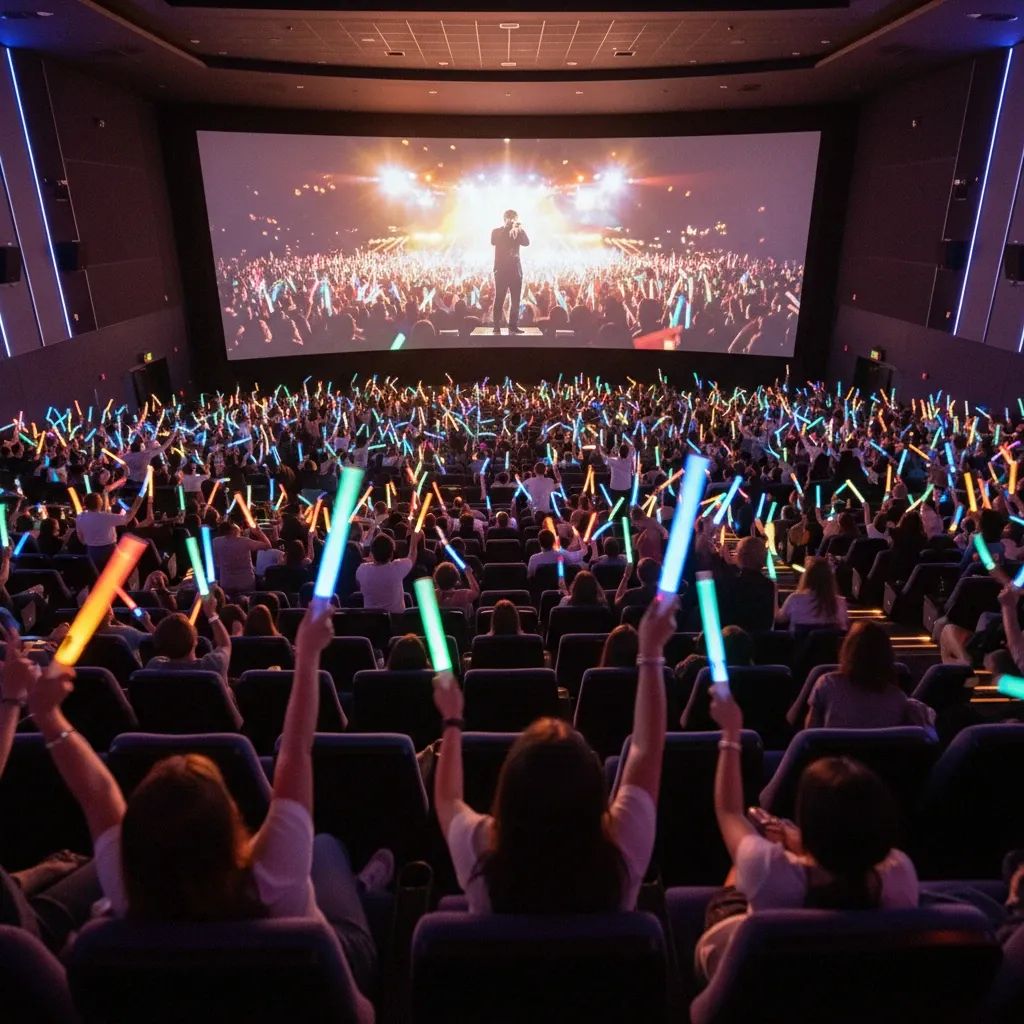
Vox Cinemas has become an unlikely concert venue for K-pop fans across the United Arab Emirates, offering a real-time stadium experience without the long-haul flight to Seoul. For AED 75, residents can watch BTS perform live on large cinema screens—a proposition that sounds straightforward until technical reality intervenes.
Why This Matters
• Two screenings scheduled: The Goyang concert streamed on April 11 and the Japan show follows on April 18, both at 1:45 PM GST across Dubai, Abu Dhabi, Ajman, Fujairah, and Ras Al Khaimah.
• No physical UAE tour announced: Despite speculation about a 2027 Middle East leg, these cinema broadcasts remain the only confirmed way to see BTS perform as a full group in the region.
• Previous sell-outs: The group's 2019 and 2022 cinema events in the UAE sold out completely, signaling sustained demand.
What Happened at Yas Mall
The April 11 screening at Vox Cinemas Yas Mall began with promise and devolved into improvisation. Though scheduled for 1:45 PM, the band didn't appear until roughly 2:15 PM. What followed was a 60-minute stretch where the cinema screen displayed Goyang Stadium in crisp 4K resolution—but with no audio whatsoever.
Army, the group's global fanbase, filled the silence themselves. Inside the theater, attendees sang entire songs from memory, their collective voices replacing the missing broadcast feed. It was an unintended karaoke session that underscored the devotion of UAE-based fans who had paid for a live experience and received, at least initially, a glorified PowerPoint.
Reports from the UK surfaced on social media platform X describing the inverse problem: audio but no video. The glitch was not geographically isolated, pointing to systemic issues with the global content delivery network (CDN) managing the multi-timezone broadcast.
By the fourth song—roughly an hour into the scheduled runtime—the sound returned. The theater erupted. From that point forward, the technical side stabilized, and the screening shifted from salvage operation to legitimate concert surrogate.
The Cinema-Concert Hybrid Model
Watching live concerts on theater screens is not novel in the UAE. Taylor Swift's Eras Tour and Blackpink concert films have both drawn crowds to local multiplexes. But those were pre-recorded, edited productions. A live broadcast from a stadium 4,500 kilometers away, streamed in real time across 11 time zones, operates under entirely different constraints.
The BTS ARIRANG tour uses a 360-degree in-the-round stage design, a format that demands dynamic camera work. When functioning properly, the cinema format offers advantages a stadium seat cannot: extreme close-ups, coordinated angle switches, and zero obstruction from the person in front of you. Fans at Yas Mall were, in effect, getting director's-cut views of choreography and facial expressions invisible to most attendees inside Goyang Stadium.
The tradeoff is obvious. There is no physical proximity, no shared air with 50,000 other fans, no floor vibrations from bass speakers. What remains is a curated visual experience paired with a local crowd of equally invested viewers. For UAE residents who have never seen BTS perform live—and who face logistical and financial barriers to flying to Seoul or Tokyo—it is a functional compromise.
The Technical Realities of Global Live Streaming
The audio dropout was not merely an inconvenience; it reflects the structural fragility of large-scale live broadcasts in 2026. A 4K concert stream requires sustained upload speeds of at least 25 Mbps per viewer, multiplied across thousands of simultaneous cinema connections globally. Even with advanced CDN infrastructure, middle-mile bottlenecks—network congestion between regional hubs—can degrade quality or sever connections entirely.
Latency is another constraint. While low-latency protocols like WebRTC and Low-Latency HLS have brought delays down to 1–6 seconds, maintaining audio-video synchronization across intercontinental distances remains complex. The Goyang screening appeared to suffer from a routing failure, where video packets arrived but audio did not, likely due to a split in the delivery path.
Multi-CDN strategies, which dynamically route traffic across multiple providers, are standard in 2026 to mitigate single-point failures. But even redundancy cannot eliminate risk when dealing with live content. Unlike on-demand streaming, where buffering can smooth over hiccups, a live feed has no safety net.
Impact on Expats and Investors
For the UAE's expatriate community, particularly South and Southeast Asian residents with ties to K-pop culture, these screenings offer cultural continuity. The ability to participate in a global fandom event without international travel is a tangible quality-of-life benefit, especially for younger residents and families.
From a business perspective, Vox Cinemas—owned by Majid Al Futtaim—has positioned itself as the exclusive Middle East exhibitor for major K-pop live events. The AED 75 ticket price is premium compared to standard cinema admission but significantly lower than the 25,000–45,000 Japanese Yen (approximately AED 680–1,220) charged for in-person seats at Tokyo Dome. The model capitalizes on pent-up demand in a region where major international acts rarely tour.
Historical sell-out performance for BTS cinema events in 2019 and 2022 suggests strong repeat behavior. If technical execution improves, this could become a recurring revenue stream for exhibitors and a template for other global music acts targeting Middle Eastern audiences.
What's Next
The April 18 screening of the Japan leg offers a second test. Fans can purchase tickets through voxcinemas.com and the Vox Cinemas app, with screenings again starting at 1:45 PM GST. The concert itself takes place at Tokyo Dome and will also stream via Weverse Concerts, offering a digital alternative for those unwilling to gamble on another theatrical technical failure.
The April 11 experience at Yas Mall proved that while audio issues are disruptive, they do not erase the event. The audience created its own atmosphere, lightsticks synchronized, and when the sound finally arrived, the energy escalated. For fans accustomed to watching BTS through smartphone screens, even an imperfect cinema feed felt communal.
Whether this model scales depends on infrastructure reliability. The UAE has robust internet backbones, but the weak link is not local—it is the international routing and CDN orchestration required to deliver a seamless global broadcast. Until that technology matures, live cinema streams will remain high-reward, high-risk propositions.
For now, they are also the only game in town.