
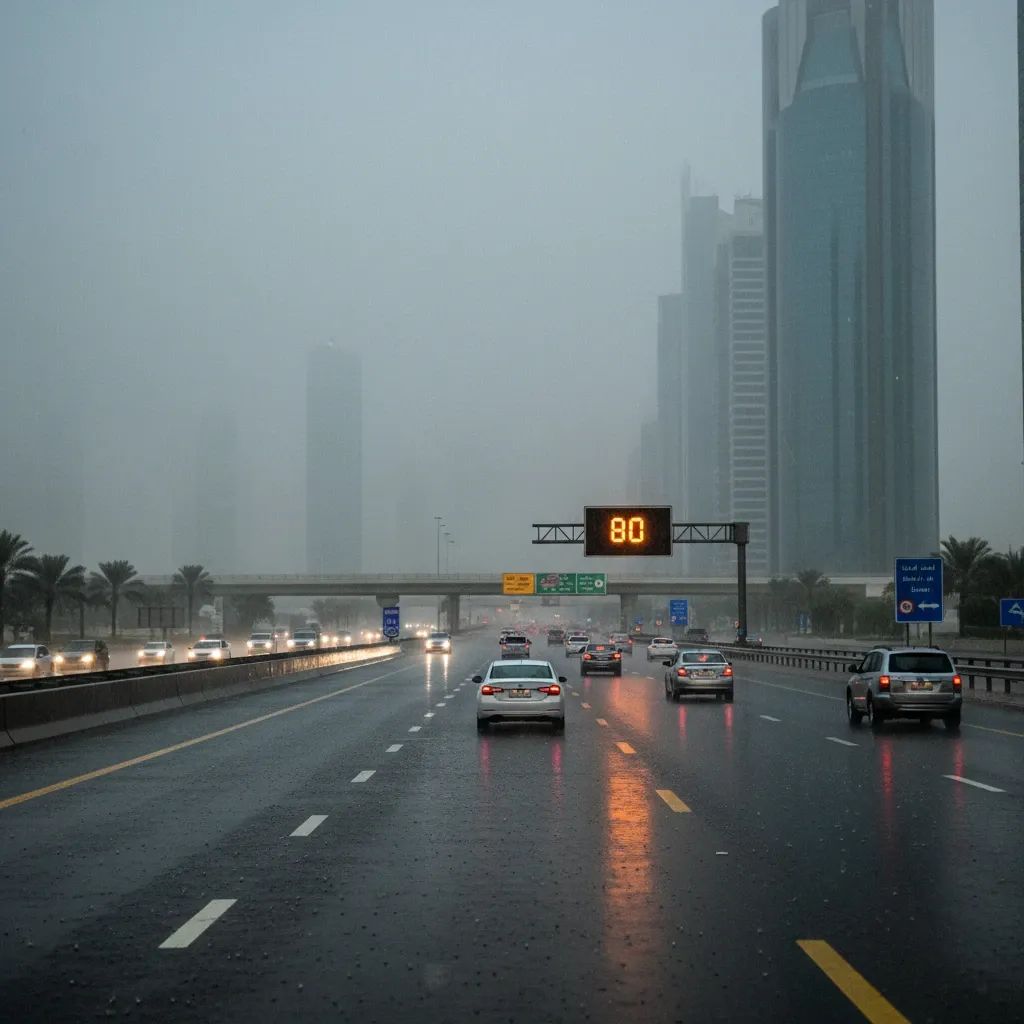
The Abu Dhabi Police Traffic and Patrols Directorate has issued driving safety guidance as rainfall sweeps across the emirate this weekend, creating wet road conditions and reduced visibility for motorists navigating the capital's highways and streets.
Why Safety Matters During Rain
Abu Dhabi residents experience rainfall infrequently, which means many drivers lack regular practice with wet-weather driving conditions. When rain falls on roads that have been dry for extended periods, accumulated debris, sand, and residual oil create slippery surfaces that increase stopping distances and reduce tire traction. Poor visibility further compounds these risks, requiring heightened attention and adjusted driving behavior.
Key Safety Directives from Abu Dhabi Police
Authorities are urging motorists to follow specific safety protocols during this period:
Comply with variable speed limits: Electronic signboards on major routes display reduced speed limits during wet conditions. These variable limits are legal requirements—exceeding them carries traffic violations and fines. Drivers should adjust their speed according to the displayed limits rather than relying on static posted signs.
Maintain extended following distance: Increase the gap between your vehicle and the one ahead to at least 5 seconds on wet roads. Wet surfaces require significantly longer braking distances than dry pavement. This extended cushion provides crucial reaction time if sudden braking becomes necessary.
Avoid sudden driving inputs: Abrupt acceleration, hard braking, or sharp steering maneuvers can cause loss of traction on slippery surfaces. All control inputs—throttle, brake, and steering—should be gradual and smooth.
Reduce speed when turning: Wet conditions reduce grip during cornering. Slow down before entering curves or roundabouts, and avoid simultaneous braking and steering, which increases the risk of skidding.
Pull over if visibility becomes severe: If rainfall intensity makes vehicles ahead difficult to distinguish, activate hazard lights and exit the travel lane completely to a safe stopping area or service station.
Avoid low-lying areas: Valleys and underpasses can accumulate standing water during heavy rain. Water depth may be concealed—what appears shallow could be deep enough to damage your engine or sweep your vehicle off the road.
Additional Reminders
Abu Dhabi Police have also reiterated zero-tolerance enforcement for dangerous behaviors, including reckless driving maneuvers, opening vehicle doors while moving, and using mobile devices behind the wheel. These violations carry significant fines and potential vehicle impoundment.
Vehicle maintenance plays an important role in safe wet-weather driving. Tire tread depth should exceed 3 mm for effective water channeling; windshield wipers older than 12 months should be replaced; and headlights and rear fog lamps should be in working condition for improved visibility.
Planning Your Weekend
Residents should monitor weather updates and consider postponing non-essential trips if conditions deteriorate. Those who must drive should allow additional travel time, reduce speed as conditions require, and remain focused on the road. Delivery drivers, ride-hail operators, and commercial fleet managers should enforce strict speed discipline among personnel.
The message from Abu Dhabi Police is clear: while variable speed systems and technology provide tools to enhance safety, driver judgment remains essential. Adjust your driving behavior to match wet conditions, stay alert, and prioritize reaching your destination safely over arriving quickly.


