A Conglomerate's Balancing Act: How Luxury Real Estate Meets Worker Housing in Abu Dhabi
The International Holding Company subsidiary Emirates Stallions Group logged a profitable first quarter by doing what few regional conglomerates have mastered: anchoring prestige residential sales while simultaneously scaling blue-collar accommodation operations. With AED 370 million in revenue and AED 68.6 million in net profit, the diversified platform grew both top and bottom lines at a clip that outpaced inflation, thanks to a luxury project that sold out before marketing launched and a manpower arm that keeps pace with the region's sprawling construction boom.
Why This Matters
• Asset base now AED 4.8B: A 10% jump from year-end 2025 signals aggressive real estate inventory buildup and operational capacity expansion, underpinning shareholder equity of AED 3.1 billion and book value per share of AED 12.4.
• Branded residential proven: Rotana Residences' pre-launch complete sell-out of all 439 units validates premium buyer appetite in Abu Dhabi, even as new supply floods the market.
• Manpower growth remains stable: Sawaeed Holding generated AED 107 million in Q1 revenue and AED 17 million profit, anchoring the group's recurring income stream amid construction cycle volatility.
• Margin expansion outpaced revenue: Gross profit jumped 32% while revenue rose 11%—a sign of disciplined pricing and cost control.
The Branded Residential Play: Prestige Meets Supply Chain
Abu Dhabi's residential market has bifurcated in recent years. On one end sit government-backed affordable schemes and developer-led mid-market towers. On the other sits a narrower but lucrative niche: luxury branded residences where international hotel operators manage common areas, security, and guest services for apartment owners.
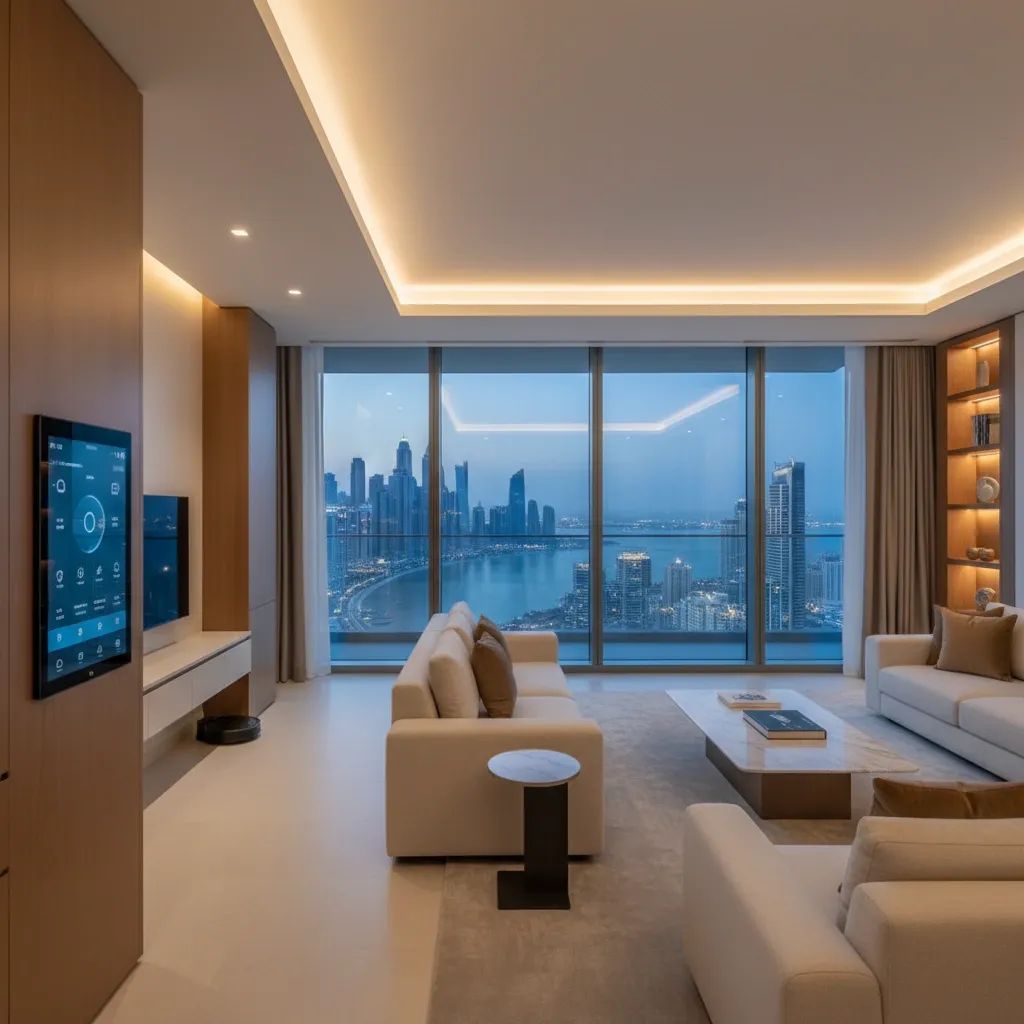
Royal Development Holding, ESG's real estate arm created in 2025, capitalized on this stratification with Rotana Residences, a AED 1 billion, two-tower scheme featuring 439 units across studios, one-, two-, and three-bedroom configurations, plus duplex penthouses. The project sold entirely before its official launch—a rarity in the competitive Abu Dhabi market and a signal of sustained high-net-worth appetite for trophy addresses.
The development sits on Al Reem Island, where 50,000-plus residents now occupy a mix of residential towers, offices, and hospitality venues. For buyers, the Rotana affiliation unlocks a distinct value proposition: daily housekeeping, concierge, fitness facilities, and brand-name recognition that typically moves with market cycles more predictably than generic apartment towers.
Construction commences in Q2 2026, with handover slated for Q4 2028—a standard 2.5-year build-to-delivery timeline. For ESG, the project locks in three years of employment, design management, and supply chain activity. For investors, it offers an early-mover advantage in a branded category that remains underpenetrated relative to Dubai, where Emaar and Damac have normalized branded residential.
The rapid absorption also reflects ESG's direct-sales marketing advantage: as an IHC subsidiary, the group accessed institutional investor networks and ultra-high-net-worth lists that smaller developers cannot easily reach. In-house financing options, flexible down-payment terms, and pre-delivery installment schedules likely accelerated purchasing decisions during the pre-launch phase.
Manpower and Accommodation: The Unglamorous Engine
While Rotana Residences captures market attention, Sawaeed Holding quietly powers 40% of ESG's earnings through far less visible but remarkably stable operations: sourcing, housing, and training workers for construction, hospitality, logistics, and facility management clients across the United Arab Emirates.
In Q1 2026, Sawaeed generated AED 107 million in revenue and AED 17 million profit after tax—a 16% net margin that would envy most real estate developers. The subsidiary's services span workforce recruitment and placement, labor accommodation development and management, vocational training delivery, and compliance consulting.
Why does this business model stick? The United Arab Emirates construction pipeline remains dense with Expo 2020 legacy projects, metro expansions, airport upgrades, and residential buildouts. Each requires hundreds or thousands of blue-collar workers housed within commuting distance—a need that spawns recurring, contractual revenue for operators who can deliver turnkey solutions.
Sawaeed's advantage lies in vertical integration: it owns and manages labor accommodation assets, eliminating reliance on landlords or public housing authorities. It also controls placement, reducing intermediaries. Clients contract a single vendor for workers, housing, transport, training, and compliance reporting—simplifying procurement and reducing administrative friction.
The regulatory environment also favors scale. United Arab Emirates authorities increasingly mandate worker welfare standards, safety compliance, and accommodation density limits. Operators with systems, audit trails, and certified training programs retain clients and win tenders over smaller, informal competitors. Sawaeed's size and ESG backing position it to absorb compliance costs and still grow margin.
The Balance Sheet: Liquidity Meets Leverage
Total assets reached AED 4.8 billion as of end-March 2026, up 10% from December 2025. This jump reflects two flows: property inventory buildup for Rotana Residences (construction-stage assets on the balance sheet) and working capital deployment into labor accommodation facilities across multiple emirates.
Total equity rose to AED 3.1 billion, translating to a book value per share of AED 12.4. This metric matters because ESG trades on the Abu Dhabi Securities Exchange, and investors often compare stock price to net asset value. A discount signals undervaluation; a premium suggests growth expectations are priced in.
Operational profit before tax climbed 32% to AED 79 million, reflecting efficiency gains and a revenue mix tilting toward higher-margin activities. Gross profit jumped 32% while revenue rose 11%—a spread that indicates successful pricing power and cost discipline. In a region where material costs and labor wages trend upward, this expansion hints at operational excellence or favorable contract renegotiations.
What This Performance Means for the Broader UAE Economy
For equity investors, ESG exemplifies the conglomerate model that outperforms single-industry peers during economic cycles. Real estate development is inherently cyclical—demand surges when credit loosens and collapses during downturns. Manpower services, by contrast, remain more structural: as long as infrastructure projects proceed, worker accommodation demand persists. By blending the two, ESG smooths earnings and reduces exposure to sector-specific shocks.
For competing developers, Rotana Residences' pre-launch sell-out validates luxury branded residential as a positioning strategy. Expect imitators from Emaar, Damac, and smaller Abu Dhabi-based players to court international hotel brands for co-branded projects. This will intensify competition for hospitality licensing and brand-use agreements, potentially raising entry barriers for smaller developers.
For construction and infrastructure contractors, ESG's manpower capability means fewer headaches around worker sourcing and housing logistics. A contractor building a metro station extension or airport renovation can now negotiate an all-in package with ESG rather than juggling accommodation providers, recruiters, and compliance consultants separately. This reduces project friction and accelerates timelines.
For labor-dependent sectors—hospitality, logistics, facilities management—sustained high-quality accommodation supply from ESG and competitors means more reliable workforce availability and lower turnover. This indirectly boosts productivity across the economy and reduces the wage inflation that occurs when labor becomes scarce.
Integrated Portfolio: Real Estate Isn't the Only Play
ESG controls over 50 subsidiaries spanning design, manufacturing, landscaping, agriculture, hospitality, and marine infrastructure. This conglomerate structure allows cross-selling: a real estate client may also engage ESG for architectural design (via Decovision, 45% equity stake), furniture and joinery (via Vision Factory, 60% stake), or landscaping. Internally, these relationships reduce transaction costs and strengthen margin.
ESG Hospitality, launched in October 2023, targets luxury hotel development across the United Arab Emirates and internationally. While early-stage, this vertical could generate fee income from the Rotana partnership and create future co-investment opportunities with the real estate arm.
The diversification, while complex, reduces earnings volatility. If real estate sales slow, manpower and hospitality revenue can offset declines. This structural resilience explains why large IHC subsidiaries trade at premiums to their breakdown values—investors value the portfolio hedge.
Execution Ahead: 2026 and Beyond
Management flagged "continued development activities and operational priorities"—corporate-speak for more project launches and asset growth. With AED 3.1 billion in equity and a cash-generative manpower business, ESG possesses the balance sheet capacity for additional real estate inventory deployment and potential strategic acquisitions.
The remainder of 2026 hinges on Rotana Residences construction commencement, sustained occupancy and pricing discipline in Sawaeed's accommodation portfolio, labor cost containment as inflation pressures input costs, and strategic capital allocation toward new verticals or geographies.
For now, ESG's ability to marry prestige residential sales with stable worker-housing operations positions it as a bellwether for how United Arab Emirates conglomerates navigate a complex regional economy where luxury coexists with infrastructure-scale labor demands.