
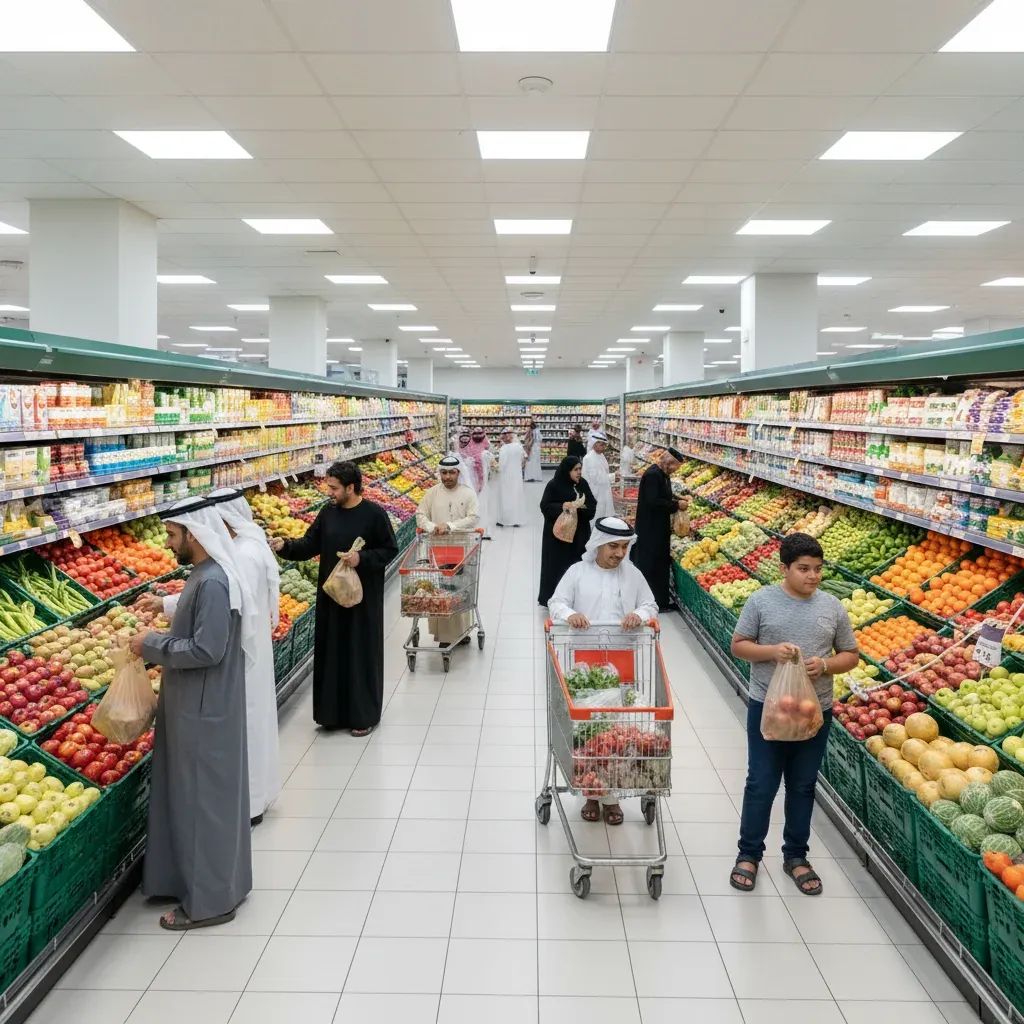
Fast-Tracking Food Safety: Dubai's New Nanoparticle Lab Changes the Game for Imported Groceries
The Dubai Municipality has just installed a technological advantage that quietly shifts how food gets screened before it reaches your table. A specialized nanoparticle detection laboratory—equipped with cutting-edge mass spectrometry technology—now operates under the Dubai Central Laboratory, capable of scanning processed food for prohibited additives in under five minutes. This matters because many products considered perfectly legal elsewhere arrive here and face immediate scrutiny against stricter standards. Items imported from North America, Asia, or even other GCC states may fail Dubai's assessment even if they cleared their country of origin without issue.
Why This Matters:
• Rapid compliance verification: Products no longer wait days for regulatory clearance; contamination flags surface in a single shift, cutting warehouse detention and spoilage risk.
• Stricter than most global peers: The UAE banned titanium dioxide (E171) from food in April 2023, rejecting an additive still legally sold in the US, Canada, and Australia under specified limits.
• Continuous surveillance capability: The facility processes 60 samples daily under normal conditions and can surge to 100 during food contamination emergencies, creating real-time market oversight rather than retroactive investigations.
The Regulatory Split That's Creating Business Friction
Food safety authorities globally are sharply divided on titanium dioxide—a whitening and anti-caking agent used in bakery goods, dairy products, and confectionery for decades. This split reveals a fundamental disagreement about how to manage uncertainty when human health is at stake.
The European Union acted decisively in 2021 when the European Food Safety Authority flagged unresolved questions about genotoxicity—genetic material damage. By August 2022, E171 was banned across all member states. The UAE followed the same precautionary logic, implementing its own prohibition through Cabinet Resolution in March 2023, effective immediately thereafter. If the evidence of safety is inconclusive, the reasoning goes, the burden should fall on the manufacturer to prove safety, not on regulators to prove harm.
Other heavyweight authorities disagree fundamentally. The US Food and Drug Administration permits titanium dioxide at concentrations up to 1% by weight, citing decades of use without documented adverse effects. Health Canada completed its own review in 2022 and concluded the scientific evidence does not support health concerns. Food Standards Australia New Zealand and JECFA (the joint UN-WHO food additives committee) reached similar conclusions after independent reviews through 2025, rejecting the European assessment.
The divide is philosophical, not scientific. North American and Australian regulators essentially ask: Is there documented proof of harm? When the answer is no, they permit it. European and Emirati authorities ask: Is safety conclusively proven? When the answer is no, they prohibit it.
For food manufacturers, this creates a logistical headache. A multinational bakery company cannot sell the same product formulation in Los Angeles, Toronto, and Dubai. Reformulation for the UAE market becomes mandatory—or exit the market entirely. This regulatory friction touches supply chains across confectionery, dairy, sauces, and processed foods wherever titanium dioxide contributed to product appeal or shelf stability.
How the Laboratory Detects What Others Cannot
The Inductively Coupled Plasma Mass Spectrometry (ICP-MS) system deployed by the Dubai Central Laboratory operates by converting food samples into ionized particles, then measuring mass-to-charge ratios to create a precise elemental fingerprint within minutes. A technical distinction that sets this facility apart from many global counterparts: the system can differentiate between conventional titanium dioxide particles and nanoscale variants.
This granularity is crucial. Nanoparticles—those smaller than 100 nanometers—behave differently in biological systems than their larger counterparts. They cross tissue barriers more readily, accumulate in organs, and trigger cellular responses that conventional particles do not. Older regulations written around bulk-scale titanium dioxide miss this distinction entirely. A product might comply with legacy standards but fail under nanoparticle-specific analysis.
Engineer Hind Mahmoud Ahmed, Director of Dubai Central Laboratory Department, emphasized that the facility measures not just presence but precise particle size distribution, chemical composition, and physical structure. This capability transforms compliance from a binary pass-fail into a nuanced technical assessment. Products can now be evaluated against specifications written for nano-specific safety rather than generic additive allowances.
The speed advantage compounds across the supply chain. Perishable goods flagged at port no longer accumulate storage costs across a three-to-five-day external lab cycle. Compliant suppliers navigate faster clearance; non-compliant products are identified before expensive warehouse space fills and temperature control expenses mount.
What the Emerging Science Reveals About Ingested Nanoparticles
The impetus behind Dubai's regulatory stance is grounded in recent biological research documenting specific mechanisms through which nanoparticles harm health. The concern is not theoretical.
Migration from packaging into food is documented across multiple studies. Nanoparticles used in antimicrobial coatings, reinforcement layers, or oxygen-barrier films can detach from packaging surfaces or dissolve into food, particularly in acidic environments or when exposed to heat. Silver nanoparticles—common antimicrobial additives—have been detected in various food products, including infant formula. Temperature and storage duration accelerate this process.
Once ingested, the minuscule particle size enables crossing of biological barriers. Unlike bulk particles trapped in the digestive tract, nanoparticles penetrate the gut lining and cross into systemic circulation. Animal studies have shown titanium dioxide nanoparticles entering fetal tissue after crossing the placental barrier. Cell-level research links nanoparticle exposure to oxidative stress, inflammatory responses, and DNA damage. Some findings—not yet conclusive in humans—suggest potential links to cancer and cardiovascular effects at elevated doses.
Antimicrobial nanoparticles create an unintended secondary risk. Silver, copper, and zinc oxide nanoparticles kill beneficial gut bacteria along with pathogens, destabilizing the microbiome. Even minor disruptions to the gut bacterial ecosystem trigger long-term effects on immunity, metabolism, and inflammatory tone. The mechanism is well-established; the long-term human health implications remain incompletely understood.
The regulatory dilemma is stark: no cohort study has followed large populations over decades to document effects of chronic low-dose nanoparticle ingestion. This gap—acknowledged even by regulators that permit titanium dioxide—creates legitimate space for disagreement about how much uncertainty we should tolerate. Dubai's answer, aligned with European precaution, is to act on the absence of conclusive safety data rather than wait for evidence of harm.
Immediate Supply Chain Consequences
The launch of this laboratory signals that reformulation is now mandatory for brands serving the UAE market. Confectionery, dairy products, baked goods, and sauces—categories historically dependent on titanium dioxide for whiteness, anti-caking properties, or texture—face a critical choice: reformulate using approved alternatives, remove the UAE from their distribution map, or risk product seizure and reputational damage.
For consumers, the benefit is less visible but substantive. A typical grocery shelf in Dubai now carries stricter pre-market screening than most regions. Products that remain legally available in other markets have been assessed against more stringent standards before reaching supermarket shelves. For health-conscious shoppers—particularly parents concerned about nanoparticle exposure in children's foods where developing systems may be more vulnerable—this creates a tangible safety net.
The laboratory also signals institutional commitment to continuous surveillance rather than reactive enforcement. Instead of relying on certifications from exporting countries or periodic audits, Dubai Municipality is building infrastructure for real-time market monitoring. This shift changes compliance incentives. Suppliers engaging proactively with laboratory services and adopting pre-approved formulations reduce friction and delay. Those who test compliance at port arrival face congestion and potential product loss.
Building a Unified Food Safety Architecture
The nanoparticle detection lab is part of a broader ecosystem the Dubai Municipality has deployed across 2026. In May 2026, the ViruGenetics Laboratory launched—the first facility in the entire UAE capable of detecting foodborne viruses through genomic sequencing. In June 2026, alongside the nanoparticle lab, the municipality also introduced GMO testing services with multiplex detection capabilities. Together, these three laboratories address distinct contamination vectors:
• Nanoparticle Lab: Screens for manufacturing-derived nanoscale additives and validates formulation compliance
• ViruGenetics Lab: Detects viral pathogens (salmonella, norovirus, hepatitis A) through genetic fingerprinting
• GMO Lab: Verifies genetic transparency and confirms accurate labeling of engineered ingredients
Each operates with rapid turnaround protocols designed for data-driven regulatory decisions rather than reactive recalls after consumer harm surfaces. This infrastructure positions Dubai ahead of most regional peers. While Turkey requires pre-approval for engineered nanomaterials in food under its Novel Foods regulation (transitional period through June 2027), it has not deployed dedicated nanoparticle detection labs with sub-five-minute turnaround. Saudi Arabia's Food and Drug Authority is developing novel food guidelines within its 2023–2027 strategic plan but lacks comparable testing infrastructure. Jordan has research interest in nanotechnology but reportedly no specific nanomaterial legislation. Egypt's National Food Safety Authority published regulations for genetically modified foods in January 2026 but has not published comparable guidance for nanotechnology in food products. The broader GCC is focused on unified food security strategies and sustainable packaging mandates, but explicit nanotechnology regulations remain nascent across most member states.
Operational Capacity and Emergency Protocols
The laboratory operates at approximately 60 samples daily under routine conditions. During suspected contamination incidents or targeted market sweeps—scenarios that have occurred in Dubai's retail environment in prior years—capacity expands to 100 samples per day. This tiering reflects standardized surge-capacity protocols Dubai Municipality has adopted across its laboratory network.
The operational flexibility matters for supply chain management. A suspected outbreak can trigger accelerated testing without collapsing routine screening. Conversely, steady-state operations maintain consistent throughput, preventing bottlenecks that could halt imports or trigger artificial scarcity.
The Regulatory Trajectory Ahead
Engineer Ahmed framed the nanoparticle facility as a "starting point." Future expansions into cosmetics and pharmaceutical testing are explicitly planned, sectors where titanium dioxide and zinc oxide nanoparticles remain ubiquitous globally despite growing scrutiny. The European Union has updated its nanomaterial definition and now mandates nano-specific safety assessments for food additives; comparable requirements for personal care products are likely within EU frameworks by 2027–2028.
Testing for nanoparticle residues in fresh produce and imported agricultural goods represents another logical expansion. As nano-fertilizers and nano-pesticides proliferate globally—a trend accelerating as conventional inputs face environmental pressures—the ability to detect and quantify nanoparticle residues in crops will become operationally essential. The laboratory's current processed-food focus could reasonably extend to raw agriculture within 18 to 24 months, given Dubai's dependency on agricultural imports.
Alignment with Global Regulatory Momentum
The laboratory launch coincides with regulatory acceleration globally. The FDA's Human Foods Program lists nanoparticles as a priority research area for 2026, with specific focus on migration from food contact materials. Health Canada's 2025 Plan of Priorities includes risk assessments of nanoscale silver, zinc oxide, and nano-titanium dioxide. The EFSA Nano Network is updating guidance documents through 2029 to integrate nano-related risk assessments across European member states.
What distinguishes Dubai is emphasis on operational enforcement infrastructure rather than advisory guidance. While major authorities publish frameworks and fund research, Dubai has invested in high-throughput testing infrastructure capable of real-world, continuous market surveillance. This reflects a strategic positioning: establish Dubai as a trade hub where regulatory compliance is swift, transparent, and aligned with the world's strictest standards—even when those standards diverge by jurisdiction.
What Businesses and Residents Should Expect
For suppliers operating in Dubai's food ecosystem, the operational reality has shifted fundamentally. The regulatory environment has transitioned from periodic audits to continuous surveillance enabled by rapid analytics. Suppliers relying on formulations that were compliant five years ago will find themselves at a disadvantage. Those who reformulate proactively and engage early with Dubai Municipality's laboratory services navigate the transition more smoothly and face fewer delays.
For residents, the nanoparticle lab represents a calculated institutional bet on precaution. In the absence of conclusive long-term human health evidence—a gap even permissive authorities acknowledge—Dubai has chosen to act on uncertainty rather than await scientific consensus. Whether that approach proves prescient or unnecessarily restrictive depends on research still unfolding globally. For now, residents benefit from one of the region's most technologically advanced and stringent food safety systems, one that screens for contamination vectors many markets have yet to address systematically.
The lab ultimately signals that Dubai is building food safety infrastructure designed not to react after harm occurs, but to prevent it before products reach consumers. That operational philosophy—surveillance before incident—represents a meaningful shift in how the emirate manages the relationship between innovation in food manufacturing and protection of public health.


