
The United Arab Emirates has thrown its diplomatic weight behind renewed international efforts to end Sudan's civil war, endorsing a joint statement that calls for an immediate shift from battlefield violence to a civilian-led political transition—a move that underscores Abu Dhabi's growing role as a regional mediator in one of Africa's most devastating humanitarian crises.
Why This Matters
• Regional stability impact: Sudan's collapse threatens the UAE's economic corridors and security interests across the Horn of Africa and Red Sea maritime routes.
• Humanitarian urgency: Over 8 million Sudanese have been displaced—equivalent to displacing the entire population of the UAE—with acute food insecurity gripping the country amid the world's worst humanitarian emergency in 2026.
• UAE's diplomatic positioning: Abu Dhabi is part of the "Quad" negotiation framework (comprising the US, Saudi Arabia, and Egypt) signaling its influence in shaping post-conflict governance structures.
The Diplomatic Push: From Berlin to Addis Ababa
The UAE's backing of the joint statement comes weeks after the April 15 International Sudan Conference in Berlin, where donors pledged €1.5 billion (roughly AED 6 billion) in humanitarian aid—a commitment that underscores the international scope of response, though modest compared to the UAE's annual humanitarian spending in the region, which typically exceeds AED 2 billion across multiple crises. That gathering, co-hosted by Germany, the African Union, and Western powers, produced the "Berlin Principles for Sudan"—a framework asserting that no military solution exists and demanding an immediate humanitarian truce followed by a sustained ceasefire.
Between June 3–5, the so-called Quintet (a coalition of five international bodies—the United Nations, African Union, League of Arab States, European Union, and the Intergovernmental Authority on Development—coordinating Sudan diplomacy) held consultations in Addis Ababa with Sudanese political and civilian stakeholders. The goal: establish a preparatory committee to organize comprehensive inter-Sudanese dialogue. Sudanese political forces reached consensus on a shared peace process vision, though disputes over representation of various factions remain a sticking point.
The UAE's formal welcome of these consultations signals Abu Dhabi's endorsement of the Quintet's mediation track, even as the Emirates maintains its parallel role in the US-led Quad initiative (direct negotiations between the warring parties), which focuses on de-escalation between the Sudanese Armed Forces and the Rapid Support Forces (RSF).
What This Means for Residents and Investors
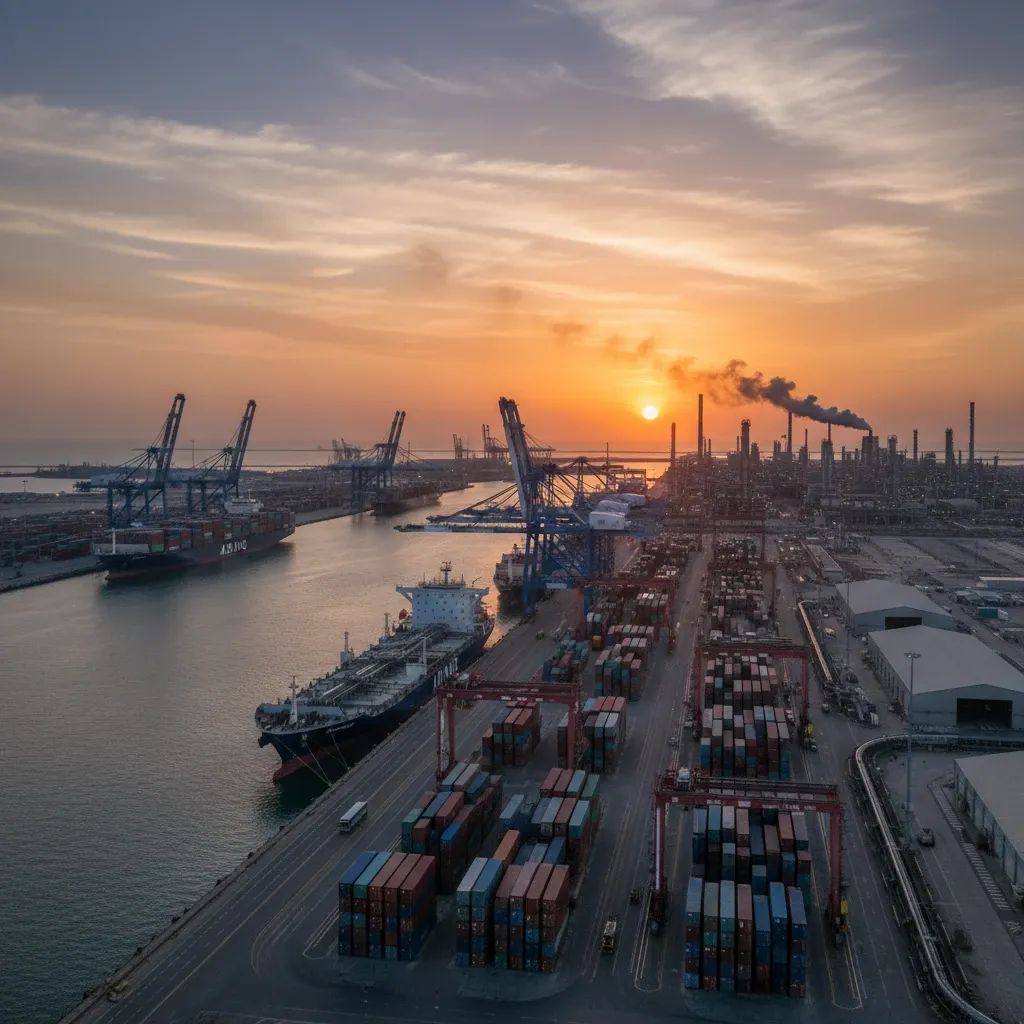
For expatriates and investors in the UAE, Sudan's trajectory carries tangible implications. The Horn of Africa region, where Sudan sits, is critical to maritime trade routes through the Red Sea—routes that link the UAE's Jebel Ali Port to European and East African markets. Approximately 25% of cargo passing through Jebel Ali Port transits via Red Sea routes, making regional instability a direct concern for shipping costs and business operations. Prolonged instability in Sudan could disrupt these corridors, driving up shipping insurance costs and rerouting cargo, adding an estimated 5-10% premium to maritime insurance policies for vessels operating in Red Sea waters.
Abu Dhabi's active mediation also positions the UAE as a potential gatekeeper for reconstruction contracts once the conflict subsides. Historical precedent suggests that Emirati firms could secure early-entry advantages in infrastructure, telecommunications, and energy sectors if a civilian-led government takes shape. However, the pathway remains fraught: the Sudanese government has already rejected a US-backed ceasefire roadmap proposed in February 2026, citing concerns over safeguarding "supreme national interests."
For UAE-based humanitarian organizations and charities, the international pledges from the Berlin Conference open channels for coordinated aid delivery. The UAE hosts a significant Sudanese diaspora community numbering over 150,000 residents, many of whom maintain family and business ties to Sudan. The UAE's Ministry of Foreign Affairs has consistently emphasized the need for unimpeded humanitarian access, aligning with UN calls for safe corridors to reach millions cut off from basic services—a priority particularly important given the direct community impact on residents with Sudanese heritage.
The Ceasefire Stalemate and Competing Frameworks
Despite diplomatic momentum, prospects for an immediate breakthrough remain dim. In May 2026, a coalition of Sudanese civilian and political forces meeting in Nairobi proposed a renewable three-month ceasefire monitored by local, regional, and international mechanisms. The proposal included a Joint Military Ceasefire Committee to track violations—yet neither the Sudanese Armed Forces nor the RSF have publicly committed to the terms.
The US-backed roadmap presented to the UN Security Council in February outlined a phased approach: an immediate humanitarian truce, UN-supervised aid corridors, gradual negotiation of a permanent ceasefire, transition to civilian governance, and democratic elections. Khartoum's formal rejection of this framework exposed the limits of external leverage. The RSF, by contrast, signaled conditional acceptance in principle, revealing the fractured nature of Sudan's warring factions.
The Quintet's approach—focused on Sudanese ownership of the political process—attempts to sidestep the accusation of foreign imposition. Yet the involvement of around 40 Sudanese civilian representatives at the Berlin Conference, hailed as an innovation, also highlighted the challenge: how to balance inclusivity with the reality that armed groups control territory on the ground.
Why Political Solutions Matter More Than Military Victories
The UAE's statement explicitly underscored the need to prioritize political solutions over military conflict—a stance reflecting hard-won lessons from regional conflicts in Libya, Yemen, and Syria. Military stalemates in those theaters have demonstrated that battlefield dominance rarely translates into sustainable governance.
For Sudan, the arithmetic is sobering. The conflict, which erupted in April 2023 between rival military factions, has now entered its fourth year in 2026, with the country fragmenting into zones of influence controlled by rival militias. The humanitarian toll is staggering: millions face acute food insecurity, and the shortfall in international aid threatens to worsen malnutrition and disease outbreaks.
The UAE's backing of a civilian-led transition aligns with broader Gulf Cooperation Council (GCC) interests in stabilizing the Horn of Africa. Emirati officials have privately emphasized that a durable peace in Sudan requires addressing the root causes of the 2019 uprising that toppled President Omar al-Bashir—namely, economic collapse, political marginalization, and the dominance of security apparatus over civilian institutions.
The Quintet's Role and Regional Coordination
The Quintet mechanism represents an attempt to unify fragmented diplomatic efforts. Critics have long complained that competing mediation tracks—the US-led Quad, the African Union's initiatives, and the UN's special envoy—lack coherence and allow spoilers to play one forum against another.
Pekka Haavisto, the UN Secretary-General's Personal Envoy for Sudan appointed in February 2026, has undertaken a regional tour to engage stakeholders, but his mandate is constrained by the warring parties' refusal to negotiate in good faith. The Quintet's emphasis on Sudanese ownership aims to build legitimacy for any eventual agreement, but it also raises the risk of prolonged consultations without tangible de-escalation on the ground.
The UAE's role within the Quad—alongside the US, Saudi Arabia, and Egypt—gives Abu Dhabi dual leverage: it can push for military de-escalation through direct talks with armed factions while simultaneously supporting the Quintet's civilian dialogue track. This dual-track diplomacy reflects the UAE's broader foreign policy strategy of hedging bets across multiple frameworks.
Humanitarian Priorities and Aid Delivery
The UAE's statement reaffirmed full support for efforts to protect civilians, alleviate suffering, and ensure humanitarian assistance delivery. In practical terms, this means backing proposals for safe corridors, cross-border aid access, and the establishment of verification mechanisms to monitor ceasefire compliance.
Germany's pledge at the Berlin Conference to become one of the largest donors—alongside the overall €1.5 billion commitment—provides a financial baseline. However, aid organizations on the ground report that funding alone is insufficient without security guarantees. Attacks on humanitarian convoys and the deliberate obstruction of aid by armed groups remain pervasive.
For UAE-based residents with ties to Sudan—whether through family, business, or diaspora networks—the humanitarian crisis presents both a moral imperative and a practical challenge. Remittances from the Gulf have historically been a lifeline for Sudanese households, but the collapse of banking infrastructure and currency instability inside Sudan complicate money transfers.
The Road Ahead: Obstacles and Opportunities
The international community's call for a civilian-led, inclusive, and independent transition reflects the aspirations articulated by millions of Sudanese during the 2019 revolution. Yet the path from aspiration to implementation is littered with obstacles: entrenched military interests, regional proxy dynamics, and the absence of a credible enforcement mechanism for any ceasefire agreement.
The UAE's backing of the joint statement and the Quintet process signals Abu Dhabi's preference for a negotiated settlement over a protracted military stalemate. However, the Emirates' own involvement in the Quad—which includes Egypt, a key supporter of the Sudanese Armed Forces—illustrates the complex regional alignments at play.
For now, the focus remains on establishing the preparatory committee agreed upon in Addis Ababa and translating diplomatic momentum into tangible de-escalation measures. Whether these efforts can overcome the battlefield realities and deliver a sustainable peace remains the defining question for Sudan's future—and for the UAE's role in shaping it.


