
A Nation's Transport Trial Begins Rolling
The United Arab Emirates Railway Corporation has officially moved into trial operations. On June 30, 2026, the first trial passenger train departed Abu Dhabi's Mohamed bin Zayed City station bound for Fujairah's Al Hilal terminus—a 105-minute crossing that marks the beginning of a new phase for how residents and commuters will eventually move across the federation. This inaugural journey launches the passenger service trial period, with full commercial operations scheduled to roll out in phases through March 2027.
What's Actually Changing
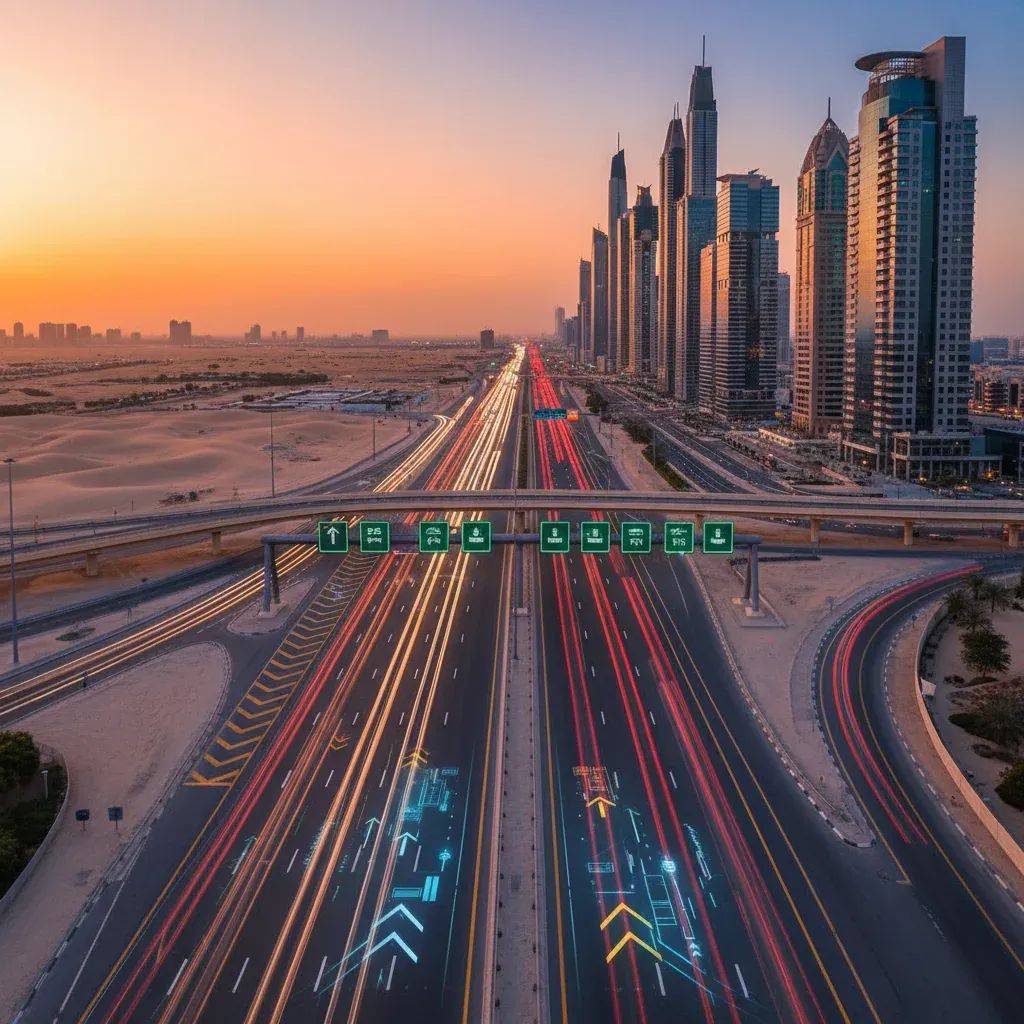
• Speed advantage over highways: Trains hit 200 km/h reliably, insulating passengers from the E11's notorious congestion—no more calculating "best departure times" to avoid traffic.
• Price structure: A one-way Comfort Class ticket costs AED 55, with Premium Class available at AED 120. This positions rail competitively against buses (AED 25-50, slower) and taxis (AED 300+ for solo travelers on intercity routes).
• Network completion timeline: By March 2027, 11 stations will connect Abu Dhabi, Dubai, Sharjah, and Fujairah—transforming what is currently a patchwork of high-cost travel options into an integrated system.
The Immediate Context
Etihad Rail's freight operations have moved cargo across this 900-kilometer corridor since 2023, proving the infrastructure works. What's new is bolting 13 passenger trains onto existing tracks, each carrying 400 travelers split between Comfort and Premium classes. The trains arrived fully equipped: individual seat screens, USB charging ports, climate control, and service trolleys for coffee and snacks. Stations deployed with car parks, taxi ranks, food vendors, and rental car counters—essentially replicating airport logistics at 11 locations.
The passenger service launches in carefully sequenced waves. Today marks Phase 1: Abu Dhabi-Fujairah trial service. On September 30, Dubai's Jumeirah Golf Estates station opens alongside Al Dhaid in Sharjah's northeast, extending the network closer to Dubai. By December 30, five Al Dhafra region stations activate, primarily serving industrial workers in oil fields near Ruwais. March 2027 closes the loop with Sharjah University City, positioning the system as the nation's first truly integrated intercity rail network.
How This Disrupts Existing Travel Economics
Anyone commuting between emirates knows the brutal calculus. A solo taxi from Abu Dhabi to Dubai runs AED 300-500 depending on demand. Inter-city buses save money—AED 25-50—but trade speed for savings, often consuming 2-2.5 hours wrapped in traffic. Domestic flights sound fast until you add airport procedures; true door-to-door time from downtown Abu Dhabi to downtown Dubai rarely beats 3 hours, and tickets average AED 897 return.
The train introduces a third option: predictable pricing with Comfort fares at AED 55 and Premium at AED 120. For a team member commuting Abu Dhabi-Dubai twice weekly for business once the September network launches, rail offers genuine convenience benefits alongside cost savings. Annual taxi costs approach AED 100,000; trains would cost roughly AED 15,000 at Comfort Class—a significant swing that will reshape individual transport budgeting.
Residential patterns may follow suit. Currently, many employees accept grueling commutes from cheaper housing in the periphery because intercity costs prohibit regular long-distance relocation. Affordable housing clusters in satellite towns could become viable if rail connections improve intercity accessibility.
Station Geography and Last-Mile Reality
The network's success hinges entirely on whether passengers can reach stations without private cars. Mohamed bin Zayed City station sits near Dalma Mall, accessible by multiple bus routes and ride-hailing services without requiring 20-minute drives from home. This matters urgently—if residents must drive to catch trains, adoption stalls.
The Dubai connection proves critical. The Jumeirah Golf Estates station will physically connect to Dubai Metro infrastructure, allowing the following journey: Metro from Deira or Bur Dubai to the Jumeirah terminus, a platform transfer to Etihad Rail, then onward to Abu Dhabi's government and business district. That's genuinely viable for commuting—something Dubai's current options don't enable equally well. For Abu Dhabi residents working in Dubai Marina or Downtown, the inverse holds: Mohamed bin Zayed City to Dubai corridor becomes preferable to sitting in cars.
Sharjah University City station proximity to Sharjah International Airport opens unanticipated connectivity potential. Passengers from Abu Dhabi or Dubai could theoretically connect to regional flights without the bottleneck of driving to DXB or AUH airport, though this requires seamless terminal partnerships that haven't yet been announced.
The Economic Outlook and Job Creation
Etihad Rail's infrastructure investment represents a substantial commitment to intercity connectivity. The jobs pipeline runs parallel: 9,000+ positions materialize in operations, maintenance, security, cleaning, and station management—distributed across all emirates rather than concentrated in Abu Dhabi or Dubai. These positions pay reliably, don't require university credentials, and represent genuine diversification beyond oil and tourism sectors that traditionally employ lower-skilled labor.
Property markets near announced stations are attracting investor attention. Real estate developers are quietly positioning projects to capture station-adjacent demand, reflecting confidence in the network's long-term role in the emirate's transport infrastructure.
Shifting Environmental Burden and Public Health
The UAE Net Zero 2050 strategy depends on transport transformation. Etihad Rail contributes to this objective through modal shift from private vehicles. Rail freight delivers particularly sharp climate returns—shifting cargo from trucks to trains reduces CO2 by up to 80% per ton-kilometer, making the infrastructure investment environmentally significant.
The safety dimension also matters. Road safety benefits from reduced vehicle congestion on intercity highways, as fewer cars on roads during peak periods generally correlates with improved traffic safety outcomes.
The Cultural Adoption Question
The United Arab Emirates has historically engineered society around private vehicle ownership. Wide highways, abundant parking, subsidized fuel, and a cultural identity tied to automobiles run deep. Unlike Singapore or Tokyo, where public transit adoption reflects necessity and cultural expectation, the UAE population chose cars when given options. Reversing that requires more than convenient scheduling and competitive pricing.
Behavioral research on comparable transitions suggests 3-5 years for habit formation around new transit infrastructure. Initial ridership reflects early adopters and price-sensitive travelers. Sustaining and growing adoption depends on reliability so precise that missed connections become genuinely rare, frequency so consistent that schedules become second nature, and integration so seamless that multimodal trips feel simpler than driving solo.
One operational failure—trains running late consistently, stations overwhelmed at peak times, ticket systems crashing during booking—and confidence collapses rapidly. Commuters will revert to cars after one or two frustrated attempts. The psychological contract is conditional: "I'll try the train if it works better than driving." Etihad Rail's critical period for proving reliable service runs through the initial months of operation.
What Comes After 2027
A dedicated high-speed Abu Dhabi-Dubai line is under construction, with officials targeting launch by 2030. That project signals medium-term infrastructure thinking about intercity connectivity. The Al Sila terminus near the Saudi border similarly suggests long-term strategic positioning for regional transport networks, though cross-border rail coordination remains in development stages.
Risks Worth Naming Directly
Etihad Rail's passenger service depends on achieving meaningful ridership penetration. Success requires genuine behavioral shift among residents, not just curiosity-driven trial usage. Failure to attract sustained ridership after the initial launch period would mean infrastructure operating below capacity.
Operational hiccups during the critical first months could significantly impact adoption momentum. If the September network expansion produces service interruptions or operational challenges, adoption velocity could slow markedly. The UAE's population has alternatives; unlike transit-dependent cities elsewhere, passengers here can revert to cars if the train experience disappoints.
The Real Test Ahead
June 30, 2026, marks the beginning of the trial phase for Etihad Rail, but sustained success depends on what happens over the coming months. The system must prove that the infrastructure, pricing, and experience genuinely serve residents' transportation needs. Early trial users will provide critical feedback; the question is whether the service matures into reliable, trusted intercity connectivity.
The implications reach beyond transportation economics. A functioning intercity rail system demonstrates planning competence, operational excellence, and willingness to invest in infrastructure that benefits populations. It shows whether the UAE can deliver complex, integrated projects on schedule—a credential that builds confidence in future ventures.
The trial phase has begun. Whether it evolves into a transformation of intercity travel depends entirely on what happens next.


