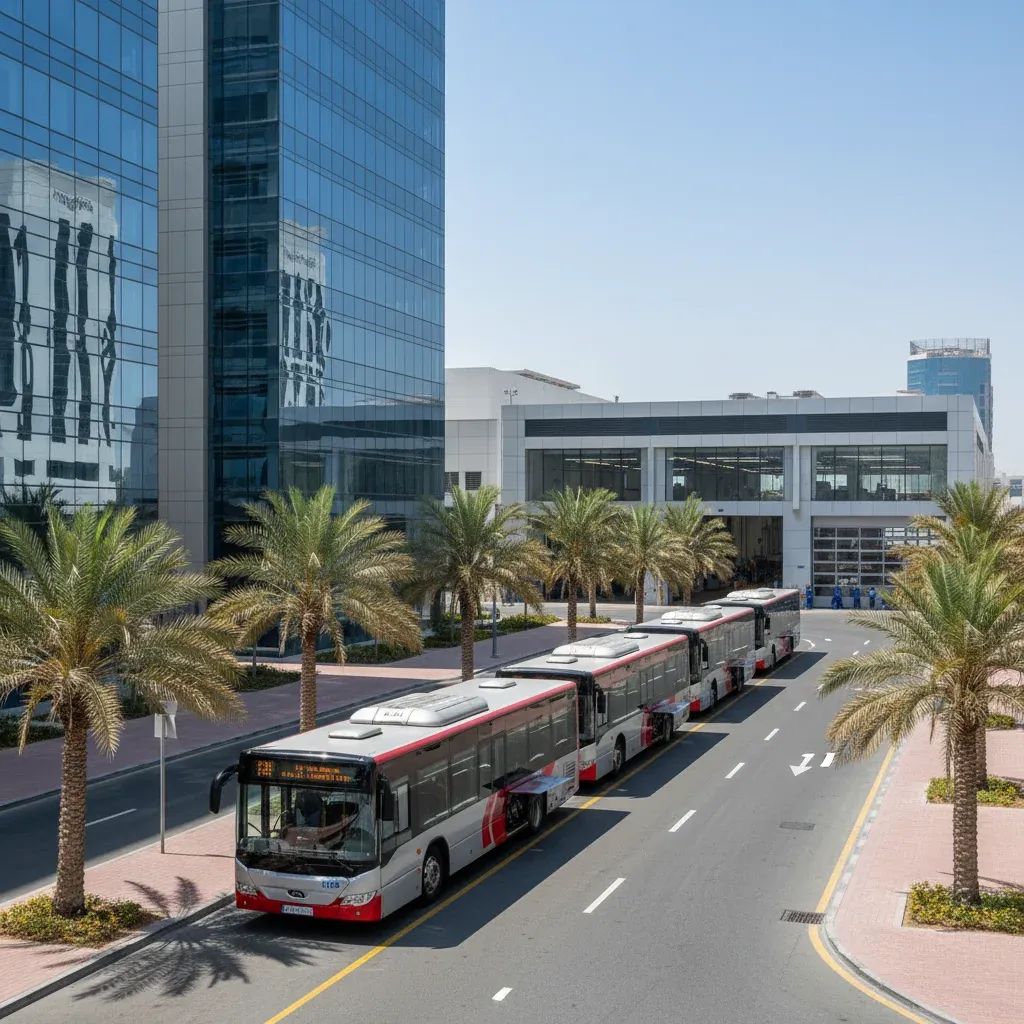
When School Buses Aren't Ready: What the April 20 Classroom Return Means for Your Family
The UAE Ministry of Education has temporarily halted school bus operations just days before students return to physical classrooms on April 20, citing the need to verify that transport services comply with federal safety standards before resuming full service. Families across all emirates now face the immediate challenge of arranging alternative transportation while officials conduct week-by-week readiness assessments.
Why This Matters
• Starting April 20: Students return to in-person learning without access to traditional bus services; parents must arrange private transportation.
• Open-ended timeline: Weekly reviews will determine when buses resume, with no confirmed restart date announced yet.
• Financial friction: Many families have prepaid bus fees and are now negotiating refunds or payment suspensions with schools and transport operators.
The Coordination Puzzle Behind the Delay
When the UAE Ministry of Education announced the postponement, the decision reflected not bureaucratic foot-dragging but the genuine complexity of aligning transport operations across multiple regulatory jurisdictions. Dubai's Roads and Transport Authority, Abu Dhabi's Integrated Transport Centre, Sharjah's Roads and Transport Authority, and municipal traffic divisions all enforce overlapping but distinct requirements.
Transport authorities must verify that school buses meet the operational framework established over the past decade. These rules encompass vehicle specifications—yellow exterior with signage, CCTV systems, GPS tracking, emergency equipment—and personnel standards requiring drivers to hold heavy vehicle licenses, pass background checks, complete specialized training, and demonstrate periodic medical fitness. Female attendants remain mandatory for younger passengers.
Recent amendments added another layer: journey time caps of 45 minutes for kindergarten pupils and 60 minutes for other age groups. This represents a policy shift addressing longstanding complaints from parents about children spending excessive time in transit. Transport providers must recalibrate routes to meet these limits while still serving all registered students, a logistical exercise requiring coordination between schools, transport companies, and traffic planners.
The coordination demands extend to technology integration. Modern school buses in the UAE operate with RFID attendance systems, mobile applications providing parents real-time vehicle locations, and AI monitoring that flags safety deviations. Daily pre-operation inspections check lighting, tires, seating integrity, and structural soundness. These systems, while enhancing safety, require technical verification and staff training before service launch.
What Families Are Actually Doing Right Now
The transportation vacuum has forced immediate improvisation across households. Parents in Dubai, Abu Dhabi, Sharjah, and the Northern Emirates are organizing carpool arrangements, adjusting work schedules to accommodate school runs, and negotiating flexible childcare arrangements with family members or domestic help. The financial implications ripple quickly—families who pre-paid bus fees for the academic year are contacting schools demanding refunds or temporary payment suspensions.
Schools, particularly private institutions, have activated contingency protocols. Many are implementing hybrid rotational models where students attend classes on alternating days while others continue remote instruction. This staggered approach reduces the immediate transportation burden and buys time for bus services to achieve regulatory clearance. However, hybrid models complicate school operations, requiring split scheduling for facilities, staff, and administrative systems.
Transport service providers face mounting pressure to modify contracts. Some operators have agreed to pause fees during the postponement, while others cite existing contractual language that limits their flexibility. This contractual friction—the gap between operators' legal obligations and families' practical needs—has become a point of tension in numerous emirates.
The Emerging Alternative: Premium Shared Transport
Dubai's Roads and Transport Authority introduced a parallel development that may reshape school transportation long-term. In mid-January, the authority launched a pilot "pooled transport" initiative offering luxury SUV services for students aged 14 and above in congested school clusters. The program targets expansion to additional Dubai districts by September 2026, with an ambitious goal of transitioning 60% of the student population into shared premium vehicles within three years.
This initiative operates independently from traditional school buses and addresses a different market segment—families seeking higher comfort standards and flexible app-based arrangements. However, it does not solve the immediate transportation challenge for younger students (kindergarten through year 6) or families in emirates outside Dubai's pilot zones. The broader implication is that the UAE Ministry of Education may be evaluating transportation models beyond conventional yellow buses, potentially accelerating a longer-term shift toward diversified services.
The Safety Standards Driving the Delay
The postponement's stated rationale—ensuring adherence to the "highest safety standards"—reflects genuine regulatory substance rather than hollow bureaucratic language. The UAE's school bus framework represents cumulative policy refinement addressing documented safety concerns. Stringent vehicle specifications, driver qualifications, technology integration, and journey time limits all address identifiable risks that transport authorities and education officials have prioritized.
Yet the coordination required to implement these standards across diverse emirates is genuinely complex. Traffic conditions differ between Dubai's congested streets and the more open highways of the Northern Emirates. School density varies, affecting route efficiency. Municipal infrastructure readiness differs. Some emirates have modernized traffic management systems; others are still upgrading monitoring capabilities. These variations require localized adaptation rather than uniform application, complicating the readiness verification process.
The journey time caps, while advancing child welfare by reducing exhausting commutes, force transport companies to redesign routes. A bus that previously served 40 students across a sprawling network might now need to operate two separate routes to meet the 60-minute threshold, requiring additional vehicles, drivers, and attendants. These operational adjustments demand thorough planning to avoid bottlenecks.
What Happens Next: The Weekly Review Process
The UAE Ministry of Education has committed to evaluating readiness progress weekly, with official announcements regarding service resumption channeled through the ministry, the Knowledge and Human Development Authority in Dubai, and the UAE Media Office. This iterative review structure signals that officials recognize the postponement's disruptive impact but are unwilling to rush implementation without adequate verification.
Parents monitoring announcements should expect updates to follow a predictable pattern: each weekly review will confirm either continued postponement (if readiness standards remain unmet) or a specific resumption date accompanied by the particular emirates or school clusters where buses will operate first. A phased restart—beginning with low-traffic regions or specific emirates—is plausible, rather than simultaneous service across all emirates.
Schools have been instructed to maintain direct communication with families, detailing transportation alternatives and any modifications to attendance expectations during the transition phase. This guidance acknowledges that some families may struggle to maintain daily in-person attendance without formal transport options, and that schools should plan accordingly.
The Broader Context: Why This Matters Beyond Logistics
The school bus postponement, while disruptive in practice, reflects the UAE Ministry of Education's systematic approach to operational readiness. Rather than opening classrooms and addressing transport gaps afterward, officials chose to coordinate comprehensive preparation beforehand. This philosophy—prioritizing thoroughness over expediency—frustrates families navigating immediate challenges but aims to prevent cascading problems once students fully return.
The postponement also highlights the structural challenge of aligning multiple government jurisdictions around shared objectives. Dubai, Abu Dhabi, Sharjah, and the Northern Emirates each maintain distinct transport authorities with parallel but non-identical regulatory frameworks. Federal education policy must accommodate these local variations, a coordination exercise that often appears bureaucratically cumbersome but reflects the federation's constitutional structure.
For residents, the practical takeaway is clear: the absence of school buses on April 20 is temporary but open-ended. Families should assume they will need to arrange private transportation through at least May, plan financial contingencies for prepaid bus fees already committed, and monitor official announcements weekly for resumption timelines. Schools should retain hybrid flexibility to manage attendance fluctuations during the transition period.
The UAE Ministry of Education's decision prioritizes systematic preparation over convenient expediency—a principle that may extend transportation resumption by weeks but aims to establish a foundation for reliable, safe service once operations restart.