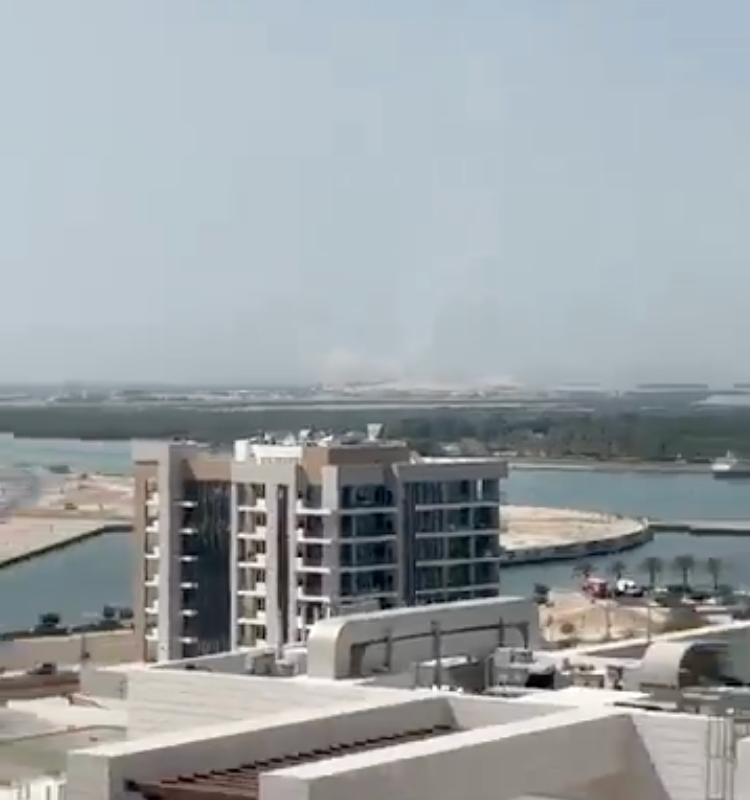
Brent crude has vaulted past $88 a barrel following a 4.6% single-day surge on Friday, marking the steepest rally in nearly two months and signaling renewed anxiety about Middle East supply stability. For residents and businesses across the United Arab Emirates, this spike carries immediate financial weight—expect higher petrol station prices next month and elevated operating costs across logistics, construction, and utilities sectors.
Why This Matters
• Fuel pump prices will likely climb 5-8% in August across UAE emirates as monthly adjustments reflect elevated Brent benchmarks above $85 per barrel
• Diesel cost inflation threatens construction and delivery sectors, with refinery margins hitting record levels ($66.25 above Brent) due to shipping constraints
• Diplomatic stability through Q4 is the critical variable—analysts at JPMorgan and Goldman Sachs expect prices to normalize toward $78-80 by year-end if tensions ease, but any escalation could push Brent above $100
• Government revenues improve modestly, supporting pension payouts and infrastructure spending, but operational friction undermines some gains for UAE-based energy exporters
The Crisis Nobody Expected to See Twice
The irony of Friday's oil rally sits in plain sight: global oil demand is actually declining this year. The U.S. Energy Information Administration projects a 1.1 million barrel-per-day contraction across 2026, driven by slower economic growth, electric vehicle adoption, and efficiency improvements. Meanwhile, OPEC+ has quietly approved consecutive production quota increases. By all fundamental metrics, oil should be gravitating downward. Instead, geopolitical anxiety has overwhelmed demand destruction, lifting both Brent crude to $88.10 and West Texas Intermediate to $82.49—their highest levels since mid-June.
The reason sits along two maritime arteries that no longer tolerate alternative routing. The Strait of Hormuz operates at a fraction of normal capacity following intensified US-Iran military exchanges. Iranian missiles struck Kuwaiti power infrastructure and a commercial tanker off Oman earlier this week, actions that traders interpreted as signals of deepening conflict rather than isolated incidents. Simultaneously, Tehran has instructed Houthi-aligned naval forces to prepare for potential closure of the Bab el-Mandeb strait, the southern gateway to the Red Sea and an alternative path for tankers avoiding the Persian Gulf.
This dual-chokepoint squeeze is historically unusual. When one corridor faced disruption in prior decades, shippers pivoted elsewhere. Today, that option has effectively vanished. A vessel forced to circumnavigate the Cape of Good Hope—the only remaining route if both straits constrict—adds 10 to 14 days to transit time and incurs freight surcharges that dwarf normal shipping costs. Tanker operators and refiners have no escape hatch.
Why the UAE Cannot Escape This Even as It Profits
The United Arab Emirates sits in a peculiar position. As the world's seventh-largest crude oil producer and a member of OPEC+, the nation benefits directly from elevated prices. Higher benchmark valuations support government revenues, bolster sovereign wealth fund operations, and fund infrastructure projects across Abu Dhabi, Dubai, and the northern emirates. The Abu Dhabi National Oil Company and affiliated producers are collecting enlarged margins on each barrel exported.
Yet operational friction erodes this advantage. The majority of UAE crude still transits either the Strait of Hormuz or the Red Sea bound for Asian markets. While the Abu Dhabi Crude Oil Pipeline to Fujairah provides some insulation by routing oil directly to the eastern coast, this facility operates at finite capacity and primarily serves Gulf Cooperation Council refineries rather than international export markets. The UAE's export volumes face identical shipping delays, insurance premiums, and supply-chain uncertainty affecting every other Gulf producer.
The UAE Ministry of Energy and Infrastructure has not disclosed tactical responses, but industry participants suggest contingency planning is underway. The central issue remains unresolved: the revenue uplift from higher crude prices cannot fully compensate for the operational costs and supply-chain friction imposed by the very geopolitical crisis driving the price elevation. This is a windfall with embedded friction built in.
The Numbers Tell a Story of Fragility
Friday's $3.87 jump in Brent represents the capstone of a volatile seven days. Both benchmarks posted their third and second consecutive weekly gains respectively, accumulating roughly 16% in gains across the trading week. Brent is tracking its strongest advance since March, while WTI has posted its best performance since early March—the early stage of an earlier Middle East conflict that sent Brent above $120 per barrel before normalization began.
The scale of this week's rally is striking precisely because it lacks accompanying supply loss. No major refinery has been damaged. No OPEC+ member has declared production cuts triggered by the crisis. The entire price movement is attributable to perceived supply risk rather than confirmed supply outage. This distinction matters enormously for forecasting because perceived risk can evaporate quickly if diplomatic resolution materializes.
Nowhere is this risk premium more visible than in diesel crack spreads, the refinery profit margin between crude input and refined fuel output. These spreads reached $66.25 per barrel above Brent—a historical record that signals acute refinery capacity constraints. For construction companies, delivery services, and power utilities dependent on diesel, this divergence translates into accelerated cost pressure. A gallon of diesel now embeds a premium reflecting not just crude prices but supply-chain logistics and refinery scarcity that crude prices alone do not capture.
What Residents Should Expect at the Pump and Beyond
When the UAE's petroleum pricing committee announces August fuel adjustments, expect pump prices to reflect the elevated Brent benchmark environment. Industry analysts project petrol price increases of 5% to 8% depending on the final calculation methodology and any government subsidy adjustments. For a typical household running a mid-size sedan, this translates to roughly AED 3-5 additional monthly expenditure on fuel, a modest but cumulative burden for middle-income residents.
Diesel-dependent sectors face sharper exposure. Construction companies bidding on projects completed in August and September must account for elevated diesel costs, either absorbing margins or passing charges to clients. Delivery services will likely adjust surcharges. Food importers relying on internal logistics will face higher transport costs, with potential downstream effects on grocery pricing. For residents on fixed incomes or salary-dependent employment, cumulative price pressures from fuel, utilities, and delivery services compound into meaningful household budget friction.
The United Arab Emirates' headline inflation rate stood at 2.8% year-over-year as of June. Sustained crude elevation in the $85-88 range could push this higher, particularly in transportation-intensive sectors. Anyone holding investments in energy stocks, sovereign wealth fund allocations, or inflation-sensitive assets should account for the asymmetry: energy equities benefit in the near term from price elevation, but face downward pressure if prices normalize toward analyst consensus in Q4.
The Analyst Consensus Points to Normalization—With Caveats
Institutional forecasters have collectively sketched a downward trajectory for oil prices across the remainder of 2026, contingent on diplomatic stabilization. JPMorgan's energy desk projects Brent averaging $86 in Q3, declining to $80 in Q4, with year-end prices near $78. Goldman Sachs has cut its Q4 Brent forecast to $80 and flagged a downside scenario where crude could collapse to $70 if supply recovers faster than geopolitical tensions ease. Morgan Stanley similarly revised its Q4 estimate to $80, and S&P Global Energy's base case projects dated Brent at $87 by year-end.
These forecasts rest on a specific assumption: that US-Iran hostilities de-escalate through diplomatic channels between now and early autumn, allowing shipping corridors to normalize and supply risk premiums to unwind. This is plausible but far from inevitable. The U.S. Energy Information Administration has projected Brent averaging around $82 per barrel for full-year 2026, down 14% from earlier forecasts, reflecting the expectation of normalization post-Q3.
The downside risk sits in tail outcomes. If the conflict expands—formal closure of shipping lanes, major refinery damage, or strikes on critical infrastructure—Brent could breach $100 per barrel, repeating supply shock dynamics that characterized early 2026 when Brent temporarily exceeded $120. While this scenario carries lower probability, the tail risk is material for unhedged portfolios and businesses operating without energy cost hedges.
Where This Ends Matters Enormously
For the United Arab Emirates economy, the optimal scenario involves price stabilization in the $80-85 range through year-end: elevated enough to support government fiscal objectives and sovereign wealth fund spending without so elevated as to dampen global demand or accelerate structural transitions away from hydrocarbons. Abu Dhabi's policymakers likely understand this calculus precisely. Government planning for 2026 and 2027 relies on energy revenue assumptions in this band.
The immediate question confronting traders, energy companies, and household budget planners is whether this week's $88 peak represents a transient spike or the beginning of sustained elevation. The answer depends entirely on which geopolitical scenario materializes over the next 60 days. Until diplomatic resolution becomes credible, volatility remains the baseline expectation for markets, fuel prices, and business operating costs across the emirates.