
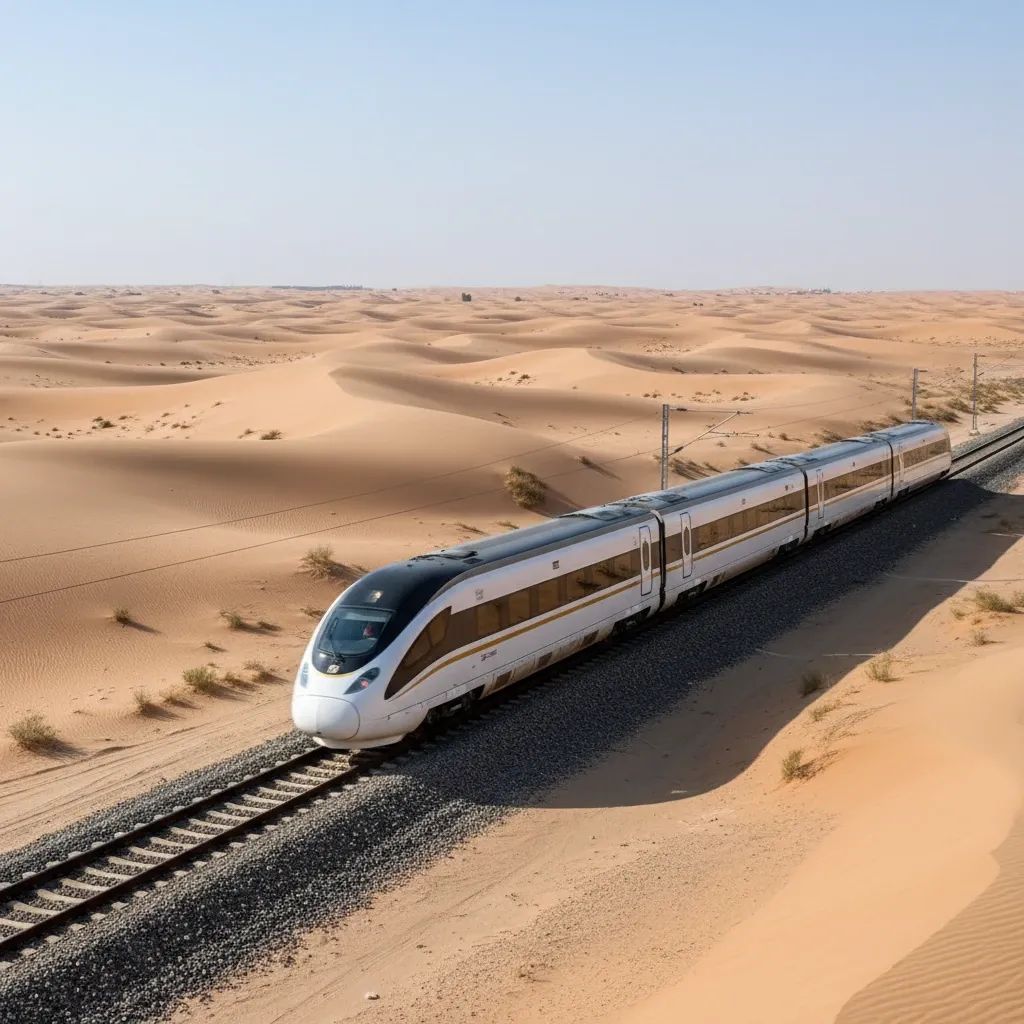
Etihad Rail has successfully completed trial passenger operations between Al Ghuwaifat near the Saudi border and Al Faya station in Abu Dhabi, marking a critical milestone toward activating the United Arab Emirates' first national passenger railway network. The route, tested in partnership with the Abu Dhabi Emergencies, Crises and Disasters Management Centre (ADCMC), is designed to provide alternative transport options during emergencies while strengthening the UAE's connectivity with Saudi Arabia.
Why This Matters
• Strategic corridor: The Al Ghuwaifat–Al Faya link forms a crucial artery between the UAE and Saudi Arabia, enhancing cross-border mobility and port access.
• 2026 launch window: Passenger services across the broader Etihad Rail network are set to commence in phases throughout this year, with 11 stations spanning a 900-kilometer route from Ghuwaifat to Fujairah.
• Crisis resilience: Trial runs validate the rail network's capacity to serve as a backup transport option during disruptions, a priority for ADCMC's risk management framework.
• 400-passenger trains: Trains will operate at speeds up to 200 km/h, offering a high-capacity alternative to road travel.
The trial represents the first time a passenger train has operated on this stretch of the United Arab Emirates national rail infrastructure, which until now has been used exclusively for freight. While no firm date has been announced for public ticketing on the Al Ghuwaifat–Al Faya segment, the successful test run confirms that the technical and operational groundwork is in place.
What This Means for Residents
For UAE residents and cross-border commuters, the Al Ghuwaifat route offers a glimpse into a near-future transport landscape that prioritizes speed, capacity, and reliability. Once commercial operations begin, passengers will be able to bypass congested highways on journeys between the western border region and the capital area, cutting travel times significantly.
The ADCMC partnership signals that the railway is not just a commercial venture but a component of the emirate's comprehensive emergency response infrastructure. In scenarios ranging from extreme weather to road closures, the rail network will provide a fallback option for both passenger and essential goods movement. This aligns with broader Abu Dhabi government strategies to diversify transport modes and reduce single-point failure risks in critical logistics.
The trial also underscores the UAE's commitment to integrating its transport systems with those of neighboring Gulf states. Al Ghuwaifat, positioned at the Saudi frontier, is a natural gateway for future cross-border rail services, potentially linking Emirati cities with Riyadh and Jeddah as part of the long-discussed GCC railway network.
Testing Infrastructure Resilience
The collaboration between Etihad Rail and ADCMC goes beyond routine operational checks. According to statements from both entities, the trial runs were structured around multi-scenario management frameworks that simulate various disruption events—from port congestion to road accidents—to assess how quickly the rail network can be activated as an alternative.
ADCMC's role in the trial emphasizes logistical security and business continuity planning. The center monitors transport readiness around the clock, using real-time data to evaluate how the rail system integrates with other vital sectors such as ports, airports, and emergency services. This proactive approach reflects a shift in how the United Arab Emirates government views infrastructure: not merely as economic assets but as instruments of resilience.
For Etihad Rail, the trial validated the network's technical flexibility. Trains were tested under operational conditions that mirror real-world scenarios, including coordination with freight schedules, station management protocols, and safety systems. The company has stated that maintaining sustainable operations and delivering well-organized transport solutions are central to its mandate, particularly as the network scales up to accommodate both passengers and cargo simultaneously.
The Broader Network Rollout
While Al Ghuwaifat and Al Faya are now confirmed as operational test sites, they represent just two nodes in a much larger system. The Etihad Rail passenger network is being rolled out in phases throughout 2026, with initial priority given to the Abu Dhabi–Dubai–Fujairah corridor. This route, which connects the capital with the UAE's commercial hub and a key east coast port, is expected to handle the bulk of early passenger traffic.
Additional stations, including Al Faya, will be activated as demand and operational capacity allow. The phased approach enables Etihad Rail to refine scheduling, ticketing, and safety protocols before scaling to the full 11-station network. Industry observers note that this gradual rollout mirrors international best practices, reducing the risk of service disruptions that often accompany large-scale infrastructure debuts.
The 900-kilometer network will ultimately link the entire UAE from west to east, transforming the way residents and visitors move between emirates. For expats working in Abu Dhabi but living in outlying areas, or for tourists seeking efficient intercity travel, the rail system promises a level of convenience that has been absent from the UAE's transport mix.
Unanswered Questions on Pricing and Schedules
Despite the progress, key details remain undisclosed. Etihad Rail has not yet released information on ticket pricing, frequency of service, or exact departure times for any route, including Al Ghuwaifat–Al Faya. The company has indicated that these specifics will be announced closer to the commercial launch date, which is anticipated within the coming months.
The lack of pricing transparency leaves open questions about how competitive the rail service will be compared to existing road and air options. For the Al Ghuwaifat route, which serves a sparsely populated border region, demand will likely hinge on how effectively the rail system integrates with onward connections to Saudi Arabia and whether it offers a tangible time or cost advantage over private vehicles and buses.
Capacity, however, is less of a mystery. Trains designed for the Etihad Rail passenger service are built to carry up to 400 passengers, a figure that positions the rail network as a high-volume option capable of absorbing significant demand during peak travel periods such as holidays and weekend cross-border trips.
Regional Connectivity Implications
The Al Ghuwaifat trial is particularly significant for the Gulf Cooperation Council (GCC) railway project, a long-term initiative to link all six member states via a unified rail network. While progress on the broader GCC rail has been slow, the UAE's domestic network is now the most advanced in the region, and successful operations on the Al Ghuwaifat route could accelerate cross-border integration.
For Saudi Arabia, which has invested heavily in its own rail infrastructure, seamless connectivity with the UAE offers economic and strategic benefits, including enhanced labor mobility, tourism flows, and freight efficiency. The United Arab Emirates stands to gain from improved access to Saudi ports and markets, while also positioning itself as a regional logistics hub.
As the 2026 phased launch unfolds, the Al Ghuwaifat–Al Faya trial will be remembered as the moment when Etihad Rail shifted from a freight-only operator to a full-service transport provider capable of supporting both commercial and emergency needs. For residents, investors, and regional planners, the implications are clear: the UAE's transport landscape is entering a new era.


