
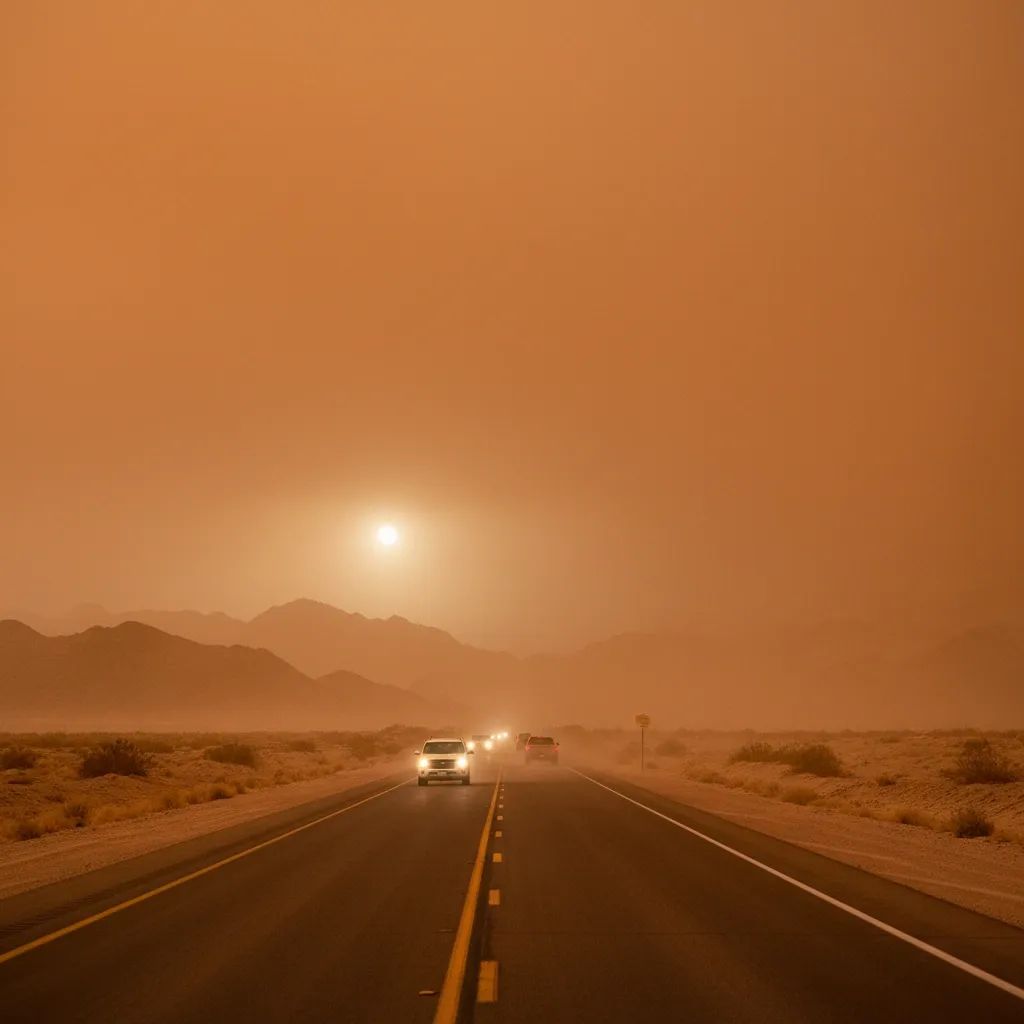
The National Centre of Meteorology in the United Arab Emirates issued a dust storm warning on Wednesday afternoon, March 4, 2026, as northwesterly winds sweep across the country during a specific 4-hour advisory window from 14:55 to 19:00. The warning focuses exclusively on Wednesday evening conditions, when visibility is expected to drop below 2,000m on major highways and coastal zones.
Why This Matters:
• Visibility drops below 2,000m on Sheikh Zayed Road, Emirates Road, and other major corridors during the advisory period
• Reduced visibility increases collision risk for motorists, requiring speed reductions and extended following distances
• Peak dust intensity occurs during afternoon thermal heating, which amplifies wind speeds between 14:55 and 19:00 Wednesday
• General unsettled weather continues through Friday, though the specific dust storm threat is Wednesday evening only
The Wednesday Evening Advisory
The NCM's warning applies specifically to Wednesday, March 4, from 14:55 until 19:00, when northwesterly winds will mobilize dust and sand across open desert corridors and low-lying coastal stretches. During this 4-hour window, thermal heating from daytime temperatures near 34°C will amplify wind speeds to levels capable of stripping visibility below safe driving thresholds.
The Roads and Transport Authority and regional police departments have activated standard protocols for reduced-visibility conditions during this period, emphasizing the elevated risk of multi-vehicle accidents on high-speed corridors. Motorists are advised to reduce speed to 80 km/h when dust plumes obscure road markers, maintain extended following distances, and activate fog lights even during daylight hours.
Dubai International Airport and Abu Dhabi International Airport may implement low-visibility procedures during the advisory hours, which could result in minor schedule adjustments for arriving aircraft. Passengers are encouraged to verify departure times with their airlines as conditions evolve during the Wednesday evening rush.
Maritime operators should expect rough conditions in the Arabian Gulf through Thursday evening, with wave heights periodically reaching levels that complicate loading operations and small-vessel navigation. Bus services connecting emirates may experience delays due to reduced visibility during the peak dust hours.
Broader Weather Pattern Through Friday
Beyond the specific Wednesday evening dust advisory, the United Arab Emirates is experiencing a multi-day unsettled weather system that began Tuesday night and is expected to gradually weaken by Friday. This broader pattern includes shifting wind patterns, scattered rainfall, and residual dust mobilization across all seven emirates.
Cloud cover increased markedly across northern and eastern regions Wednesday morning, bringing the possibility of light to moderate rainfall with isolated heavier bursts in mountainous areas. The precipitation pattern follows the wind shift from southeasterly to northwesterly, a transition that typically signals cooler, more unstable atmospheric conditions in the Gulf region.
Temperature readings Wednesday afternoon reached approximately 34°C in Abu Dhabi and Dubai, with an expected overnight decline to 22-23°C. Thursday will bring a further cooling trend as the northwesterly flow continues, with wind speeds averaging 15-25 km/h and gusts reaching 40 km/h over open water.
By Friday, fair to partly cloudy skies are forecast to return, though residual northwesterly winds will maintain elevated dust potential in exposed inland areas. The NCM projects a gradual stabilization of atmospheric conditions heading into the weekend, with sea states in the Arabian Gulf moderating from rough to moderate by Saturday.
General Precautions for Dust Events
During dust advisories, individuals with respiratory sensitivities—including those with asthma, allergies, or cardiovascular conditions—should consider limiting outdoor activities during peak dust hours. General precautionary measures include using air purifiers where available and monitoring official air quality readings through the Environment Agency Abu Dhabi's public air quality index portal.
Construction companies and outdoor operations typically suspend non-essential work during active dust advisories to protect worker health. Schools across the United Arab Emirates have protocols for restricting outdoor physical activities during dust events, though full closures are rarely necessary unless visibility and air quality deteriorate significantly.
Air conditioning filters in vehicles and buildings may require attention in the days following the dust event, as accumulated dust can reduce system efficiency.
Seasonal Context
March represents a transitional weather window for the Arabian Peninsula, when shifting pressure systems and sea-breeze dynamics create conditions favorable for dust mobilization. While severe dust storms that reduce visibility below 1,000m average only three events annually across the United Arab Emirates, more moderate dust episodes—defined as visibility at or below 5,000m—occur with greater frequency during this period.
The current event, while disruptive, falls within the expected range for early March conditions rather than representing an anomalous system. Residents should continue monitoring official NCM updates as the weather system progresses through the remainder of the week.


