
UAE Air Defense Intercepts Iranian Strikes as Dubai Residents Navigate Weeks of Attacks
The UAE's integrated air defense network intercepted another Iranian strike package in the early morning hours of March 18, with explosions heard across Dubai and Abu Dhabi. The United Arab Emirates Ministry of Defence confirmed the interceptions, a phrase that has become routine over the past three weeks of sustained Iranian retaliation following escalated regional tensions.
What Residents Are Experiencing
Explosions and air defense activity have become frequent enough to disrupt sleep and trigger alarm systems across the Emirates, yet residents continue daily activities with minimal disruption. Restaurants operate at near-capacity; offices function normally; schools continue operations despite intermittent air defense activity overhead.
The UAE Ministry of Defence has confirmed that no civilian casualties have resulted from any breaches of the defense perimeter since hostilities escalated on February 28, though the psychological toll of repeated alerts continues to accumulate. The consistency of official statements has maintained public confidence so far, though residents acknowledge this stability depends entirely on continued defense system performance.
How the Defense System Works
The UAE's layered air defense system operates on a principle called "layered redundancy"—multiple opportunities to intercept threats before they reach the ground. The system comprises several tiers:
Outer layer: American THAAD batteries positioned at strategic locations. These systems are designed to catch ballistic missiles during their descent phase when projectiles follow predictable trajectories.
Intermediate tier: Patriot PAC-3 batteries from the United States, Israeli Barak-8 systems, and South Korean Cheongung II platforms. This layer handles tactical ballistic missiles, cruise missiles, and slower-moving threats.
Inner layer: Short-range systems including Russian Pantsir-S1 point defense units and the UAE-manufactured SkyKnight system, developed by national defense contractor HALCON. European and British platforms—the French Crotale, Swedish RBS-70, and British Rapier systems—also contribute to this layer.
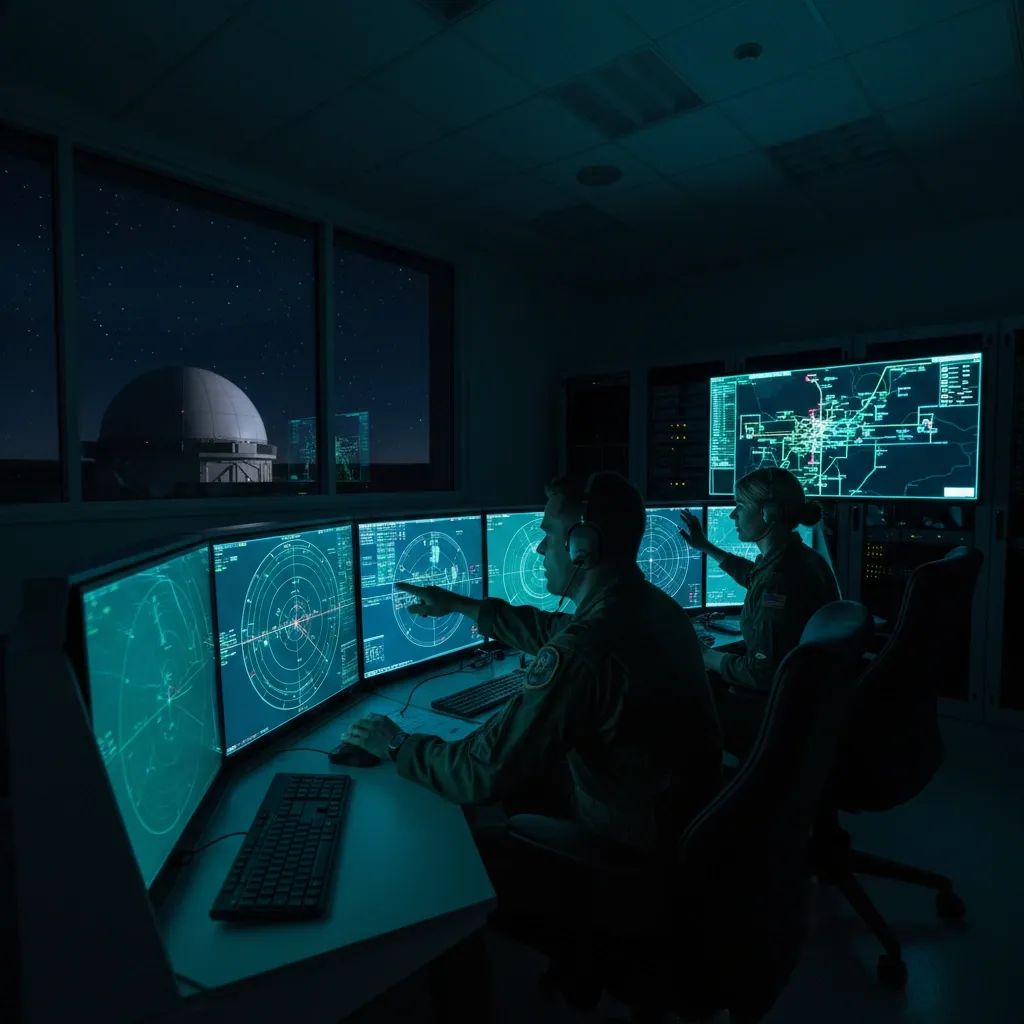
The system's effectiveness depends on integrated command and control, where real-time sensor data flows continuously to centralized command centers that assign interception responsibilities based on threat characteristics—a process occurring at machine speed.
The Conflict Context
Iran launched its retaliation campaign on February 28 following regional escalation. The UAE Ministry of Defence has confirmed that ballistic missiles and drones have been launched toward the Emirates, with the defense system responding to these threats. Regional tensions have also affected neighboring states: Saudi Arabia confirmed intercepting ballistic missiles, Kuwait and Qatar activated their air defense networks, and Iraq experienced strikes targeting the US embassy compound in Baghdad.
Sheikh Abdullah bin Zayed Al Nahyan, the UAE's Foreign Minister, has conducted consultations with international counterparts seeking de-escalation pathways. European nations—France, Germany, and the United Kingdom—issued a joint statement condemning the escalation, while emphasizing European forces did not participate in initial military operations. President Donald Trump has stated American military operations will continue "until all objectives are achieved," effectively anchoring Gulf states into an extended conflict scenario.
Economic and Practical Impact
The repeated air defense activity has created economic consequences:
Insurance and shipping: Commercial property insurance premiums have increased, and shipping companies have reported adjusting operations. The Port of Jebel Ali has experienced activity changes as companies reassess routing and timing decisions.
Tourism: Hotel occupancy in Dubai has shown some softening, with cancellations noted in corporate event sectors and discretionary leisure travel. However, core economic activity—residential real estate transactions, office leasing, banking and financial services—has continued with minimal disruption.
Repositioning of defenses: The UAE Armed Forces have repositioned domestically manufactured systems around critical infrastructure, including the Port of Jebel Ali, desalination plants, and power generation facilities. This reflects the government's dual objective: maintain air defense effectiveness while accepting that some risk cannot be entirely eliminated.
What Remains Uncertain
Military analysts acknowledge that ammunition stockpiles are finite, and sustained saturation attacks could eventually degrade interceptor availability through sheer attrition. While the UAE benefits from direct access to American ammunition supplies and maintains strategic defense partnerships with European contractors, the volume of projectiles available for deployment creates a theoretical scenario in which the defense network could become overwhelmed through depletion rather than technological failure.
UAE leadership has privately acknowledged this structural vulnerability to American counterparts, effectively accepting that regional instability may persist during the current conflict cycle.
The Current Situation
For residents adjusting to ongoing air defense operations, the past three weeks have established new baseline expectations for urban life. Air defense activity is factored into daily schedules; authorities maintain accurate communication about interceptions; port operators adjust cargo timing. The system's credibility rests on consistent performance and accurate public information.
That confidence remains conditional. The United Nations Secretary-General has called for immediate cessation of hostilities, though this plea carries limited enforcement mechanism. For now, residents navigate an environment where advanced defense technology functions to intercept threats, but where the broader regional conflict remains unresolved and the timeline for de-escalation remains unclear.


