
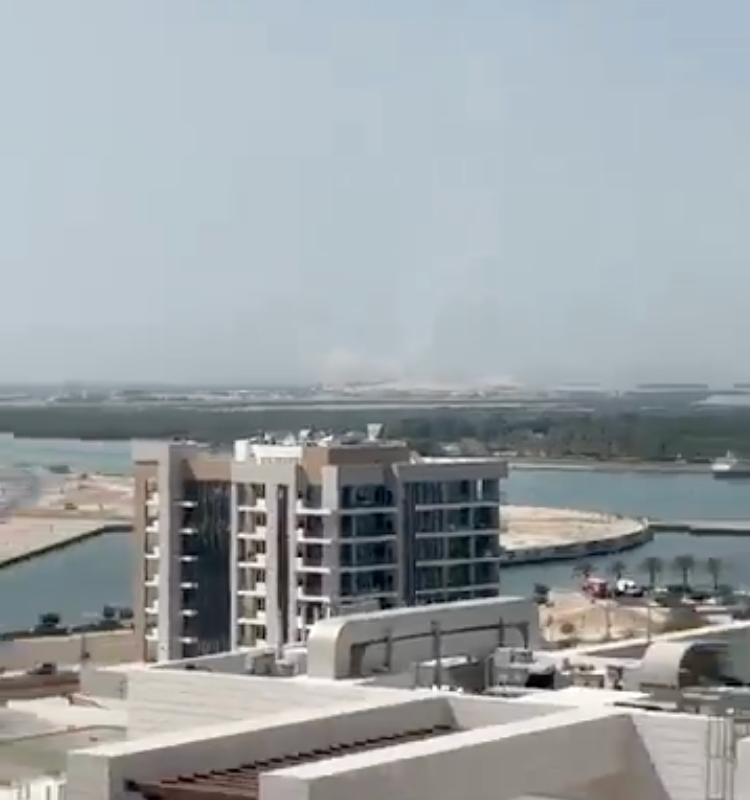
Slovenia's President Dr. Nataša Pirc Musar condemned continued Iranian attacks on the UAE during a phone call with President Sheikh Mohamed bin Zayed Al Nahyan on March 24, affirming European support for the Emirates' defensive measures. The diplomatic gesture comes as the UAE continues to face what officials describe as unprecedented military pressure from Iran, with direct implications for the 9.4 million residents, investors, and businesses across the country.
Why This Matters
• International backing strengthens UAE's diplomatic position: Having a NATO and EU member state explicitly support the Emirates' defensive posture elevates the situation from a regional dispute to a matter of international law and sovereignty.
• Residents face ongoing security disruptions: Since late February, Iran has launched waves of attacks, forcing families to reassess safety plans, insurance coverage, and long-term decisions about living in the UAE.
• Economic consequences are already visible: Foreign direct investment decisions are being postponed, tourism bookings have softened, and companies are factoring in additional military risk premiums when considering expansion in the Emirates.
The Military Situation: What Residents Need to Know
According to UAE Ministry of Defense reports, the Emirates has been absorbing repeated waves of Iranian weaponry since February 28—a coordinated response to earlier US and Israeli operations targeting Iranian installations.
The scale of attacks has been significant: The Ministry reports that Iranian forces have launched 357 ballistic missiles, 1,806 drone incursions, and 15 cruise missiles directed toward Emirati territory. While the nation's air defense systems have neutralized the vast majority of incoming threats, the system is not flawless.
Casualties and damage have been documented: Eight people have been killed, including two military personnel. A hundred fifty-seven others have been injured. Power substations have been damaged. Water infrastructure has been compromised. These tangible impacts across Abu Dhabi and Dubai serve as reminders that defense systems reduce but do not eliminate risk.
For residents accustomed to decades of relative tranquility, this represents a fundamental shift. Parents now explain to children why the night sky lights up with defensive interceptors. Workers reassess evacuation plans. Families recalibrate insurance and safety protocols. The psychological weight extends far beyond casualty figures.
The UAE government has deliberately maintained operational normalcy—schools remain open, airports continue functioning, business districts operate with constrained activity. Yet this stability is both a genuine assertion of resilience and an acknowledgment of underlying vulnerability.
The Diplomatic Significance of Slovenia's Call
The conversation between Sheikh Mohamed bin Zayed Al Nahyan and Dr. Pirc Musar operated on multiple levels. On the surface, it was a gesture of international solidarity—a European head of state condemning Iranian actions and expressing concern for Emirati welfare.
The deeper significance lies in institutional relationships already under construction. Slovenia and the UAE have developed an elaborate framework for collaboration:
• An Economic and Technical Cooperation Agreement established in 2015 has been automatically renewed at five-year intervals, creating stable foundations for petrochemicals, agricultural innovation, financial services, and renewable energy collaboration.
• A bilateral investment treaty signed in 2016 creates legal protections for Slovenian capital entering UAE ventures.
• Judicial cooperation frameworks finalized in December 2025 establish extradition procedures and mutual legal assistance arrangements, signaling deepening institutional commitment.
The March 24 call thus served as a reaffirmation of this partnership during a moment when international backing carries strategic weight. For the UAE, having an EU and NATO member state explicitly endorse its defensive posture reinforces the framing that this crisis involves universal principles of sovereignty and international law.
Regional Responses and Broader Implications
Saudi Arabia has shifted significantly: Crown Prince Mohammed bin Salman has granted the United States expanded military access to facilities including King Fahd Air Base, according to regional reports. The Kingdom's messaging has hardened—any further Iranian strikes will face escalatory responses. This represents a fundamental pivot from years of calibrated regional diplomacy.
Qatar faces competing pressures: The nation temporarily suspended liquefied natural gas production following Iranian strikes on energy facilities. Qatar expelled Iranian military attachés and publicly called for an unconditional halt to US and Israeli military operations against Iran, according to regional sources. This positioning reflects Qatar's economic dependence on stable global energy markets while maintaining defensive measures.
Turkey has expanded military readiness: According to NATO sources, Turkey has deployed F-16 fighter jets at NATO-affiliated facilities and formally protested Iranian incidents affecting Turkish territory while calling repeatedly for de-escalation.
Egypt pursues diplomatic solutions: Cairo has intensified shuttle diplomacy, with officials urging dialogue between Washington and Tehran as the only pathway away from protracted conflict, according to Egyptian government statements.
The United States announced a five-day pause in strikes against Iranian energy infrastructure on March 24, creating nominal space for negotiation. Tehran's Foreign Ministry denied direct engagement in talks, but regional analysts interpret the pause as a potential diplomatic opening.
The Economic Impact on the UAE and Residents
The Strait of Hormuz, through which approximately 20% of global oil supply typically transits, faces functional disruption. Energy markets have responded with sharp volatility, and global crude prices remain elevated.
For residents and businesses in the UAE, this creates concrete challenges:
• Foreign direct investment decisions are being postponed
• Companies considering Emirati expansion are factoring in military risk premiums and additional insurance costs
• Tourism bookings have softened
• Real estate transaction volumes have slowed
The stability premium that once protected the UAE's financial markets and investment climate is beginning to erode. Investors accustomed to viewing the Emirates as a stable haven are recalibrating risk assessments.
Emirati diplomat Anwar Gargash articulated the core concern: avoiding a "permanent state of threat." While temporary military crises can be managed, a protracted security environment erodes investor psychology and destabilizes development. For a nation dependent on attracting international talent and capital, this distinction is significant.
The UAE's Strategic Response
The Emirati government has adopted a carefully calibrated approach: firm military self-defense coupled with deliberate de-escalatory diplomacy.
Critically, the UAE has explicitly committed to not providing its territory or airspace for hostile military actions against Iran, according to government statements made in January 2026. This position has been reaffirmed consistently, even as Emirati air defenses neutralize incoming threats. The message is deliberate: the UAE will defend itself without becoming an instrument of broader regional war.
This posture requires political discipline to resist pressure from allied powers. But it reflects strategic necessity: for an economy built on international commerce and foreign direct investment, entanglement in regional conflict carries catastrophic consequences. The UAE's insistence on self-defense without escalation, paired with diplomatic outreach to international partners like Slovenia, represents an attempt to preserve strategic options and prevent the crisis from calcifying into permanent conflict.
What Comes Next for Residents
A narrow diplomatic window appears to exist in the coming weeks, assuming the current pause in US military action holds—though significant uncertainty remains. The bilateral joint economic commission between the UAE and Slovenia is tentatively scheduled to reconvene later in 2026, contingent on meaningful security stabilization.
For residents, expatriates, and business leaders making decisions about the future in the UAE, this period will be determinative. Air raid sirens may fade into historical artifacts of a brief crisis, or they may become permanent fixtures of daily life. The trajectory depends substantially on whether this moment catalyzes genuine negotiation or hardens into protracted hostility.
For now, the nation executes a difficult balancing act: defending its skies vigorously while keeping its ports open, courting international support while avoiding deeper conflict, maintaining economic momentum while acknowledging military reality. It is a precarious equilibrium, but in the current regional environment, it represents the most coherent strategy available to policymakers attempting to preserve both security and prosperity simultaneously.


