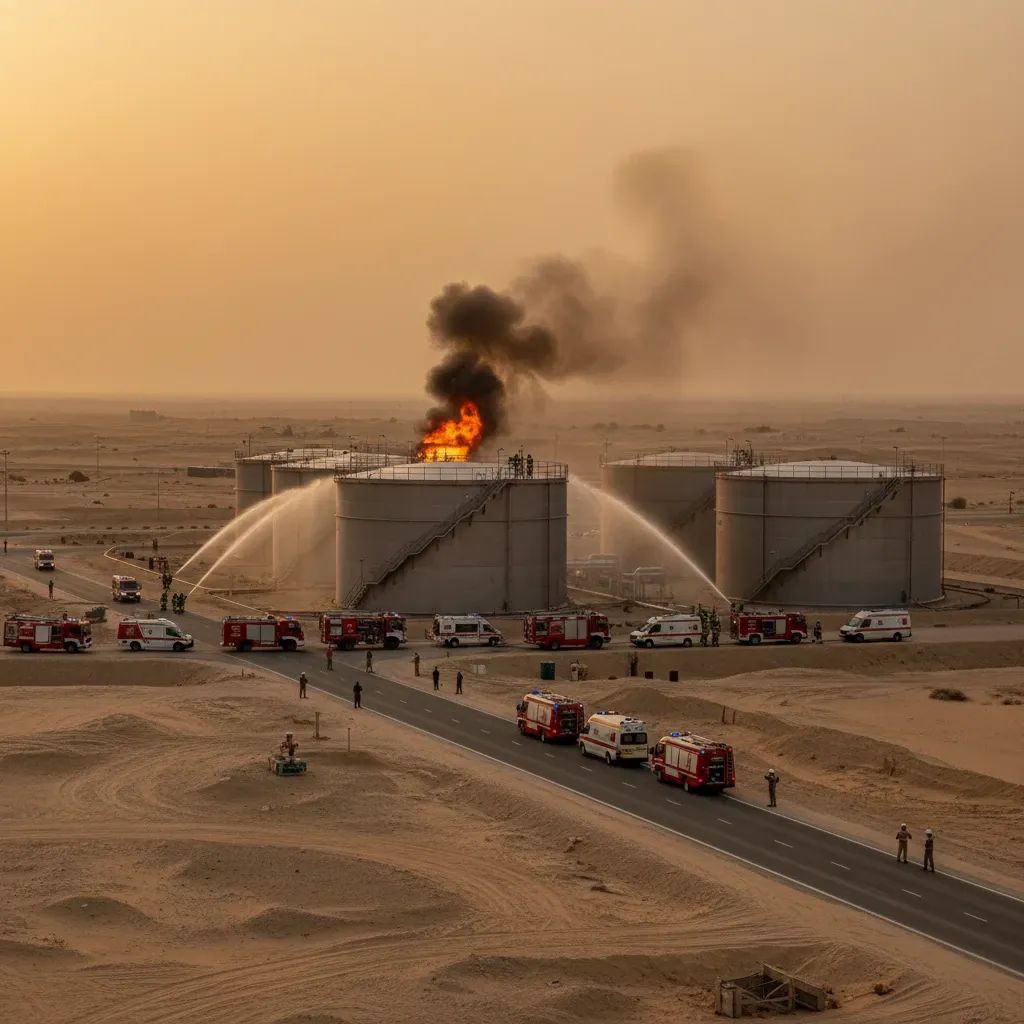
The Islamic Revolutionary Guard Corps has undergone a dramatic restructuring following the deaths of senior commanders and the Supreme Leader in early 2026. A hardline alliance now controls Iran's security apparatus, prioritizing confrontation over diplomacy. This shift directly affects regional stability, energy markets, and trade routes across the Middle East.
Why This Matters
• Regional security risks: Iran's new military leadership has shown willingness to expand attacks beyond traditional adversaries to include Gulf state infrastructure
• Trade disruption potential: Control of the Strait of Hormuz remains a central Iranian demand in ongoing peace talks, directly affecting global oil flows
• Diplomatic freeze: Nuclear negotiations remain suspended as of June 1, 2026, with Iranian officials stating "no tangible progress" in talks with Washington
• Leadership continuity threatened: The IRGC's growing influence extends beyond military affairs into political, economic, and educational spheres
What This Means for You: Practical Impact on UAE Residents
If you're living or working in the UAE, recent developments in Iran carry direct consequences. European governments urged citizens to leave Iran and parts of the Middle East in January 2026 as tensions escalated. For residents and businesses, this signals the seriousness of the situation. Energy market volatility tied to Strait of Hormuz access affects fuel prices across the region—something you'll notice at petrol stations. The targeting of civilian infrastructure during retaliatory strikes demonstrated that proximity to conflict zones creates vulnerability regardless of official neutrality. Global trade disruptions impact everything from shipping costs to consumer goods pricing in local markets.
Key Timeline of Recent Events
• February 28, 2026: US-Israeli strikes eliminate Iran's top military and security leadership
• March 1, 2026: Ahmad Vahidi appointed Commander-in-Chief of Revolutionary Guard
• April 7, 2026: Two-week ceasefire announced
• June 1, 2026: Iran suspends all nuclear talks
The New Guard Alliance
A partnership between Ahmad Vahidi and former IRGC commander Mohammad Ali Jafari has emerged as the most influential force within Iran's security apparatus. Vahidi, appointed Commander-in-Chief on March 1, brings decades of hardline credentials including previous roles as Defense Minister and the inaugural leader of the Quds Force. His ascension came one day after joint US-Israeli strikes killed his predecessor Mohammad Pakpour and Supreme Leader Ali Khamenei.
Jafari's contribution extends beyond military coordination. He created the "Middle Ring", a network of radical Islamist operatives designed to conduct cultural policing, propaganda dissemination, and election manipulation. This infrastructure has transformed the IRGC from a military force into what analysts describe as a security state with influence reaching into civilian governance, education policy, and economic control.
The current leadership differs markedly from previous IRGC commanders. Where earlier leaders sometimes displayed what observers called idealistic commitment to revolutionary principles, the current generation emphasizes strategic calculation and national interest. This approach maintains deep distrust of Western powers—particularly the United States and Israel—while pursuing Iran's regional influence through the Axis of Resistance network with methodical precision.
The Succession Crisis
The February 28 strikes eliminated Iran's entire top security tier. Defense Minister Aziz Nasirzadeh, Armed Forces Chief of Staff Abdolrahim Mousavi, and senior adviser Ali Shamkhani all died in the initial attacks. Ali Larijani, then secretary of the Supreme National Security Council and considered a moderating influence, was killed in March during subsequent Israeli strikes.
Mojtaba Khamenei, son of the deceased Supreme Leader, assumed the country's highest religious and political position through a selection process reportedly influenced by IRGC commanders seeking hardline continuity. Mohammad Bagher Zolghadr, a Revolutionary Guards veteran, took over the Supreme National Security Council. These appointments consolidated military control over ostensibly civilian positions—a significant shift in Iran's governance structure away from traditional balance between clerical authority, elected government, and military influence.
Regional Stability Under Strain
The leadership transition occurred amid active hostilities that began February 28 and briefly paused with a ceasefire on April 7. Iran's retaliatory strikes targeted not just military installations but also oil infrastructure and civilian facilities across the Middle East. Gulf states attempting to serve as mediators found themselves targeted despite declarations of neutrality, complicating their intermediary role.
Iran's assertion of control over the Strait of Hormuz—through which roughly one-fifth of global oil supply passes—has prompted a US blockade and significant maritime trade disruptions. Tehran's negotiating demands include international recognition of sovereignty over this waterway, security guarantees, war reparations, comprehensive sanctions relief, and an end to US-Israeli military operations.
The collapse of Syria's Assad regime in December 2024 already dealt a significant setback to Iran's regional influence. The new IRGC leadership's confrontational approach suggests efforts to rebuild strategic depth through more aggressive proxy support and direct military action rather than diplomatic compromise.
The Nuclear Question Remains Unresolved
Iran suspended all nuclear talks on June 1, citing Israeli military actions. This follows years of deteriorating compliance with the Joint Comprehensive Plan of Action after the United States withdrew in 2018. Iran's uranium enrichment now far exceeds the original agreement's limits, prompting France, Germany, and the United Kingdom to trigger UN sanctions in September 2025.
A framework for broader peace emerged in late May 2026, including a temporary moratorium on Iranian enrichment and phased sanctions relief. However, Iranian Foreign Minister Abbas Araghchi stated on June 4 that US discussions had yielded "no tangible progress." The IRGC-aligned leadership views Iran's nuclear and missile programs as national assets to be protected rather than bargaining chips for diplomatic concessions.
Economic Impact and Market Uncertainty
The European Union listed the IRGC as a terrorist organization in January 2026 and imposed additional restrictive measures. While Tehran views Europe as a potential diplomatic partner distinct from the United States, European leverage has diminished significantly since the JCPOA's collapse.
For Gulf economies integrated into global trade networks, Iran's trajectory creates planning uncertainty. The IRGC's expanding control over Iran's economy—including significant stakes in construction, telecommunications, and energy sectors—means military priorities increasingly drive commercial decisions. This fusion of security and economic policy makes predicting Iranian market behavior more difficult for regional trading partners.
EU condemnation of violent repression during January 2026 protests highlighted the increasingly authoritarian character of IRGC-dominated governance. A security apparatus prioritizing ideological control and external confrontation typically directs similar measures inward, affecting civil society and economic dynamism.
Looking Ahead
President Masoud Pezeshkian has publicly advocated for strengthening relations with neighboring countries through economic, cultural, and security cooperation. However, the president's influence appears limited relative to the IRGC leadership structure now dominated by the Vahidi-Jafari alliance and Supreme Leader Mojtaba Khamenei's networks.
The reformist camp within Iran continues to advocate for de-escalation, but hardline voices control operational decision-making. This internal tension will likely define Iran's trajectory through 2026. For regional stakeholders including the UAE, this creates a challenging environment requiring contingency planning for both diplomatic breakthrough and continued instability.
International observers face a critical question: will the new IRGC leadership's strategic discipline eventually produce pragmatic calculation favoring negotiated settlements, or will confrontation override practical considerations? Current indicators suggest the latter, though economic pressure from sustained conflict and isolation could eventually shift internal calculations.
Communication channels between Washington and Tehran remain technically open despite the absence of tangible progress. This suggests both sides retain theoretical interest in negotiated resolution, even as current leadership dynamics make immediate breakthrough unlikely. For now, consolidation around hardline IRGC elements points toward continued regional tension rather than diplomatic accommodation.