Decoding Apple DNA: Why a Study in Abu Dhabi Matters for Gulf Food Security
The NYU Abu Dhabi Center for Genomics and Systems Biology has published research that reshapes how scientists understand crop resilience—and what it means for agricultural futures across the Middle East. A discovery appearing in Current Biology reveals that modern apples are not static endpoints of ancient farming but living laboratories where cultivated plants continue to exchange genetic material with their wild cousins. For the United Arab Emirates, where food security depends heavily on imports, this finding opens a practical pathway toward homegrown climate-adapted crops.
Why This Matters:
• Wild apple relatives carry hidden traits for drought tolerance, heat resistance, and disease immunity that vanish in modern commercial varieties bred solely for appearance and sweetness.
• The research applies immediately to date palms and citrus—the region's agricultural backbone—offering a faster route to climate-ready crops than genetic engineering alone.
• Conservation of wild populations is urgent: habitat loss and pests are eroding the genetic diversity that scientists need now, not in a decade.
The Science: How Evolution Never Really Stopped
Associate Professor Amandine Cornille led a comparative analysis of commercial apple cultivars against wild populations stretching from the Caucasus to Central Asia. The research bypassed the textbook narrative of domestication—a one-time moment when humans selected seeds from the "best" trees. Instead, it revealed something messier and more resilient: ongoing genetic conversation between cultivated orchards and wild forests.
As apple trees spread across continents and centuries, they repeatedly bred with wild relatives. Traders moving eastward carried commercial varieties that crossed paths with Malus sieversii in Kazakhstan or Malus baccata in China. The resulting hybrids absorbed frost tolerance from one population, fungal resistance from another, and flavor depth from a third. Different apple lineages—dessert varieties optimized for crunch and sweetness, cider types prized for tannins and acidity—followed distinct genetic trajectories, yet all maintained connection to the wild gene pool.
"The diversity we see today is not accidental," Cornille explained. "It's the product of thousands of years of exchange. You cannot separate cultivated apples from their wild ancestors."
This pattern contradicts the industrial farming mindset, which treats crop improvement as a one-directional process: scientist identifies trait, engineer inserts it, harvest results. Apples succeeded through a slower, more open-ended mechanism—genetic permeability.
What the Gulf Can Learn: From Apples to Dates
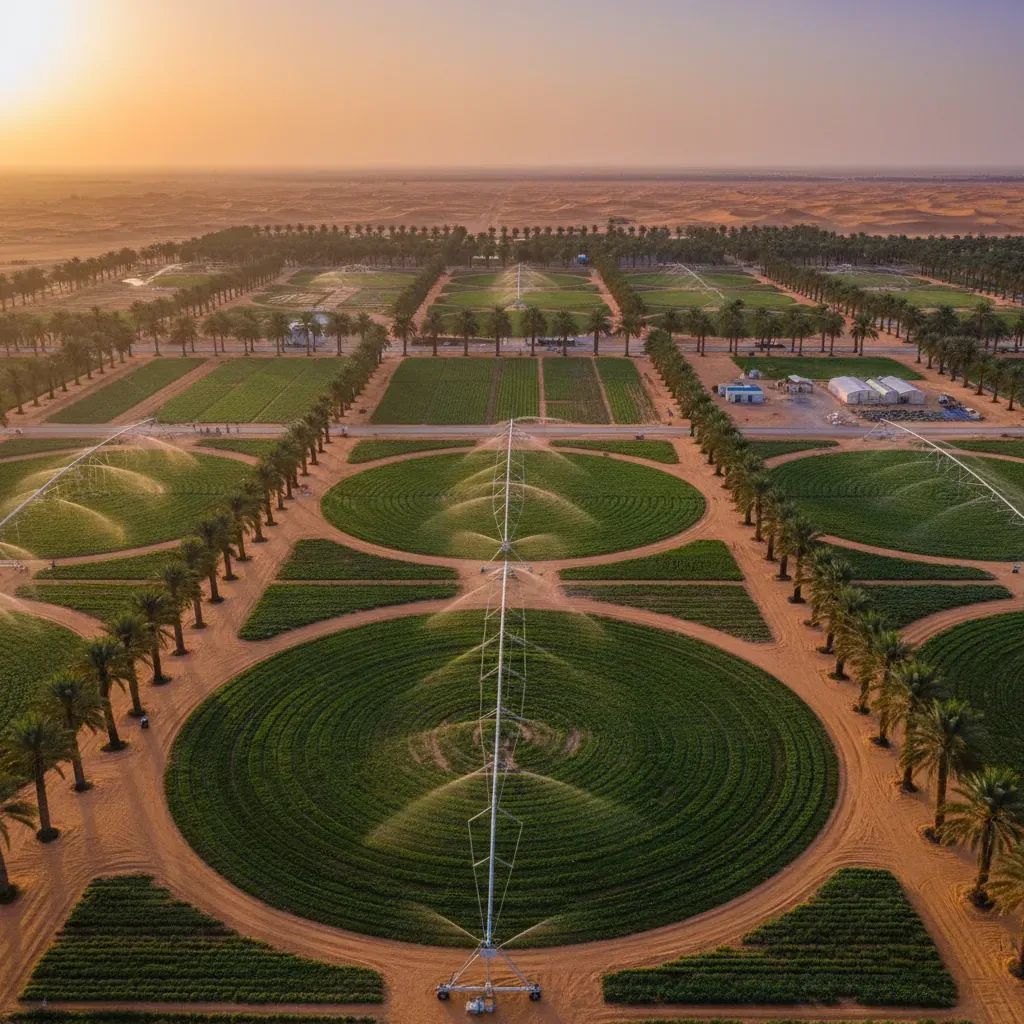
Apples are peripheral to United Arab Emirates agriculture. The crop thrives in cool uplands; the Emirates produces only small quantities in high-altitude microclimates around Al Ain. But the evolutionary principle is universal, and it applies urgently to the region's actual food pillars.
Date palms face escalating pressure from climate stress and invasive pests. Rising temperatures now present challenges for traditional varieties. Commercial date cultivars, bred for plump fruit and high yield, have lost genetic variants that wild relatives in Oman and southeastern Iran still carry: resistance to extreme heat, tolerance of brackish groundwater, and susceptibility barriers against pest infestations.
Wild date palms grow in fragmented populations across the Arabian Peninsula. Some harbor genes for salinity tolerance—critical because many United Arab Emirates farms rely on recycled groundwater. Others possess natural pest defenses evolved over millennia in their native habitats. Yet these populations receive minimal protection and even less integration into breeding programs.
The research suggests that advancing climate resilience in regional agriculture requires identifying wild relatives with proven traits, crossing them with elite commercial varieties, and selecting offspring that combine yield potential with environmental hardiness.
The Toolkit: How Genomics Accelerates the Process
A decade ago, reintroducing wild apple genes into commercial orchards meant a 15- to 20-year process: breed hybrid trees, wait for them to mature, evaluate fruit quality, discard inferior candidates, and repeat. The cycle was so lengthy that climate conditions shifted before results reached farmers' hands.
Modern tools have shattered that timeline. Machine learning models now integrate genomic data with climate information, predicting how experimental crosses will behave across temperature ranges, humidity levels, and pest pressure before a single seed is planted. Rapid-cycle breeding techniques compress generations from decades into years.
Marker-assisted selection—using DNA testing to identify offspring carrying desired genes—eliminates the guesswork. Breeders can now identify carriers of specific traits and discard inferior candidates without waiting years for maturity. The breeding cycle shrinks dramatically compared to traditional methods.
For the Gulf Cooperation Council region, this technological advantage is decisive. Water stress, pest epidemics, and heat waves move faster than traditional crop development. But genomic-assisted breeding can now race against climate change rather than lag it.
The Wild Reservoir: Biodiversity as Infrastructure
Here is the paradox: the genetic traits that modern agriculture desperately needs are housed in wild populations that face significant threats. Habitat conversion, logging, and climate impacts are fragmenting populations and reducing diversity across multiple crop ancestors.
Similar threats shadow wild crop relatives across the Arabian Peninsula. In regions where remnant populations survive in remote areas, environmental pressures threaten long-term survival. Genetic resources that took millennia to accumulate face modern threats.
Yet these wild populations function as genetic insurance. Seed collections and cryopreservation facilities—essentially freezing plant tissue for indefinite storage—represent strategic asset preservation. Just as regions invest in desalination plants and renewable energy to secure water and energy, protecting wild crop relatives secures the raw material for agricultural resilience.
How Residents Can Understand the Practical Impact
For expats and citizens in the United Arab Emirates, this research filters through to everyday life in subtle but real ways. Imported produce prices fluctuate because supply chains are fragile—a frost in a major producing region, a pest outbreak elsewhere, or supply disruptions, and supermarket shelves can thin or prices spike. Developing locally adapted crops reduces vulnerability to these shocks.
Agritech companies operating in the Emirates—vertical farms, hydroponics operations, and agricultural enterprises—stand to benefit directly. As climate-resilient varieties enter the market, these businesses can stabilize yields and reduce operational losses from disease or heat stress. For investors focused on sustainable agriculture, the science signals where innovation flows: toward breeding approaches that integrate wild genetics into proven crop systems.
For investors in food security, the NYU Abu Dhabi findings validate a thesis gaining traction in Gulf markets: regionally appropriate agricultural solutions can enhance food independence. The United Arab Emirates cannot become a wheat exporter due to climate constraints. But salt-tolerant crops, heat-adapted varieties, and disease-resistant cultivars represent achievable and economically sensible goals.
The Broader Pattern: Other Crops, Same Blueprint
Apples are not unique in maintaining genetic dialogue with wild populations. Grapes have preserved ongoing exchange with wild Mediterranean and Central Asian relatives since domestication. Tomatoes retain genetic flexibility through continuous hybridization with wild Solanum species. Citrus crops show similar patterns, with wild relatives in adjacent regions carrying desirable traits.
For the Gulf region, this has immediate relevance. Citrus crops—limes, lemons, oranges—show similar patterns of genetic exchange with wild ancestors. Grapes, increasingly cultivated in the Emirates under shade structures and irrigation, could draw vigor from wild relatives. Other introduced crops benefit similarly from wild genetic pools in their regions of origin.
The message is converging globally: biodiversity represents a critical resource for agricultural resilience.
What Happens Next: The Practical Steps
The NYU Abu Dhabi research does not propose radical change to Emirates agriculture. Instead, it validates a course correction: expand wild population surveys, establish breeding collaborations between regional universities and commercial farmers, and prioritize genetic resources from wild populations adapted to the Gulf's heat and aridity.
For date palm improvement, this means field missions to identify wild trees exhibiting pest resistance or environmental adaptation. Preserve this genetic material through appropriate conservation methods. Cross-breed with elite commercial cultivars. Select offspring over several years, using genomic markers to identify carriers of beneficial traits early. Deploy new varieties to trial farms across the Emirates.
For citrus and other crops, the pathway is parallel. Field identification, genetic characterization, strategic crossing, accelerated selection, deployment.
None of this requires technological moonshots. It requires coordination, funding, and strategic planning—capacities that regional governments have mobilized for agricultural initiatives. The apple study, authored by researchers based in Abu Dhabi, demonstrates that this work is not remote academic interest. It is strategic planning for agricultural resilience in a region where water scarcity and heat stress define farming constraints.
When wild crop relatives yield their genetic secrets to breeders, those gains eventually reach commercial agriculture. For the United Arab Emirates and the Gulf, the message is clear: the genetic diversity that will feed the region tomorrow exists in wild populations today. Protecting those populations is essential for long-term food security and agricultural resilience.