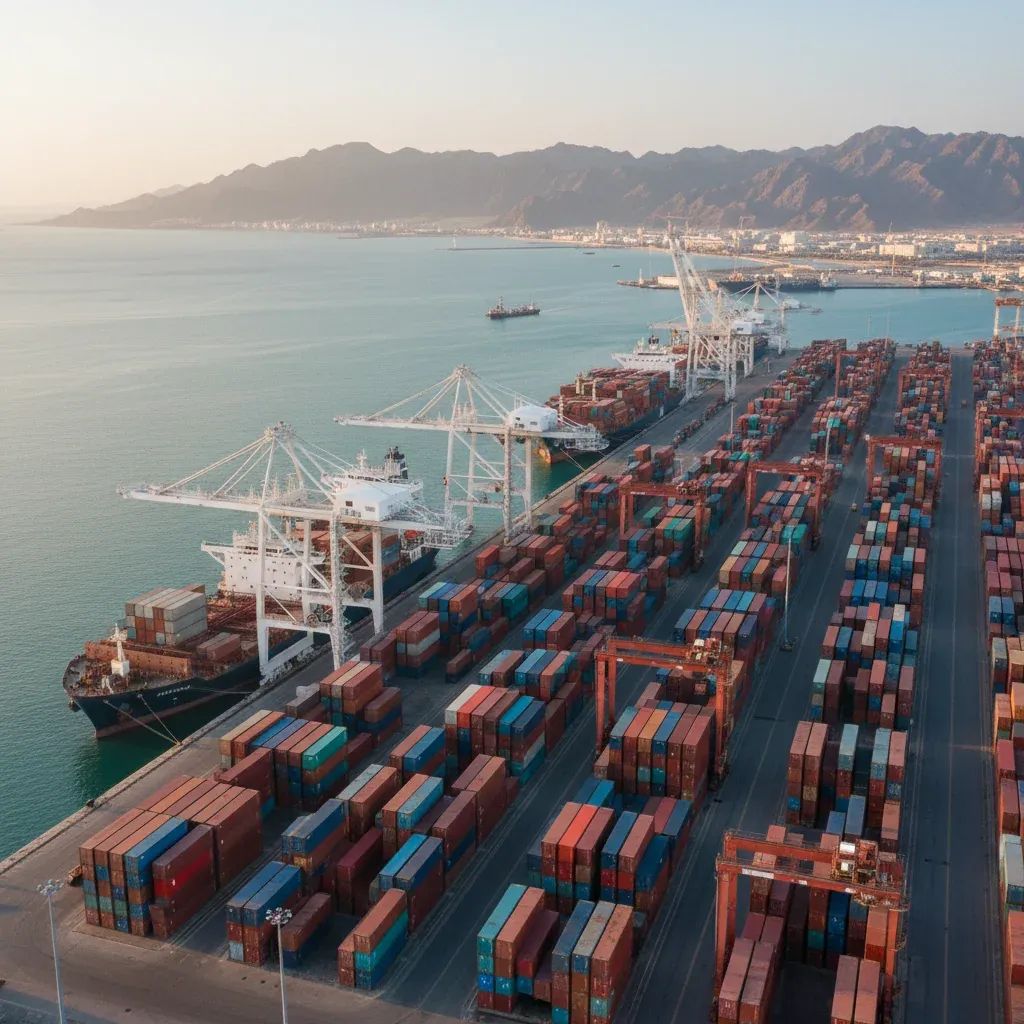
The United States military has disabled the M/V Lian Star on May 29 after it attempted to reach Iranian ports, with the Gambian-flagged vessel struck by a Hellfire missile to its engine room in the Gulf of Oman. For people living in the United Arab Emirates and across the Gulf region, this escalation underscores a critical reality: maritime commerce through one of the world's most vital shipping corridors remains operationally hazardous and economically costly, with no clear resolution in sight despite conflicting diplomatic signals from Washington.
What UAE Residents Need to Know Right Now
If you live in Dubai, Abu Dhabi, or any Emirates city, this maritime disruption affects you directly through higher electricity bills, more expensive imports, and delayed consumer goods. Shipping companies are factoring in additional insurance, longer routes, and contingency costs that ultimately flow through to your wallet. Expect elevated prices on food imports, electronics, vehicle parts, and any goods arriving by sea over the coming months.
Why This Matters
• Shipping costs are rising. Insurance premiums for vessels transiting the Gulf have climbed substantially, feeding directly into consumer prices for fuel and imported goods across the UAE and Gulf states.
• The blockade persists despite Trump's announcement. On May 29, President Trump said it would be lifted; by May 31, the U.S. Secretary of Defense confirmed it remains "very much still in place," leaving operators confused about safe passage.
• Your electricity bills and imports depend on this waterway. The Strait of Hormuz channels roughly 20% of the world's seaborne oil—any disruption reverberates through regional energy costs and supply chains.
The Enforcement Campaign Intensifies
The Lian Star was disabled after ignoring more than 20 warnings issued by U.S. Central Command aircraft. The bulk carrier's crew had apparently either misunderstood the seriousness of American intent or gambled that the warnings would not be executed. They were wrong. A precision strike into the engine room—not the hull—immobilized the ship without sinking it, a deliberate choice that suggests the U.S. military wants to disable without creating environmental or humanitarian catastrophe.
This distinction matters. Since the blockade began on April 13, CENTCOM has been actively enforcing restrictions on vessels attempting to reach Iranian ports while redirecting general shipping traffic. The strategy appears calculated: stop the most defiant operators with force visible enough to deter others, while giving most shipping traffic the option to turn back. For vessel operators and shipping companies, however, the message is unambiguous. Attempt to reach an Iranian port, and your ship will be stopped—either by threats or by weaponry.
The Islamic Revolutionary Guard Corps Navy and Iran's state shipping lines have nevertheless continued attempting transits, creating a cat-and-mouse dynamic that keeps the Gulf in a state of continuous friction. Each incident consumes operational resources, delays cargo, and adds to insurance costs that flow through to every business dependent on Gulf maritime traffic.
What This Means for UAE Residents and Businesses
For someone living in Dubai, Abu Dhabi, or any Emirates city, the practical effect is twofold. First, your electricity costs are subtly higher. The Emirates Water and Electricity Company and other regional generators rely on imported fuel and regional supply arrangements; disrupted maritime commerce translates into either higher procurement costs or operational strain. Second, anything arriving by ship costs more. Consumer goods, raw materials, vehicle parts—all pay the freight premium imposed by heightened risk.
The most affected sectors include food and beverage imports, electronics, construction materials, and automotive parts—all categories that rely heavily on Gulf shipping routes. If you've noticed price increases on groceries or consumer electronics over recent weeks, the elevated shipping costs are a contributing factor that will likely persist for several months.
The United Arab Emirates maintains full port operations and is not a sanctioned entity, so its ports continue functioning normally. However, the broader regional disruption still affects logistics. Shipping companies factor additional routing time, contingency fuel, and insurance surcharges into every voyage through the Gulf of Oman and Strait of Hormuz. These costs compound.
Beyond direct economic impact, there is operational uncertainty. Shipping firms cannot clearly distinguish between vessels genuinely bound for Iran (which face blockade enforcement) and those simply transiting or heading to UAE, Saudi, or other Gulf ports. The conflicting signals from Washington—Trump's announcement of blockade lifting versus the Secretary of Defense's confirmation it remains in place—have created genuine confusion. Until clarity emerges, conservative shipping operators will assume worst-case scenarios, routing around the region or accepting longer transit times.
The Legal Framework and International Concerns
Under traditional international maritime law, a blockade must follow specific protocols and apply fairly. The U.S. blockade has been declared and is actively enforced, with CENTCOM stating explicitly that it does not prevent transit passage through the Strait of Hormuz to non-Iranian destinations, theoretically protecting freedom of navigation for general commerce.
However, complications exist. International maritime law protects transit passage through international straits, a principle that tension with aggressive enforcement in the Gulf of Oman. Iran, meanwhile, has asserted its own counter-restrictions on the Strait of Hormuz, demanding designated routes and IRGC Navy approval for transit. This creates a complex legal environment where both blockading and counter-restrictions disrupt normal shipping operations. The simultaneous existence of both a declared ceasefire (in effect since March 2026) and an active blockade adds to the confusion—blockades typically do not occur during peacetime agreements.
The Trump Administration's Contradictory Position
On May 29, President Donald Trump announced via his media platform that the blockade "will now be lifted" contingent on Iran removing mines from the Strait of Hormuz, agreeing never to develop nuclear weapons, and ensuring unrestricted shipping access. Within 24 hours, Secretary of Defense Pete Hegseth flatly contradicted this, stating the blockade remains "very much still in place."
Iranian seafarers reported on May 30 that CENTCOM vessels continued issuing stop warnings and that restrictions persisted despite the presidential announcement. The Lian Star was disabled the same day Trump made his announcement, further undercutting any impression of blockade lifting.
This is not diplomatic nuance or cautious messaging—it is contradictory policy stated by different government figures simultaneously. For shipping operators, it creates operational paralysis. If the blockade is being lifted, routing changes and cargo planning shift one direction. If it remains in effect, the opposite adjustments apply. Businesses cannot operate effectively in that ambiguity.
Iran's President Masoud Pezeshkian characterized the blockade as an "oppressive approach" violating the ceasefire, a position that carries weight given both nations agreed to pause hostilities. Iran's statement that a comprehensive deal has not been finalized carries equal credibility, given that Iran's Foreign Ministry has disputed key terms, particularly those concerning nuclear commitments and Strait of Hormuz control.
Treasury Pressure Compounds Maritime Enforcement
Alongside naval interception, the U.S. Treasury Department has frozen approximately $344 million in digital assets linked to Iranian state entities and financial networks. This is sanctions enforcement running parallel to blockade enforcement, compounding the economic pressure beyond what the maritime restrictions alone accomplish.
For businesses in the United Arab Emirates with any cross-border transaction ties or supply chain relationships involving Iranian entities, the frozen assets represent a secondary layer of disruption. Direct Iran trade is minimal under sanctions, but indirect exposure—third-party suppliers, financial intermediaries, shipping agents—can trigger complications. Companies must carefully navigate compliance requirements or risk secondary sanctions exposure.
Regional Diplomacy at an Impasse
Qatar has emerged as a modest mediator voice, with its deputy prime minister signaling openness to temporary fee structures for mine-clearing operations while rejecting permanent Iran-imposed tolls on international shipping. This nuanced position reflects Gulf states' core challenge: they depend on open waterways for their own commerce but maintain working relationships with both Washington and Tehran.
The United Nations Security Council has circulated a draft resolution co-sponsored by the United States and Gulf nations threatening Iran with sanctions if it continues imposing restrictions on shipping. However, Russian and Chinese opposition has stalled adoption, reflecting broader geopolitical divisions over the conflict.
Pakistan has undertaken mediation efforts but reports minimal progress. Fundamental disagreements persist: the U.S. demands Iran surrender nuclear advancement, the U.S. maintains the blockade should continue, Iran insists on lifting it as part of any ceasefire, and both nations claim different interpretations of what "unrestricted passage" actually means.
The Practical Path Forward
If diplomatic efforts produce a genuine settlement, the process of blockade termination must follow its own legal protocols. A formal declaration of blockade lifting would need notification to all relevant parties, verification of mine removal (a complex task requiring international cooperation), and establishment of agreed routing procedures. None of that has begun in earnest.
Until it does, the United Arab Emirates and Gulf region should expect continued operational friction. Shipping costs will remain elevated. Energy prices will reflect that premium. Consumer goods will carry higher import freight. Businesses will maintain inventory buffers and contingency planning for delayed arrivals.
The M/V Lian Star incident demonstrates that regardless of diplomatic announcements or presidential statements, military policy continues operating on the ground. The vessel lies disabled in the Gulf of Oman—not as a diplomatic message or a negotiating tactic, but as the actual, operational consequence of crossing a line that remains firmly drawn by force.