Europe's Jet Fuel Crisis Deepens as Summer Travel Hangs in Balance
Travelers planning flights from the United Arab Emirates to Europe this summer should prepare for disruption. Europe has lost its lifeline—the Middle East, which historically supplied 60% of the continent's jet fuel—and scrambling to fill a devastating energy gap before the peak travel season arrives. With zero shipments from the region in April 2026, the first complete month without Middle Eastern supplies since record-keeping began in 2017, airlines are cutting routes, hiking fares, and burning through inventories at an alarming rate.
Why This Matters
• Historic import collapse: The Middle East supplied nothing in April 2026—an unprecedented disruption to a supply chain built over decades.
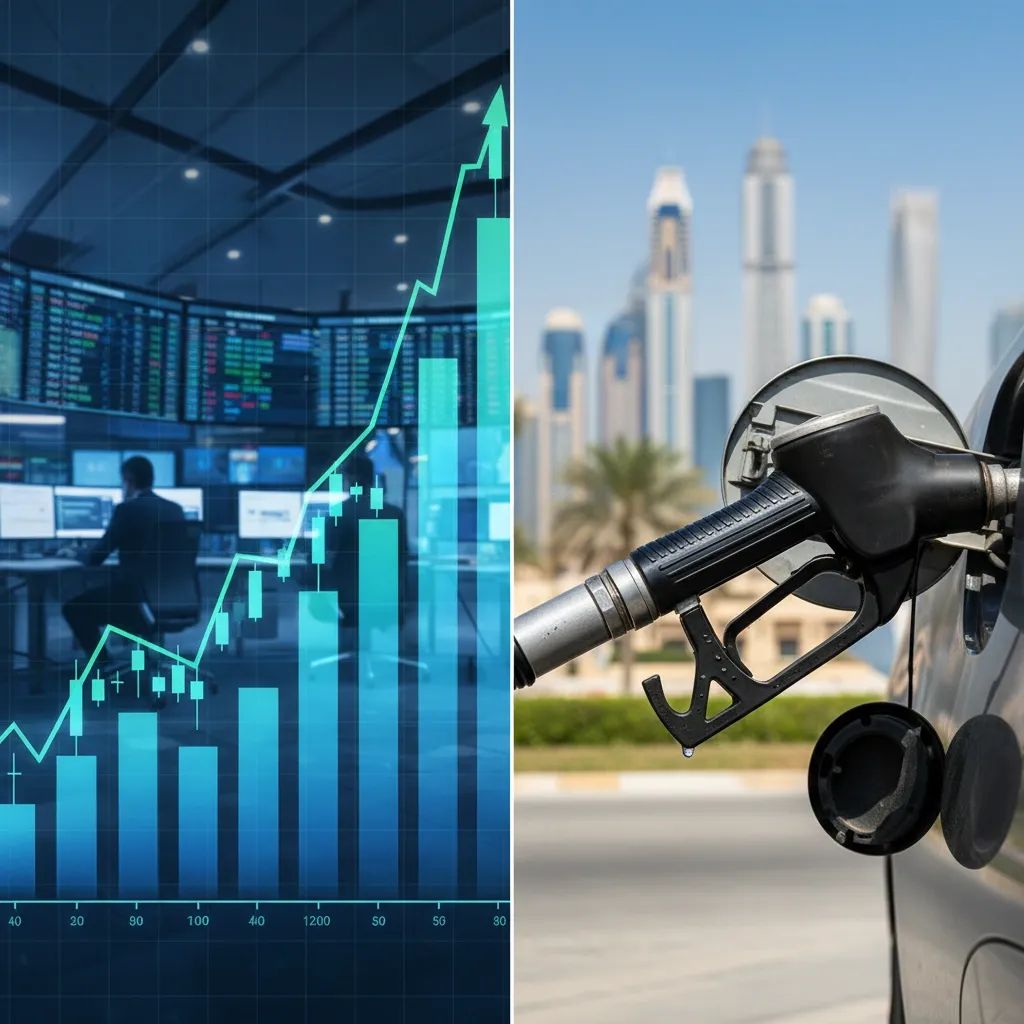
• Prices at crisis levels: Jet fuel has exceeded $200 per barrel (roughly 1,838 per tonne), now consuming approximately 40% of airline operating expenses.
• The arithmetic: Europe needs 500,000 additional barrels daily but has no reliable replacement supplier ready to meet that demand.
• Your flight risk: Passengers should expect higher ticket prices, schedule changes, and potential cancellations through at least June if the Strait of Hormuz remains closed.
The Structural Problem Nobody Can Ignore
The math behind Europe's predicament is ruthless and impossible to hide. The continent's 1.6 million barrels-per-day consumption of jet fuel vastly outpaces what its own refineries can produce—approximately 1.1 million barrels daily. That leaves a gaping 500,000-barrel shortfall that, until April 2026, flowed reliably from Middle Eastern suppliers. The region's geopolitical meltdown and effective closure of the world's most critical oil chokepoint—the Strait of Hormuz—severed that supply line without warning.
What complicates matters further is that alternative suppliers exist but cannot instantly compensate. The United States possesses production capacity, but shipping from the US Gulf Coast takes weeks, and tanker availability is already stretched thin. Nigeria holds substantial reserves but struggles with chronic infrastructure underinvestment and security constraints that cap reliable throughput. Spain has pivoted toward the Americas and North Africa for sourcing, yet these channels carry their own logistical friction. The result is a cascading energy shortage that pricing mechanisms alone cannot resolve—airlines cannot simply pay their way out of a physical supply deficit.
Compounding the uncertainty, the United Arab Emirates announced in late April its departure from OPEC and OPEC+, effective May 1, signaling a fundamental realignment of how Gulf producers view energy cooperation and global market strategy. This decision, while separate from the immediate supply crisis, injects additional unpredictability into an already fragile energy landscape.
Refineries Running at Maximum Capacity Lead Nowhere
European refineries have shifted into what industry insiders call "maximum jet mode"—prioritizing kerosene output above profitability and other product optimization. On paper, this sounds promising. In practice, it yields only marginal gains because the infrastructure ceiling is real. Decades of refinery closures and conversions to biofuel production have permanently reduced Europe's crude-processing capacity. You cannot manufacture production capacity through operational tweaks alone.
The European Commission, recognizing this bottleneck, has deployed a monitoring system to track refinery output and coordinate distribution across member states in real time through a newly established EU Fuel Observatory. Yet coordination of scarcity still yields scarcity. More refineries doing their maximum produces more fuel, but not enough fuel—a distinction that matters enormously when a continent faces a 500,000-barrel daily shortfall.
What remains achievable through coordination is ensuring that available supplies reach the airports and routes most critical to keeping European connectivity alive. Regional airports, dependent on smaller carriers with thinner margins, have absorbed disproportionate cancellations. Major hubs—London, Paris, Amsterdam, Frankfurt—retain more flight capacity but at elevated fuel costs that ripple through to ticket prices.
Airlines in Triage Mode
The response from carriers has been surgical and dramatic. Lufthansa is eliminating 20,000 short-haul flights through October—roughly equivalent to removing an entire regional airline from the market. KLM cut 160 routes in April, representing approximately 1% of its European schedule. Scandinavian Airlines grounded 1,000 flights in the month alone. Norse Atlantic Airways, a transatlantic operator, suspended several premium summer routes, citing unacceptable fuel-cost exposure.
What separates winners from losers is hedging discipline. Ryanair locked in 80% of its summer fuel requirements before prices spiked, insulating itself from the worst of spot-market volatility. EasyJet secured 70% of anticipated needs through forward contracts. Carriers caught without sufficient hedges—those betting on a stable market that never materialized—face brutal choices: absorb the losses, pass them to customers, or cut capacity. Most have chosen all three.
The pass-through to passengers is visible and substantial. Fuel surcharges now exceed $280 per ticket, and base fares have climbed alongside spot prices. Travelers shopping for flights between the UAE and European hubs should expect premium pricing through at least June. Budget carriers with locked-in fuel costs retain a competitive edge; airlines exposed to spot prices face pressure to raise fares further or shrink routes.
Some carriers have experimented with unconventional tactics. "Tankering"—carrying surplus fuel on outbound flights to avoid refueling at high-cost European airports—has become prevalent, though the added weight ironically boosts fuel consumption and partially defeats the economic purpose. The practice signals desperation masquerading as strategy.
Beyond pricing, airlines are lobbying European governments with unusual aggressiveness. ACI EUROPE (Airports Council International Europe) has demanded temporary rollbacks of aviation taxes, relaxed cabin baggage rules, and waived passenger compensation mandates—essentially asking governments to suspend regulations they argue compound financial stress during a supply crisis beyond airline control. Some governments have begun discussing targeted fuel tax cuts and regulatory relief, though broad policy changes remain politically contentious.
Europe's Coordinated Crisis Response
The European Commission's "AccelerateEU" framework represents Europe's attempt to prevent chaotic rationing and widespread service collapse. The plan includes several operational and regulatory dimensions.
The newly established EU Fuel Observatory creates real-time visibility across member-state stocks and supply flows—previously fragmented and opaque. This transparency theoretically allows the Commission to redirect supplies from better-stocked regions toward acute shortages, though the legality and logistics of cross-border fuel redistribution remain unclear.
Regulatory flexibility measures permit airlines to adjust fuel-loading practices and relax existing anti-tankering restrictions. More controversially, discussions are underway to approve US Jet A fuel, which differs slightly from Europe's standard Jet A1 specification. This represents a potential pathway to tap the US Gulf Coast, though it faces hurdles around safety certification, pricing competitiveness, and logistical infrastructure. The effort to harmonize specifications—complex bureaucratically but strategically logical—could theoretically unlock additional supply within weeks if approved.
The Commission is also exploring the concept of strategic jet fuel reserves—a policy category previously separate from broader energy reserves—and examining cross-border fuel-sharing mechanisms. At the member-state level, governments are separately considering targeted fuel duty cuts to ease price pressure, though the fiscal impact of such measures during a broader energy crisis remains contested.
Underneath this coordination sits a more straightforward reality: the EU is directing its refineries to optimize production allocation across borders through EU-wide monitoring rather than profit-margin optimization. The outcome depends on whether refineries maintain this priority or revert to profit-driven production once emergency pressure eases.
Hunting for Replacement Supply, Finding Limited Options
Europe is casting a desperate net for alternative suppliers, with mixed results. The United States and Nigeria have surfaced as fallback sources, though neither possesses the export capacity or infrastructure to replicate the Middle Eastern pipeline. Spain, leveraging its Atlantic ports, has pursued supplies from the Americas and North Africa. Sasol in South Africa holds EU certification for its conventional jet fuel and is ramping output, though volumes remain modest relative to Europe's deficit. None of these sources can eliminate the shortfall in the near term; they can only dampen it.
Logistical reality stubbornly resists quick solutions. US Gulf Coast shipments take weeks to reach European ports; refinery maintenance windows create unpredictable supply interruptions. Nigeria's infrastructure suffers from chronic underinvestment and security challenges that cap reliable throughput. The result is a rolling shortage, manageable for weeks through price rationing and schedule cuts, but structurally unsustainable if the Strait of Hormuz remains closed through peak summer.
The Paradox: Crisis Accelerating the Transition to Sustainable Fuels
Europe was already committed to transitioning to Sustainable Aviation Fuel (SAF) through its ReFuelEU Aviation mandate, requiring 2% SAF blending starting in 2025, escalating to 70% by 2050. The energy shock has transformed what was a regulatory compliance exercise into a survival necessity, fundamentally altering investment timelines and urgency.
Production capacity is expanding rapidly across Europe and internationally, though still insufficient for immediate gaps. Inside the continent, TotalEnergies is converting its Grandpuits refinery in France into a biorefinery targeting 230,000 tons of annual SAF output by year-end 2026, with co-processing projects at Antwerp and Leuna adding capacity. VARO's new facility in Rotterdam is expected to commence operations in the fourth quarter of 2026. Moeve's biofuels plant in Huelva, Spain, is projected to produce 500,000 tonnes annually of combined SAF and renewable diesel by late 2026. SAF+ IG is constructing an e-SAF plant in Southern France, aiming for 75,000 tons per year of synthetic hydrocarbons using green hydrogen and captured CO2.
Globally, capacity is emerging from unexpected sources. SK Energy in South Korea has become the first Korean refiner exporting SAF to Europe. Sasol in South Africa holds EU certification and is ramping output. Neste, the global SAF leader, is expanding agreements across multiple European hubs and projects reaching 2.2 million tons per annum by 2027. Most notably, the United Arab Emirates is developing its own SAF production pathway, with plans to export significant volumes to the EU by 2030—a development that could transform today's crisis into a long-term commercial opportunity for Gulf energy producers pivoting toward low-carbon fuels.
The critical constraint is timing. Most new SAF facilities won't deliver material volumes until late 2026 or 2027, offering minimal relief for the immediate summer season but forming the foundation for structural resilience beyond this crisis. For the next three months, Europe will operate on existing capacity and imports, not new production.
Impact on UAE Residents and Travelers
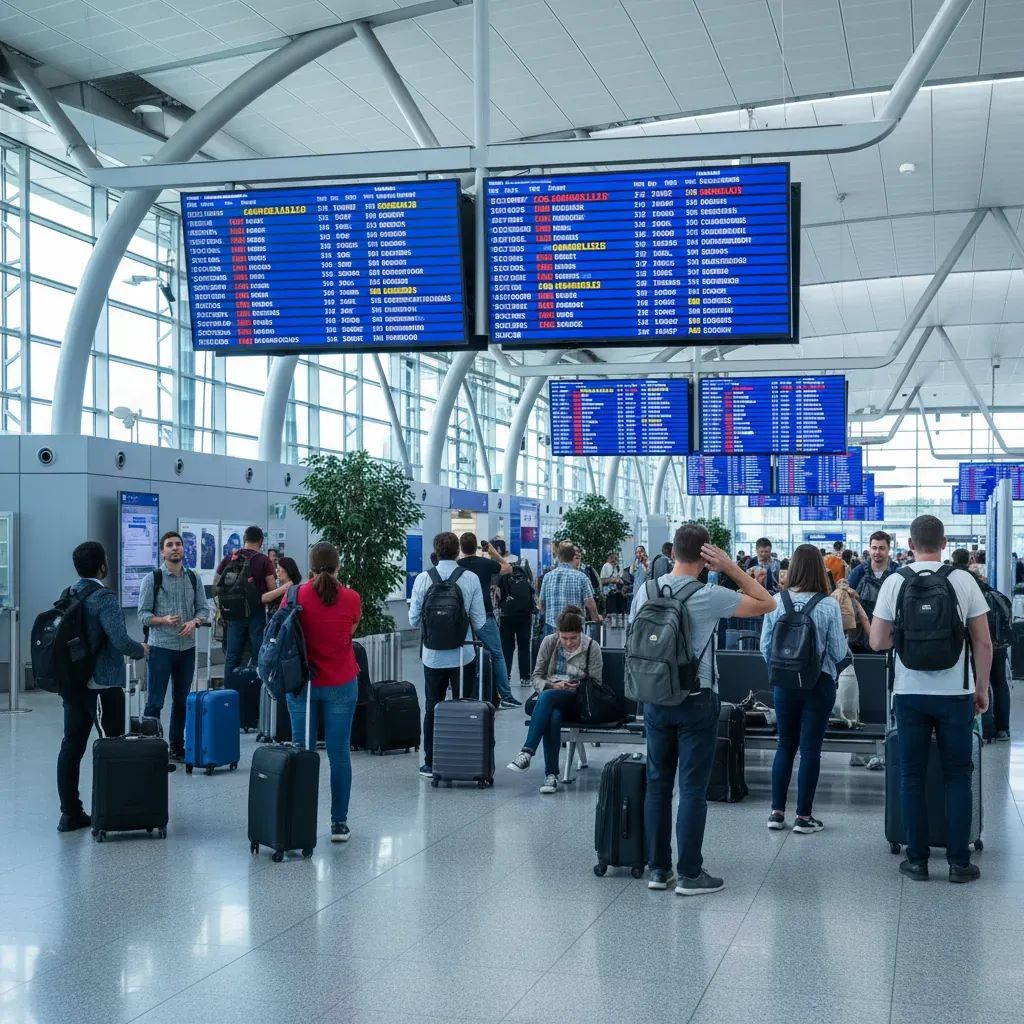
For United Arab Emirates residents planning travel to Europe, the jet fuel shortage translates into tangible costs and operational friction. Airfares are climbing, with fuel surcharges pushing economy tickets 15–20% above baseline prices. Travelers should expect flight cancellations and last-minute schedule changes; carriers with strong fuel hedging (like Ryanair and EasyJet) will likely maintain published schedules, while those exposed to spot pricing face pressure to revise timetables. Some routes may be rerouted through non-European refueling stops, adding hours to journey times. Flexible rebooking policies from major carriers provide partial insurance; budget carriers with rigid policies offer minimal protection.
For UAE-based energy traders, logistics firms, and renewable fuel companies, this disruption creates strategic opportunity. Europe's urgent need for SAF diversification and accelerated timelines for new fuel facilities create demand for Gulf-based production partnerships, feedstock supply chains, and export infrastructure. Companies positioned in hydrogen production, waste-oil recovery, or aviation fuel logistics could find expanding market access over the coming two to three years. The UAE's planned SAF export initiative represents a commercial opportunity to position the country as a trusted long-term fuel supplier to European aviation, offsetting any reputational damage from the current region-wide disruption.
The June Threshold
The situation hinges on whether the Strait of Hormuz returns to normal operations—an outcome dependent on the trajectory of regional conflict, which remains unpredictable. Energy consultancy FGE NexantECA offered a marginally optimistic assessment in mid-April, suggesting that lower imports could be offset by regional production adjustments and demand compression, though they acknowledged uncertainty extending through mid-2026.
The International Energy Agency took a more cautious stance, warning that if Europe cannot source more than half its usual Middle Eastern volumes by June, actual physical shortages will force widespread flight cancellations. That threshold has not been met, and no clear pathway to achieving it exists through alternative suppliers alone. The IEA's executive director previously stated Europe had only six weeks of reserves as of mid-April, implying June as the critical decision point.
What is certain is that Europe's once-reliable energy architecture has fractured. For the next three months, the continent will operate in managed crisis mode—maximizing refinery output, rationing jet fuel through price mechanisms and capacity cuts, and racing to bring alternative suppliers and SAF capacity online. The outcome will determine whether summer travel unfolds with manageable disruptions or descends into operational chaos that reverberates across global aviation. For now, passengers holding tickets should monitor their airline's hedging position, expect premium pricing, and remain prepared for schedule disruptions.