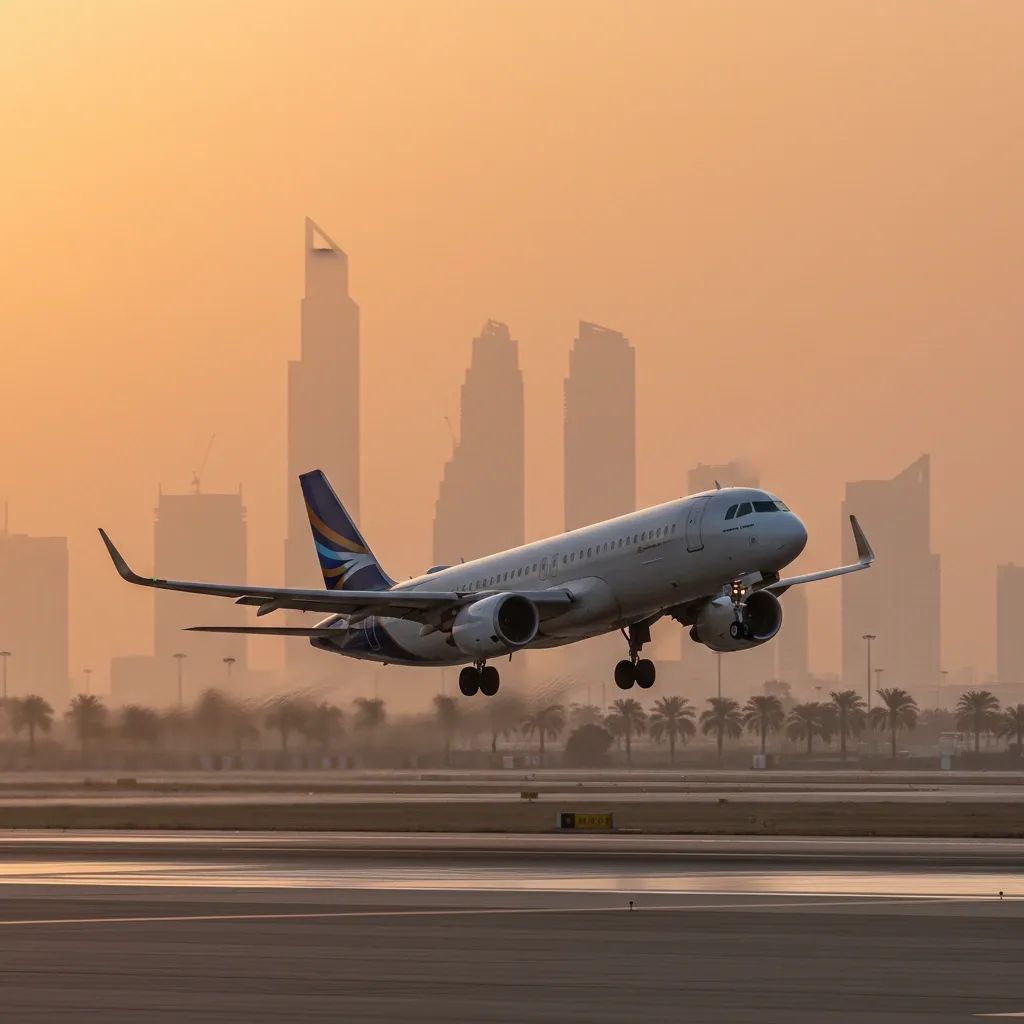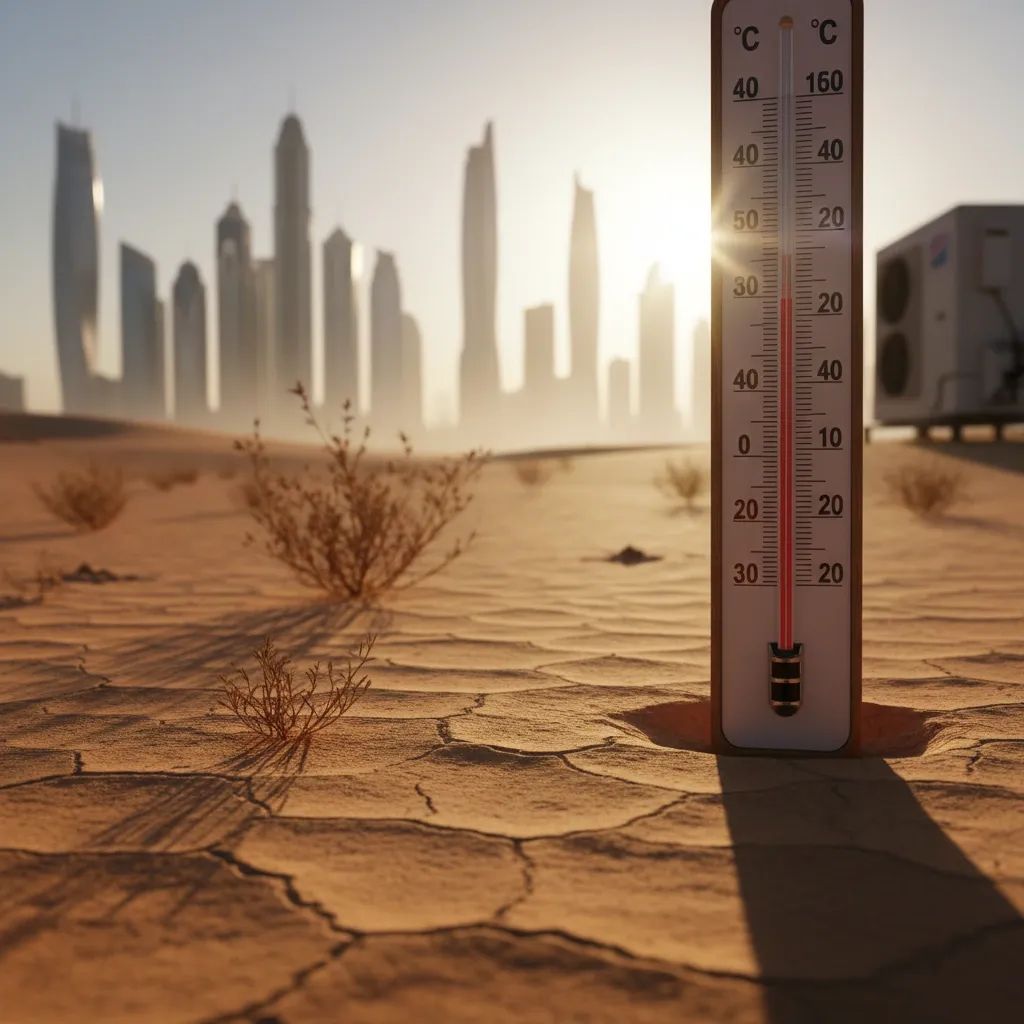
The United Arab Emirates is bracing for a scorching Friday as inland temperatures approach 49°C and coastal cities settle into the low-40s, part of a relentless summer pattern that tests both human endurance and infrastructure resilience. This is the reality of living in one of the world's fastest-warming regions—and residents, employers, and policymakers are adapting in concrete, measurable ways.
Why This Matters
• Inland heat peaks at 49°C: Liwa and surrounding desert zones will reach extreme levels; coastal hubs like Dubai (41°C) and Abu Dhabi (42°C) remain hot but more manageable.
• Humidity traps nighttime relief: Coastal humidity climbs to 85% overnight, making sleep uncomfortable and delaying body recovery from daytime stress.
• Work restrictions are strict: The midday outdoor work ban runs during peak heat hours, with compliance exceeding 99% and penalties up to AED 50,000 for repeat violators.
• Sea conditions remain calm: Arabian Gulf and Oman Sea conditions pose no disruption to marine traffic or leisure activities.
The Gradient: How Temperature Shifts Across Seven Emirates
The United Arab Emirates National Centre of Meteorology confirms a predictable but punishing pattern: the closer you live to the coast, the more manageable the heat; venture inland, and conditions become genuinely dangerous.
Dubai, the nation's commercial hub, will peak at 41°C with an overnight low of 31°C. The afternoon "feels like" temperature will exceed the thermometer reading by several degrees due to humidity, making midday sidewalk walking feel heavier than the numbers suggest. Residents know to stay indoors between 10 a.m. and 4 p.m.—not as an advisory but as a practical survival strategy that has become cultural norm.
Abu Dhabi, the capital, mirrors this at 42°C daytime with a 30°C low. Sharjah sits at the same 42°C peak, though its overnight minimum of 29°C—slightly cooler—offers marginally faster evening relief.
The smaller emirates show variation. Ras Al Khaimah, in the north, will reach 43°C, while Fujairah, perched on the Oman Sea coastline, edges down to 39°C thanks to maritime moderation. Ajman and Umm Al Quwain both register around 40–41°C. Al Ain, often cited as the nation's hottest city during peak summer, is forecast for 45°C—still extreme but notably cooler than its reputation sometimes suggests.
The desert interior tells a different story. Liwa, deep in the southern sands, will reach 48°C, while Sila hits 47°C. Al Ruwais, the western coastal outpost, climbs to 46°C despite ocean proximity. These zones are effectively uninhabitable for outdoor work without aggressive protective infrastructure.
Government Enforcement: How Safety Rules Actually Work
The United Arab Emirates Ministry of Human Resources and Emiratisation activated its Occupational Heat Stress Prevention Policy in mid-June and maintains strict enforcement through September 15. This is not performative regulation—compliance data shows 99% adherence, a striking achievement in a nation with millions of outdoor workers.
The mechanism is straightforward: no work under direct sunlight during midday peak heat hours. Employers must supply cold drinking water, electrolyte salts, first aid kits, shaded rest areas, and industrial cooling systems. The penalty structure carries teeth—AED 5,000 per worker in violation, scaling to AED 50,000 for employers repeatedly breaching the rule across multiple staff members.
Over 12,000 rest stations have been deployed specifically for delivery riders, a workforce particularly exposed to midday heat. Inspection teams use digital monitoring, field visits, and public complaints to verify compliance. The result: heat-stress hospitalizations among outdoor workers have declined measurably compared to previous summers.
For general workers, the logic is risk mitigation: extreme heat destroys cognitive function, slows decision-making, and triggers heat exhaustion within 45 minutes of sustained exposure. Builders, maintenance crews, and logistics staff adjust their schedules accordingly, beginning work at dawn and resuming in late afternoon. Construction sites that ignore the ban face operational shutdowns and reputational damage that extends beyond fines.
The Humidity Factor: Why Nighttime Is Harder Than Noon
Thermometers tell only half the story. The United Arab Emirates National Centre of Meteorology reports that coastal humidity climbs to 85% overnight, creating a physiological barrier to human cooling. When sweat cannot evaporate from skin due to saturated air, the body cannot shed accumulated heat, and core temperature rises.
The result: residents report sleepless nights, waking multiple times to reset air conditioning, applying cold compresses, or simply lying awake. This sleep disruption compounds heat stress across the population. Children, the elderly, and those with respiratory conditions experience heightened risk.
Fog and mist are forecast for early Saturday morning in coastal and internal areas as moisture condenses over cooler surfaces. It offers temporary psychological relief—a visible sign of moisture—but does little to lower actual temperatures.
Infrastructure Under Strain: The Energy Equation
The United Arab Emirates grid operates under duress during peak summer. Air conditioning accounts for up to 70% of electricity demand in some coastal emirates, and consumption during extreme heat episodes strains generation capacity. Electricity bills for families spike noticeably during summer months; for businesses running 24-hour operations, the cost is substantial.
The government's response spans multiple fronts: Dubai is investing in large-scale solar parks to power cooling loads sustainably, district cooling systems that deliver 40% greater efficiency than traditional air conditioning, and experimentation with reflective road materials to reduce surface heat absorption.
Green building codes now mandate better insulation and natural ventilation where feasible. Smart wearables that detect early heat stress in workers are being tested by major employers, potentially reducing heatstroke incidents before they escalate to emergency admissions.
Cloud seeding technology remains exploratory, though recent severe natural storms have revealed that urban drainage systems—designed for minimal rainfall—struggle with actual precipitation events. The infrastructure paradox: a region too hot for rain must paradoxically prepare for sudden, intense downpours when weather systems do materialize.
What Residents Can Actually Do Right Now
Health authorities issue guidance every summer, but adherence often lags among residents rushing through their day. The practical checklist:
Hydration is non-negotiable. Drink water consistently, not just when thirsty—thirst indicates the body is already losing efficiency. Avoid caffeinated and sugary drinks, which accelerate dehydration. Electrolyte solutions (powders mixed into water) help replace salts lost through perspiration.
Clothing matters more than many realize. Loose-fitting, light-colored cotton or linen garments reduce heat absorption compared to tight or dark fabrics. Wide-brimmed hats and high-SPF sunscreen (reapplied after two hours) are basic defenses against UV damage.
Timing is paramount. Schedule outdoor errands—grocery runs, appointments, outdoor exercise—for early morning (6–8 a.m.) or late evening (6–9 p.m.). Between 10 a.m. and 4 p.m., the risk calculus shifts sharply against outdoor activity.
Vehicle safety is critical: children and pets left in parked vehicles face lethal heat within minutes. Interior temperatures can exceed 70°C even with windows cracked—a common misconception that creates tragedy.
Community vigilance is culturally important. Check on elderly neighbors living alone; heat affects isolated seniors more severely, and they may lack resources or knowledge to stay properly hydrated.
The Climate Baseline Has Shifted
The United Arab Emirates warms at roughly twice the global average rate. Between 1980 and 2017, the nation's average annual temperature increased by 1.8°C; from 1901 to 2021, the rise measured 1.33°C. Nighttime temperatures are rising faster than daytime peaks, a particularly troubling trend that prevents physiological recovery during sleep and compounds cumulative heat stress.
Combined with higher evaporation rates, it drives humidity upward, creating oppressive overnight conditions that feel heavier than the thermometer reads. This is the climate shift residents talk about—not just higher numbers on the thermometer, but a qualitative change in how summer feels.
El Niño suppresses the northwesterly winds that normally deliver cooling sea breezes during summer. The result is stagnant, super-heated air mass that sits over the UAE for days, with little ventilation.
Looking Ahead: The "Jamrat Al Qayth" Continues
The current period, known as "Jamrat Al Qayth" (literally, the "coals of summer"), runs from July 3 through August 10. Residents can expect sustained extreme heat throughout this window, with no significant break forecast. Nights will remain warm, sea conditions will remain calm, and the humidity-heat combination will persist.
Friday's weather is fair with light winds—no storms, no disruption, just unrelenting summer. The weekend outlook offers no respite, only continuation of the pattern.
For a nation where summer extremes are embedded in daily life, this season represents an ongoing test of adaptation. The government's enforcement of work restrictions, the deployment of rest stations, the investment in solar-powered cooling, and the community-level awareness campaigns collectively form a response framework. Individual choices—staying indoors during peak hours, checking on neighbors, recognizing heat illness symptoms—amplify that protection.
The heat is real, the conditions are extreme, and the long-term warming trend is undeniable. But so too is the deliberate, measurable effort to keep residents safe within an increasingly challenging climate.