
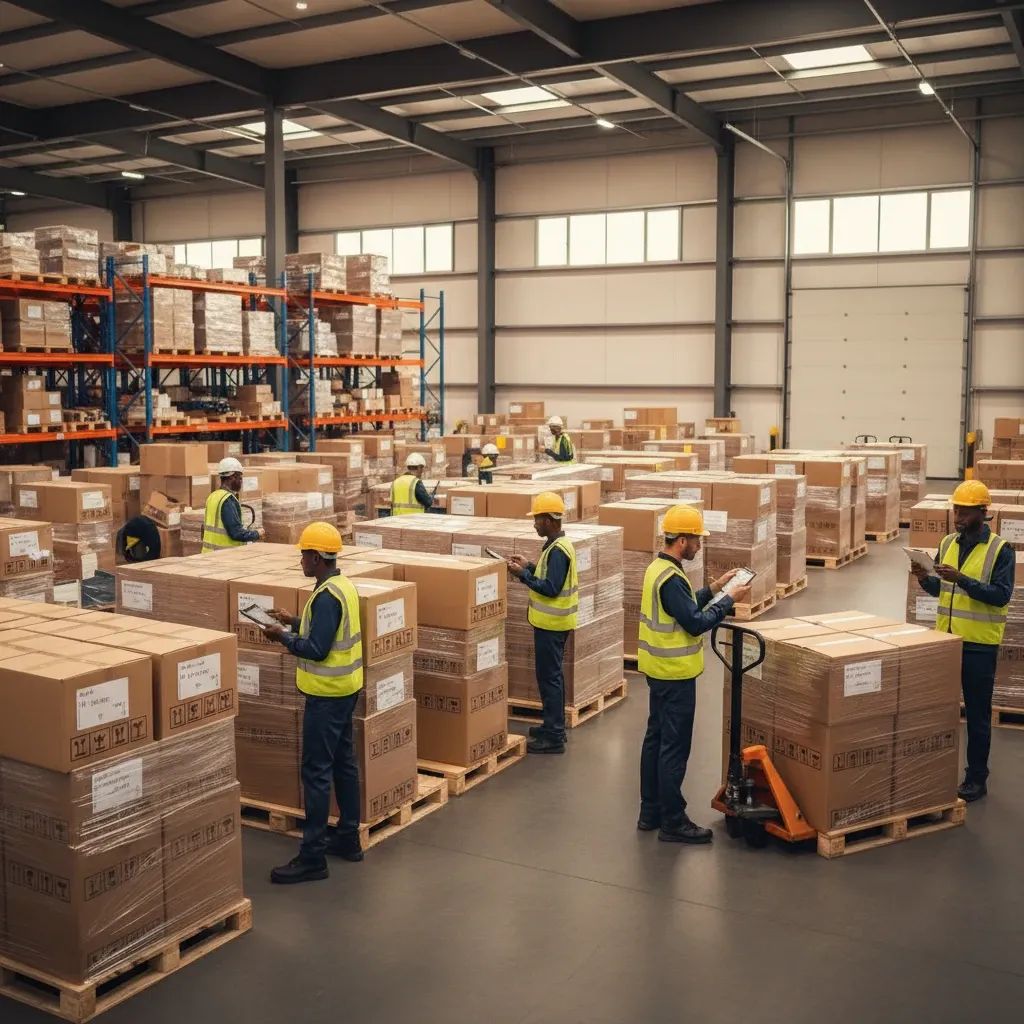
The Dubai Humanitarian hub—the world's largest logistics clearinghouse for emergency aid—continues to operate at full capacity, coordinating relief operations for over 80 international organizations and demonstrating sustained resilience even as regional instability tests global supply chains. With $200M worth of prepositioned supplies currently stored across its 150,000 square meter warehouse complex, the United Arab Emirates-backed facility remains a cornerstone of international humanitarian response, equipped to scale operations to meet urgent demand from disaster zones worldwide.
Why This Matters for UAE Residents
For UAE residents and expatriates, the hub's continued strength offers direct and indirect benefits. The Emirates' $1.46B in humanitarian contributions in 2025—making it the third-largest donor globally—reinforces the country's role as a neutral humanitarian coordinator in a volatile region. This reputation attracts international organizations seeking stable operating environments, which sustains demand for logistics services, warehouse leasing, freight forwarding, and supply chain consulting—sectors that employ thousands in Dubai and contribute to economic diversification beyond oil and tourism.
The hub's presence also positions Dubai as a trusted logistics partner during global crises. When disasters strike Southeast Asia, Africa, or the Middle East, the facility's ability to deliver aid to two-thirds of the world's population within 4–8 hours reflects capabilities that enhance UAE soft-power diplomacy and create sustained economic activity in the emirate.
Reach and Operational Capacity:
• Rapid Delivery: The hub can reach two-thirds of the world's population within 4–8 hours, a critical advantage when disasters strike Southeast Asia, Africa, or the Middle East.
• Stock on Hand: Current inventory includes medicines, shelters, water purification kits, telecommunications gear, and emergency food—enough to support relief efforts in over 100 countries annually.
• Proven Track Record: In 2025, the hub coordinated 14,297 metric tonnes of aid valued at $110M through 1,188 shipments, reaching 101 nations. In the first half of 2025 alone, Dubai Humanitarian distributed $48.8M in aid to 81 countries.
• Recent Operational Continuity: When temporary disruptions affected one tenant organization (the World Health Organization's emergency logistics hub) in early 2026 due to Middle East conflict, Dubai Humanitarian's broader operations remained fully functional, demonstrating institutional resilience. The WHO component resumed operations by early March 2026, and the facility cleared backlogs including delayed $18M in health supplies to 25 countries.
Strategic Location Powers Rapid Deployment
Dubai Humanitarian's competitive advantage lies in geography and infrastructure. Situated 10 minutes from Jebel Ali seaport—the region's largest container terminal—and adjacent to Al Maktoum International Airport, the hub leverages the United Arab Emirates' position as a natural crossroads between Europe, Asia, and Africa. This proximity cuts travel time, reduces carbon emissions, and allows emergency coordinators to respond quickly when crises emerge in flood-prone Bangladesh, conflict zones in the Sahel, or earthquake-affected regions in the Caucasus.
The UAE government, under directives from Sheikh Mohammed bin Rashid Al Maktoum, Ruler of Dubai, donated the warehouse space rent-free two decades ago. Since then, the facility has evolved into a free-zone authority hosting member organizations ranging from UN agencies like UNHCR and WFP to commercial logistics firms and international NGOs. This hybrid model blends public infrastructure with private-sector efficiency, enabling seamless customs clearance, regulatory fast-tracking, and 24-hour operational cycles during emergencies.
In practice, this means a pallet of oral rehydration salts can clear customs in Dubai, reach a chartered cargo plane, and land in Maputo within 72 hours of an official request—a turnaround most regional hubs struggle to match.
Recent Operations Demonstrate Sustained Capacity
The hub's operational tempo over the past 14 months underscores its ability to manage concurrent crises without interruption. In December 2025, Dubai Humanitarian partnered with Emirates to establish an airbridge for Cyclone Ditwah relief in Sri Lanka, moving urgent supplies within days of landfall. Two months later, in February 2026, the facility dispatched 91.6 tonnes of aid to flood-affected communities in Mozambique, coordinating with local authorities and WFP logistics teams to ensure last-mile delivery.
These operations ran in parallel with sustained support for protracted emergencies. Throughout 2025, the hub processed 790 metric tonnes of relief through 14 major shipments to Afghanistan, Myanmar, Sri Lanka, and the Gaza Strip via Egypt, reaching an estimated 3M beneficiaries. The supplies ranged from trauma kits and tarpaulins to solar-powered telecommunications equipment and child-protection materials—assets that require climate-controlled storage and specialized handling.
The diversity of inventory reflects the hub's role as a multi-hazard response platform. At any given time, warehouses hold medicines and medical devices prepositioned by WHO, emergency shelters staged by UNHCR, water and sanitation modules from UNICEF, and food security kits from NGOs like the World Food Programme. This stockpile, valued at an average of $200M, turns over continuously as shipments depart and fresh consignments arrive, maintaining a state of permanent readiness.
Resilience Under Regional Stress
In early 2026, regional conflict tested the hub's operational resilience. Temporary disruptions to the WHO's Dubai-based emergency logistics operations created delays affecting 25 countries and more than 1.5M people. The UAE government, in coordination with the UN's World Food Programme, moved quickly to facilitate urgent humanitarian shipments and clear backlogs, demonstrating the UAE's commitment to maintaining logistical corridors even during regional instability—a capability that distinguishes Dubai from potential rival hubs in Nairobi, Panama City, or Copenhagen.
By early March 2026, operations had resumed fully across all components. This episode underscored both the hub's structural advantages and its exposure to regional dynamics: while Dubai Humanitarian benefits from world-class infrastructure, organizations relying on it must factor in contingency planning and potential freight cost variations during periods of heightened regional tension.
Global Context and Future Positioning
To contextualize Dubai Humanitarian's significance, UNHCR operates seven global stockpiles across Copenhagen, Nairobi, Douala, Accra, Panama City, Termez, and Dubai. Yet UNHCR's largest single stockpile is housed within Dubai Humanitarian, rent-free, leveraging the hub's logistics advantages. This efficiency model—combining government-donated infrastructure with member-funded inventory—reduces overhead and enables faster deployment compared to legacy facilities in Europe or Africa that face higher operating costs and regulatory complexity.
Dubai Humanitarian's leadership emphasizes adaptability and innovation as core pillars for sustained growth, with partnerships aimed at developing enhanced logistics solutions and strengthening coordination among UN agencies, NGOs, and commercial providers.
The UAE's $550M pledge in December 2025 to support the UN's 2026 Global Humanitarian Overview—which seeks to assist 135M people across 23 operations—signals sustained political commitment. Combined with the hub's operational track record and strategic infrastructure, Dubai Humanitarian remains positioned as the world's largest humanitarian logistics platform for the foreseeable future, provided regional security remains manageable and donor funding patterns remain stable.


