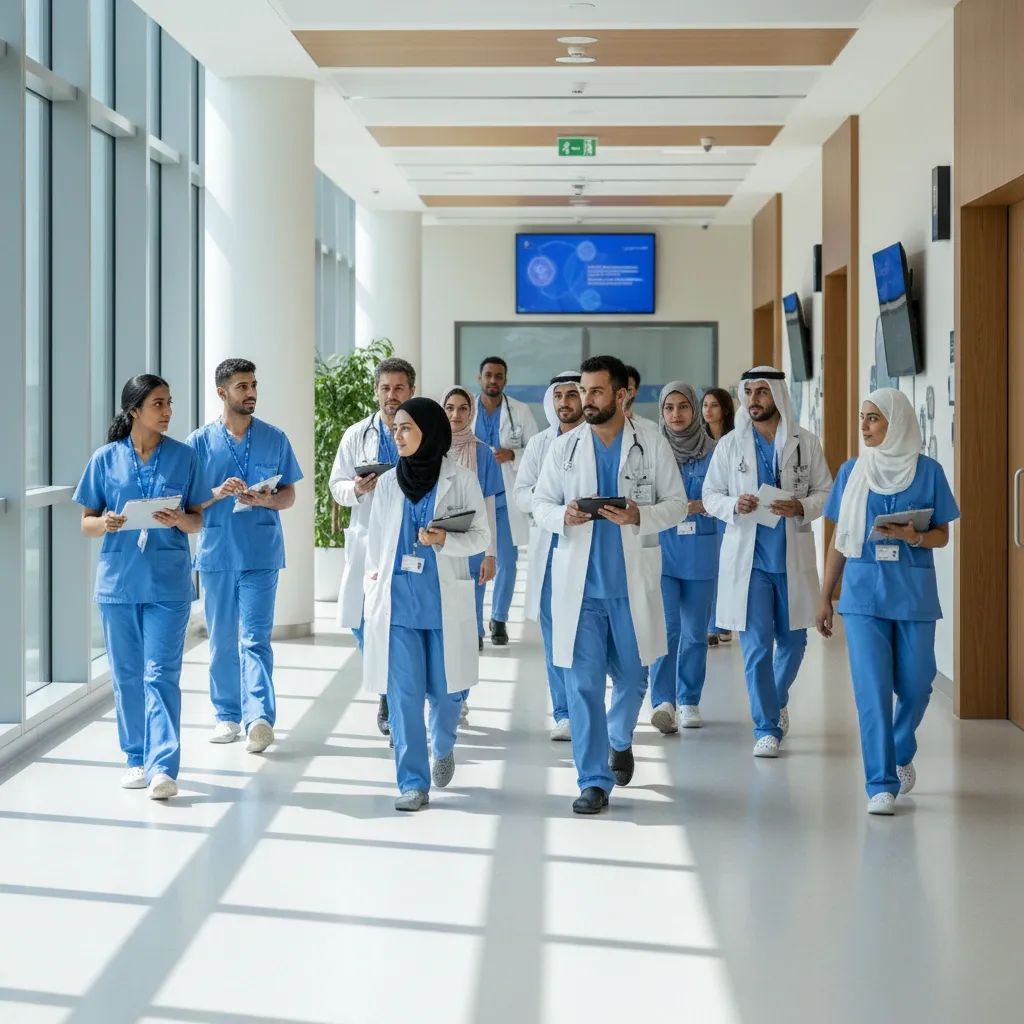
When a kidney dialysis patient approached Dubai Health Authority (DHA) leadership with a simple observation—that the bone-deep exhaustion following each treatment made it impossible to drive home safely—the response revealed something essential about how the emirate's healthcare system now operates. Rather than dismissing the complaint as a personal logistics problem, the DHA built an integrated transport network. Today, three years later, the initiative demonstrates that removing a single logistical barrier can have cascading effects on treatment outcomes, family stability, and how patients experience chronic disease management.
Why This Matters
• Automatic scheduling eliminates administrative friction: Patients no longer book rides repeatedly; transport aligns directly with their dialysis calendar, removing a recurring task that exhausts already-depleted individuals.
• Post-treatment exhaustion now has a structural solution: The 85% fatigue rate among Gulf dialysis patients is no longer a private family problem but an acknowledged clinical challenge with dedicated infrastructure addressing it.
• Geographic coverage without exception: All areas of Dubai are served, ensuring distance from a treatment facility never becomes a reason to miss a session.
• Safety hazard converted to clinical continuity: Advanced cases receive medical supervision during transit, extending clinical care beyond the hospital perimeter.
The Physiology of Why This Service Was Necessary
Hemodialysis is medically intensive work disguised as a passive sitting procedure. Over three to four hours, a machine removes roughly a liter of fluid alongside accumulated uremic toxins. The body responds with profound physiological shock: blood pressure crashes suddenly, electrolyte concentrations swing wildly, hemoglobin dips lower (many dialysis patients are severely anemic), and oxygen delivery to tissues plummets.
What emerges post-treatment is a state that patients describe as being "hit by a truck"—a paralytic fatigue distinct from ordinary tiredness. The phenomenon is not psychological but biochemical, a direct result of rapid fluid shifts and the metabolic stress of toxin removal. In the Middle East specifically, reported fatigue rates reach 85% among dialysis cohorts, making it one of the most consistent barriers to treatment adherence and quality of life outside the clinic walls.
For someone undergoing dialysis three times weekly, this fatigue is not occasional. It is a structural feature of their existence. The treatment that keeps them alive also leaves them, several hours later, unable to operate a vehicle without risking their own life or others'.
This is the gap the DHA identified. Not a gap in medical care, but a gap in the ecosystem surrounding medical care.
From a Single Complaint to Emirate-Wide Infrastructure
The Dubai Health Authority's transport service, launched in 2023, originated not from a strategic planning retreat or a government directive handed down from above. Instead, it grew from one patient's frank assessment of an unmet need. That visibility—the willingness to listen to a concrete complaint rather than dismiss it as the patient's responsibility—shaped everything that followed.
The operational structure that emerged reflects that origin. Rather than forcing patients into a centralized booking system, the DHA designed the process around the existing treatment schedule. During an initial consultation, healthcare staff coordinate with the transport team. After that single conversation, the system takes over. Each dialysis appointment automatically triggers a transport booking, scheduled to pick up the patient before treatment and deliver them home afterward. The patient never phones to request a ride again.
This automation serves a practical function: it removes decision-making overhead from individuals at their most vulnerable. It also ensures consistency. Missed sessions—often driven by logistical failures—are now systematically prevented. The treatment schedule becomes binding not just medically but operationally.
The service covers the entire emirate, from suburban residential compounds to high-rise downtown areas to industrial zones. Geography is deliberately rendered irrelevant to the patient's ability to access care. This reflects a broader statement about how the DHA interprets public healthcare: as a right tied to residence, not to proximity or personal resources.
The Patient Population and Current Scale
Approximately 25 patients currently benefit from the dedicated transport service. That number signals either careful eligibility criteria or capacity constraints—the DHA has not publicly detailed which. What is clear is that the service is not a small pilot project: it is an established operational program that has been functioning for three years with documented impact on adherence and family burden reduction.
The medical assessments that determine eligibility are individualized. Standard cases receive transportation in DHA-equipped vehicles designed for comfort, with climate control, accessibility features, and crew trained in patient handling. More complex cases—those with unstable vitals, recent complications, or medical requirements during transport—receive integrated supervision. Medical personnel travel with the patient, monitoring blood pressure, heart rate, and other markers, and are empowered to intervene if complications arise during the journey.
This tiered approach acknowledges medical reality: not all dialysis patients face identical challenges. Some recover energy quickly; others remain profoundly depleted for hours. The service adapts to individual physiology rather than forcing a one-size-fit-all model.
Impact on Treatment Adherence and Health Stability
The most measurable outcome of the transport service is a decline in missed appointments and treatment delays. This matters enormously. When a dialysis patient misses a session or shortens one due to logistics, toxins that should be removed accumulate in the bloodstream. Fluid overload develops. Cardiovascular stress intensifies. Missed sessions are not inconveniences; they are clinical deteriorations.
The DHA reports that appointment adherence has improved since the transport service launched, though specific percentage improvements have not been publicly disclosed. Improved adherence translates directly into better biochemical stability: more controlled blood potassium levels, reduced fluid overload, lower infection risk from intradialytic complications.
Beyond the clinical metrics, the service has reshaped the family experience of chronic illness. Dialysis once meant that a family member was essentially required to manage logistics three times weekly—the transportation equivalent of a second unpaid job. For households where family members also work, this created impossible scheduling pressure. The service has liberated families from this dependency, allowing caregivers to focus on emotional support, meal preparation, and managing the non-transport aspects of the patient's life.
This reduction in caregiver burden has documented psychological benefits. Caregiver burnout in chronic disease management is recognized as a predictor of poor patient outcomes. By shifting logistics to a government service, the DHA has inadvertently strengthened the informal support networks that sustain patients emotionally.
Comparison to Other Gulf Healthcare Models
The DHA's approach differs meaningfully from transport solutions elsewhere in the region, each reflecting different healthcare philosophies and governance structures.
Saudi Arabia primarily relies on private medical transport providers offering scheduled, recurring services with emphasis on 100% on-time performance. During Hajj, the Ministry of Defense operates mobile hemodialysis units to serve pilgrims. Outside that context, routine transport is privatized and requires individual contracts or subscriptions.
Qatar has taken an entirely different direction with its Assisted Home Hemodialysis (AHHD) program, sponsored by the Ministry of Health and Hamad Medical Corporation. Rather than solving the transport problem, Qatar has eliminated it by bringing dialysis equipment and nursing support directly to patients' homes. This removes the need for travel altogether. For elderly patients and those with mobility constraints, home dialysis represents a more ambitious solution than transport logistics, though it carries higher infrastructure costs and requires significant nursing capacity.
Kuwait offers subscription-based transport through private companies like AlSoor, tailored to recurring dialysis schedules. The Ministry of Health does not operate dedicated transport services for dialysis patients, making access dependent on private sector availability and personal financial resources. Charity organizations assist some non-Kuwaiti patients, but coverage is limited.
Bahrain has integrated transport into certain clinic offerings. Facilities like the Royal Bahrain Hospital's Dialysis Unit provide complimentary pick-up and drop-off services as part of their treatment package. This model ties transport directly to the clinic rather than treating it as a separate infrastructure.
Dubai's model occupies a distinct position: a government-led, emirate-wide service that is neither privatized nor hospital-specific. It is built into the public health system itself, funded through the DHA budget, and universally available to residents regardless of which dialysis center they attend. This structural approach signals that the DHA considers patient mobility a component of medical care, not an ancillary service.
The "Patient First" Philosophy in Practice
The dialysis transport service sits within a broader ideological framework the DHA calls "Patient First"—the concept that clinical outcomes are shaped by factors extending far beyond the medical procedure itself. Treatment cannot be considered successful if the patient cannot safely access it, or if the journey to and from the clinic so depletes them that they cannot manage their medication, nutrition, or mental health between sessions.
This philosophy has concrete operational implications. It means the DHA monitors not just what happens in the clinic but what happens in the patient's home, car, and on the street. It means recognizing that a patient's ability to follow their treatment plan depends on infrastructure most healthcare systems treat as someone else's responsibility.
For advanced dialysis cases, this philosophy manifests as medical personnel traveling with the patient. The clinical continuity is literal: the patient does not move from medical supervision; supervision simply relocates with them. This model assumes that complications can emerge during transit and that having clinical resources present is a health priority equivalent to having them present during the dialysis session itself.
Demographic Context: Why This Matters Now
Over 2,000 patients in the United Arab Emirates are currently undergoing hemodialysis or peritoneal dialysis, a figure projected to double within five years. This trajectory reflects the demographic and epidemiological realities shaping healthcare across the Gulf: an aging population, rising obesity rates, increasing diabetes prevalence, and higher hypertension rates—all driving factors in chronic kidney disease incidence.
As demand accelerates, services like the DHA's transport initiative become not supplementary innovations but foundational infrastructure. An emirate that will have 4,000 dialysis patients within half a decade cannot simply assume families will handle logistics indefinitely. The system needs to absorb that responsibility structurally.
The DHA's early investment in transport infrastructure positions Dubai to handle this demographic shift without creating crisis conditions during the transition. Other Gulf nations watching this model's effectiveness may face pressure to adopt similar approaches, particularly as their own patient populations expand.
Operational Design and Future Scalability
The service's technical architecture prioritizes flexibility. Medical assessments determine vehicle type, equipment level, and personnel requirements for each patient. This prevents over-resourcing straightforward cases while ensuring complex cases receive appropriate infrastructure. Coordination with clinical teams is automatic whenever a patient's condition raises concern during transit.
The administrative design mirrors this pragmatism. Automatic scheduling tied to clinical appointments means the system operates with minimal weekly human intervention once initial eligibility is established. This efficiency would allow the service to scale beyond its current 25 users without proportional increases in administrative staff.
Currently, the DHA has not announced expansion targets or plans to broaden eligibility criteria. The service remains operationally stable and reportedly effective within its current parameters. Whether the organization will expand to capture additional patients or add digital features like family tracking or telemedicine integration remains unclear. What is evident is that the infrastructure is proving durable and that demand is likely to exceed capacity as awareness of the service spreads.
What Remains Unspoken
The DHA's success with this service underscores a reality hospitals often avoid mentioning: clinical outcomes depend on social infrastructure as much as on medical equipment and expertise. A dialysis patient with state-of-the-art treatment and dangerous exhaustion afterward is a partially solved problem. A dialysis patient with good treatment, safe transportation, and family support is a comprehensively managed patient.
Dubai's willingness to fund this service—to accept that patient mobility is part of the healthcare system's responsibility—reflects a philosophical choice about what public healthcare means. It means accepting that healthcare is not confined to hospitals, that patient needs extend beyond diagnoses, and that listening to a single patient's complaint can sometimes reveal systemic solutions.
For the 25 patients currently using the service, the practical benefit is immediate: they arrive at and depart from treatment safely, their families are relieved of logistical burdens, and their treatment plans maintain consistency. For the emirate's healthcare system, the benefit is subtler but more consequential. It is a working model of patient-centered care that other systems will likely attempt to replicate as kidney disease incidence accelerates across the region.
In the context of Gulf healthcare, where medical facilities are often world-class but healthcare philosophy can remain clinic-centric, Dubai has quietly demonstrated that comprehensive patient care extends into the parking lot and all the way home.