
When the Middle East Met the Mediterranean: Etihad's Direct Gamble on Secondary European Cities
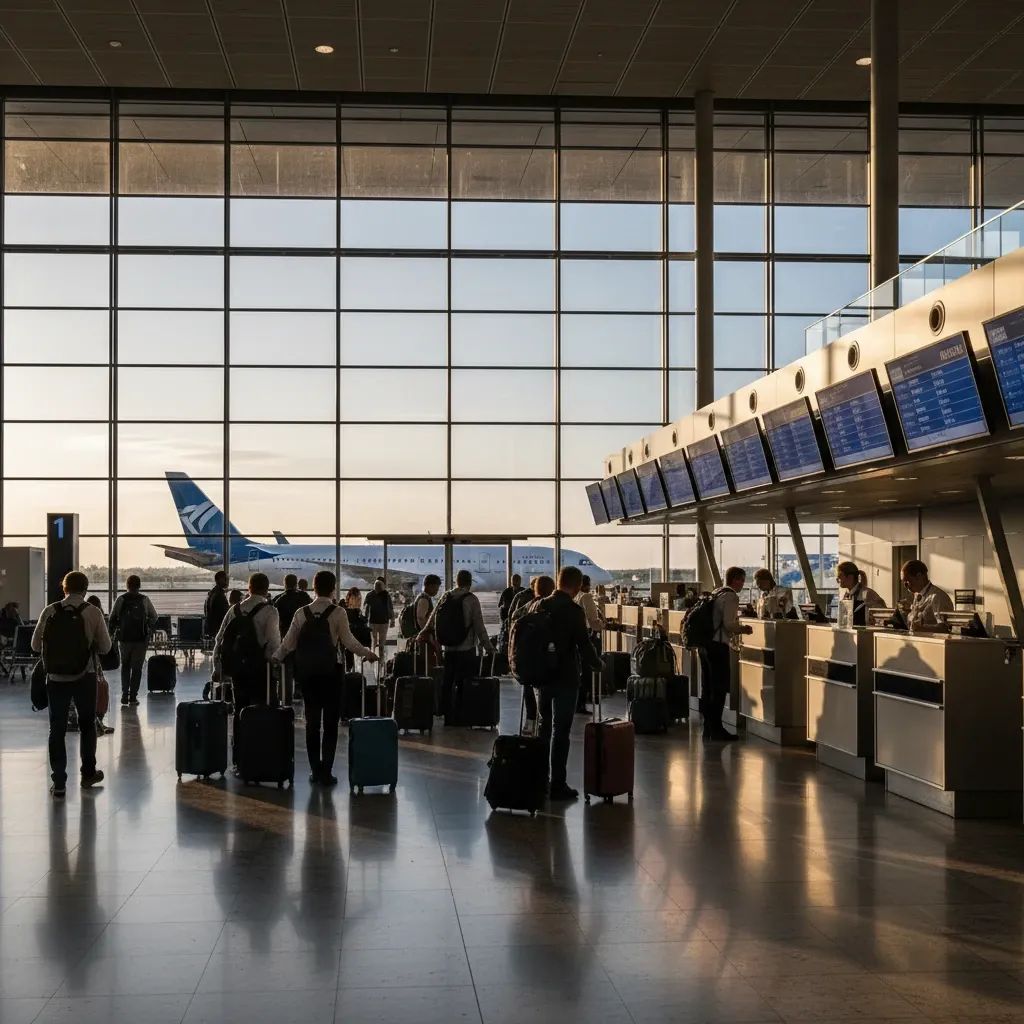
Abu Dhabi's flagship airline has quietly repositioned itself as a contender for something larger than simply moving passengers between hubs. In June 2026, Etihad Airways launched thrice-weekly direct flights connecting the capital to Kraków in Southern Poland and Palma de Mallorca in Spain's Balearic Islands—routes where no other Gulf carrier currently flies nonstop. The calculus is straightforward: bypass the overcrowded primary European gateways where competition is ferocious, and instead own the entire market on routes where demand exists but capacity never did.
Why This Matters
• First-mover advantage in premium travel: Etihad is the only airline offering First Class cabins between the Gulf and either destination, creating an exclusivity window that competitors will spend years trying to replicate.
• Direct flight convenience eliminates airport transfers: Kraków and Palma travelers from the United Arab Emirates previously required intermediate stops through Vienna, Madrid, or Frankfurt; now that friction disappears in single flights under seven hours.
• Seasonal opportunity for family travel: Both routes align with peak demand from Gulf families during summer months—exactly when UAE residents most aggressively book international holidays.
• New real estate and investment signals: Enhanced air connectivity typically triggers property interest among high-net-worth Gulf buyers looking for European second homes.
The Timing: Why Now, Why These Cities
On June 11, Etihad Airways commenced service to Kraków, introducing Europe's fastest-growing cities to direct Middle Eastern connectivity. One day later, Palma de Mallorca entered the schedule. Neither arrival is accidental. Kraków, Poland's cultural capital and software-development hub, had experienced measurable uptick in Gulf tourist arrivals throughout 2025—a 12-month test run of demand that Etihad's commercial teams clearly monitored. The airline's decision to add a second Polish destination (following Warsaw's June 2025 launch, now a year into established service) reflects confidence that market appetite extends beyond the capital.
Palma's timing proves equally deliberate. The Balearic Islands open Europe's beach season precisely when Dubai and Abu Dhabi become intolerable—when outdoor midday temperatures push toward 50 degrees Celsius. Families with school-age children and professionals seeking July-August escapes need reliable options. Etihad's service runs through mid-September, capturing the eight-week window when Gulf customers most reliably travel internationally.
What distinguishes this expansion from typical airline route-launches is the aircraft selection. The Airbus A321LR—an engineering compromise between range and profitability—carries only 199 passengers across First, Business, and Economy configurations. This narrow-body design contradicts conventional widebody orthodoxy for long-haul travel, yet it serves Etihad's economics perfectly. Routes to secondary European cities don't generate sufficient daily demand to justify the per-seat costs of larger aircraft like the Boeing 777 or Airbus A350. The A321LR operates profitably at lower load factors while preserving the premium-cabin amenities that differentiate the airline: private First suites with shower spas and lie-flat Business beds with direct-aisle access.
What Residents of the United Arab Emirates Actually Gain
For people living in the United Arab Emirates, these routes address a recurring frustration that rarely appears in airline marketing material: the sheer exhaustion of connecting flights. A businessman from Lahore with a meeting in Kraków can now book a single ticket through Abu Dhabi, arriving with luggage claims reduced to one instead of navigating multiple transfer points where bags notoriously delay or disappear. The convenience premium—worth quantifying financially—eliminates hours of airport procedure and jet-lag compounding that connecting itineraries impose.
For leisure travelers, Kraków presents unexpected appeal. The medieval Old Town—a UNESCO World Heritage site—couples with proximity to Wawel Castle, Polish folk traditions, and increasingly, Poland's emerging technology sector. Families seeking European cultural immersion without the tourist saturation of Prague or Barcelona now have a direct option. Business professionals with connections to Polish manufacturing clusters or software development firms gain what they previously lacked: premium cabin access that enables conference attendance without the physical exhaustion of connecting flights.
Palma de Mallorca carries different implications. Mediterranean beaches have long been accessible from the UAE, but always through transfers. The island's luxury resort infrastructure—yacht clubs, Michelin-starred dining, exclusive beach clubs—caters precisely to the high-net-worth demographic concentrated in Dubai and Abu Dhabi. A direct flight removes the justification for booking expensive, time-consuming itineraries through European hubs. For families, the psychological win cannot be overstated: children's tolerance for airport disruption peaks before departure; a single nonstop flight preserves patience and vacation energy rather than front-loading exhaustion into travel days.
The premium cabin structure matters more than promotional copy suggests. A flight exceeding six hours in standard economy seats tests endurance; First Class transforms the experience into something approaching rest rather than ordeal. For high-yield passengers—exactly the demographic Etihad targets—the cost difference between Business and First often justifies the upgrade when both represent premium comfort. On connecting flights, no premium option existed; Etihad has simply created supply where demand was previously unmet.
Practically, residents connecting from secondary Asian markets gain competitive advantage. A professional traveling from Karachi to attend a Warsaw conference can route through Abu Dhabi via Etihad's integrated schedule, avoiding the fragmented bookings and missed-connection risks that characterize multi-airline itineraries. The single-ticket convenience—baggage transferred automatically, integrated loyalty miles, coordinated schedule buffers—produces value that pure fare comparison misses.
The Competitive Dimension: Why Rivals Haven't Arrived First
The competitive landscape for these routes has never truly existed. Emirates, the region's largest carrier, operates extensively to European leisure destinations but not to Kraków or Palma de Mallorca directly from the Gulf. Qatar Airways, similarly, maintains limited Central European presence and no Balearic service. The vacuum Etihad fills reflects not competitor complacency but rather route economics that typically demand either higher passenger volumes or lower input costs than these secondary cities command.
By launching first, Etihad captures what brand strategists term the "founder effect"—early association between the airline and these destinations that persists long after competitors eventually enter. The First Class monopoly amplifies this advantage. Wealthy travelers accustomed to premium cabin travel have historically endured connecting flight compromises that competitors normalized but Etihad has eliminated. Even if Emirates or Qatar Airways eventually add these routes—inevitable given Etihad's success—the perception that Etihad "owns" premium travel to these destinations will survive for years.
Economy-class competition proves more straightforward. Ryanair and Wizz Air operate extensive European networks from regional airports; passengers seeking budget options will always gravitate toward budget carriers regardless of Etihad's offerings. However, for time-conscious mid-market travelers—professionals, affluent families, older demographics less comfortable with budget-airline logistics—Etihad's direct service removes friction that cheaper alternatives cannot match.
The Larger Picture: Etihad's European Strategy Within Journey 2030
These two routes materialize within Etihad's codified expansion roadmap: "Journey 2030," which targets 30 million annual passengers and over 125 destinations by decade's end. Currently operating fewer than 100 aircraft, the strategy requires fleet expansion approaching 150 by 2030. These European additions represent tactical execution of that larger ambition.
Deliberately targeting secondary European cities rather than contesting London, Paris, or Amsterdam reflects sophisticated market segmentation. Primary European hubs overflow with competitor capacity; differentiation demands targeting travelers who prioritize convenience over price wars. Kraków and Palma—while popular with tourists—lack the airline saturation that characterizes major continental gateways. This strategic positioning allows Etihad to scale network density without massive capital deployment in contested markets.
Fleet composition accelerates this capability. Etihad has committed to acquiring fuel-efficient widebodies like the Boeing 787 Dreamliner and Airbus A350-1000, reducing per-seat operating costs on longer transcontinental routes. The A321LR fills complementary niches: routes where distance capability matters but passenger demand doesn't justify widebody deployment. This fleet architecture maximizes network density while preserving operating margins across heterogeneous route profiles.
Partnership strategy amplifies reach without ownership risk. Etihad's expanded codeshare agreement with Air France-KLM provides access to over 40 additional European destinations without operating flights directly. A passenger booking Abu Dhabi to Paris through Kraków actually connects on French carriers for the final leg—seamless from the passenger perspective but operationally efficient for Etihad. This "hub-and-spoke plus strategic partnerships" model scales faster than organic growth alone.
Economic Signals for Destination Cities
Kraków's tourism economy stands to absorb meaningful stimulus. The city already experienced noticeable visitor growth from Gulf nationals in 2025—a trend the direct Etihad connection will accelerate substantially. Tourism contributes approximately 7-8% of Kraków's GDP; passenger growth carries measurable economic weight. Each premium passenger Etihad lands represents higher per-visitor spending: five-star hotel nights, fine dining, luxury cultural experiences, and upscale retail transactions. Employment implications extend beyond obvious tourism jobs to ground handling, airport operations, maintenance scheduling, and supply-chain services. Polish authorities view Etihad's commitment as validation that Kraków competes on Europe's tourism ladder.
Palma de Mallorca operates at different scale. The island receives over 10 million annual visitors, with tourism accounting for roughly 45% of island GDP. The strategic win here involves source-market diversification rather than volume. Historically, German, British, and French tourists dominated Mallorca's calendar. Adding substantial Gulf and Asia-Pacific travelers through Abu Dhabi's hub fundamentally reshapes the island's visitor profile and seasonality patterns.
Real estate markets will respond tangibly. High-net-worth individuals throughout the United Arab Emirates increasingly treat Mallorca as second-home terrain. Direct air access lowers both transactional friction and psychological distance, making property investment or vacation-home purchases demonstrably more attractive. The Balearic Islands' luxury real estate sector, previously dominated by European and Russian capital, will likely see incremental Middle Eastern acquisition as connectivity improves.
Direct flights also mitigate seasonality pressures that plague Mediterranean destinations. Over-tourism in summer months has become political and environmental concern for island authorities. Spreading arrivals across the calendar—particularly attracting Gulf travelers who may travel differently than Northern Europeans—distributes capacity stress and extends hospitality sector profitability beyond compressed summer peaks. This demand distribution carries significance beyond pure economics; it addresses sustainability concerns that increasingly influence destination policy.
Abu Dhabi's Hub Ambitions
These routes reinforce Abu Dhabi's strategic positioning as a global aviation crossroads, competing with Doha, Istanbul, and regional rival Dubai to capture connecting traffic between Europe, South Asia, and East Asia. The capital's aviation infrastructure—anchored by the modern Terminal A at Abu Dhabi International Airport, which Etihad relocated to in November 2023—supports this ambition with facilities designed for high-volume hub operations.
Etihad explicitly encourages stopover tourism among connecting passengers. A traveler booking Abu Dhabi to Kraków to Southeast Asia might pause two days in the capital, generating hospitality revenue, retail spending, and attraction visits. This traffic-conversion model—connecting passengers becoming temporary residents—boosts Abu Dhabi's broader economy beyond aviation revenue alone. The stopover program functions as economic stimulus disguised as passenger convenience.
These routes also reveal management confidence in post-pandemic demand stability. Leisure travel has recovered above pre-2020 baselines across affluent markets. Etihad's willingness to deploy aircraft on thinner seasonal routes reflects measured belief that demand supports profitable operations without year-round frequency requirements.
The Road Ahead: Route Evolution and Competitive Response
Currently, both routes operate seasonally at three-weekly frequency. Industry observers watch whether load factors justify daily frequency upgrades or year-round Kraków operations. Palma's mid-September cutoff follows Mediterranean seasonality; extending to winter operations would require proving off-season demand—possible but unproven.
Codeshare expansion possibilities emerge naturally. Etihad might layer Kraków service onto Polish carrier LOT's network, creating seamless onward connections to Central European cities. Mallorca connections through Spanish partners could extend reach across the Iberian Peninsula without incremental operational expense. These arrangements cost Etihad nothing operationally but amplify passenger appeal substantially.
Competition will materialize eventually. Airlines monitor route profitability closely; success invites imitation within 18-24 months typically. However, Etihad's first-mover advantage—particularly the exclusive First Class offering—provides protection measured in years rather than months. Brand association and frequency advantages forged early prove difficult for rivals to dislodge, even when capacity eventually arrives.
For residents of the United Arab Emirates navigating European travel options, these routes represent tangible quality-of-life improvement. Direct flights to previously inaccessible destinations, premium cabin options previously unavailable, and scheduling convenience previously absent translate into something prosaic but valuable: reducing friction in an activity—travel—that inherently involves complexity. That utility underpins why aviation infrastructure investment matters to daily life in the region, even when the announcement arrives without fanfare.


