
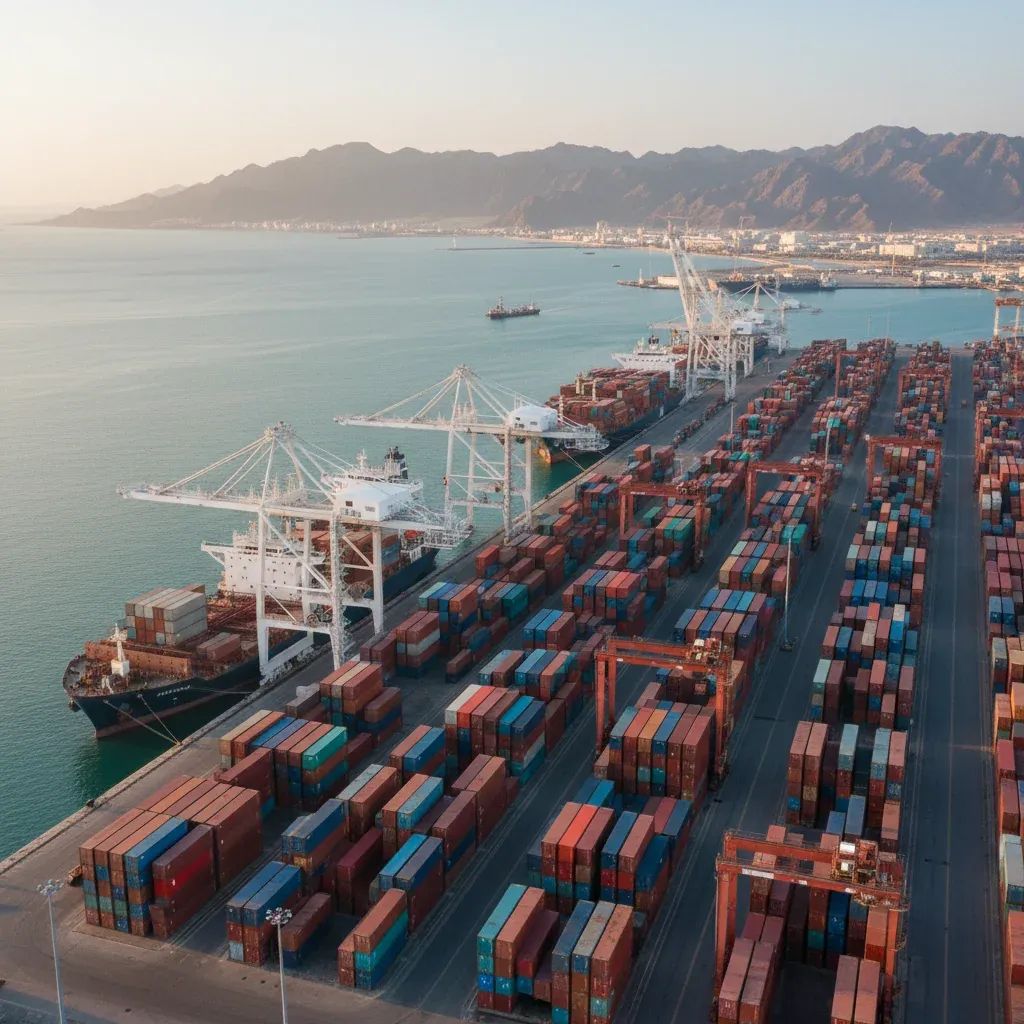
Beijing's most aggressive fuel price cut in six years takes effect this weekend, and the economic ripple is expected to extend directly into the ledgers of United Arab Emirates businesses, retailers, and anyone watching import costs. The National Development and Reform Commission is slashing gasoline by 950 yuan per tonne and diesel by 915 yuan per tonne—the third consecutive reduction—creating potential consequences for freight rates, landed goods prices, and inflationary momentum across Dubai, Abu Dhabi, and the broader Gulf region.
China accounts for approximately 30–35% of UAE total imports, making Beijing's pricing decisions particularly relevant to local retailers and logistics operators. Roughly 40% of Chinese imports into the UAE consist of electronics, machinery, and appliances—categories where lower manufacturing input costs could translate into meaningful retail price adjustments within weeks.
Why This Matters
• Freight savings expected to accelerate: Diesel reductions may translate into lower transportation costs on the Shanghai-to-Jebel Ali corridor, meaning importers could negotiate freight concessions within 30 days as carriers potentially reflect cost relief into pricing.
• Landed goods deflation likely within 6–8 weeks: Chinese manufacturers now face measurably lower input costs; competitive pressure could push discounts onto electronics, textiles, and appliances hitting UAE retail shelves, though the timing and magnitude remain subject to carrier margin preservation and retail competition.
• Geopolitical stability confirmed: The Strait of Hormuz, conduit for 20% of global oil exports, is functioning without disruption—eliminating the risk premium that had inflated energy costs across Asia-Pacific trade networks.
The mechanics of this cut reflect China's automatic pricing system, which reviews fuel costs every 10 working days against international benchmarks—Brent, Dubai, and West Texas Intermediate crude. When global prices fall, domestic pump prices generally follow. The underlying cause this time is straightforward: Middle Eastern tensions have eased. Saudi crude exports have rebounded to 90% of pre-conflict levels. Shipping through the Hormuz chokepoint is normalized. The "fear premium" that had inflated energy costs has evaporated, leaving primarily fundamental supply-and-demand dynamics.
China's government retains the ability to impose price ceilings—it did so in March when crude spiked abnormally—and today's cut reflects a choice to pass relief through to consumers and businesses. A private motorist refueling a 50-liter tank could save roughly 37.50 to 40 yuan per visit. For long-haul truckers burning hundreds of liters across inland corridors, potential savings are far more significant: approximately 400 yuan per tank, representing a meaningful portion of operational fuel budgets.
The Supply Chain Acceleration
United Arab Emirates importers are likely to observe two distinct cost compressions. First, the direct transportation layer could tighten. Freight brokers and logistics operators in Shenzhen, Shanghai, and Ningbo now face lower fuel expenses; those cost savings may create negotiating room on container rates. Companies importing textiles from Guangdong, electronics from Fujian, or construction materials from Jiangsu may find carriers more willing to accept tighter margins on per-tonne pricing.
Second, and more subtly, landed costs could decline through reduced input expenses. When Chinese manufacturers pay less for diesel to power their factories and move inventory to port, those savings have potential to migrate into wholesale pricing. A refrigerator factory burning diesel to run its assembly line sees immediate operational relief. That factory could then compress its export quotes to maintain market share, knowing competitors face identical cost pressures. The competitive dynamic flows downward—refineries and distributors may absorb some savings, but retailers in markets like Dubai could face genuine downward pressure on acquisition costs within 60 days, provided competitive intensity remains strong.
Historical data from the 2020–2021 recovery suggests cost reductions take 12–16 weeks to fully materialize in retail pricing because businesses sometimes preserve margins during uncertainty. Today's environment may differ: margins in consumer electronics and home goods are already compressed. Retailers may struggle to absorb simultaneous cost reductions while maintaining profitability, creating pressure to pass savings forward—though this remains dependent on competitive dynamics and retailer strategy.
The Demand Stimulus Angle
China's domestic economy is experiencing weakness. Property development is stalled. Younger households are saving rather than spending. Consumer confidence has deteriorated. Within this context, lower fuel prices serve potential dual purposes: they respond to market signals and may inject discretionary purchasing power back into the system.
A truck driver who saves 400 yuan per tank could redirect that money toward meals, consumer goods, or services. Multiply this potential across millions of drivers, factory workers, and delivery personnel, and the aggregate effect could be measurable stimulus. The People's Bank of China can then maintain accommodative monetary policy without triggering runaway inflation—lower transportation costs may create natural deflationary pressure across supply chains, potentially preventing the producer price spikes that typically follow monetary expansion.
For the United Arab Emirates, this matters because China's potential deflationary impulse could extend into UAE-bound trade flows. When producer prices in Shanghai contract, those savings could migrate into import pricing. Importers who purchase at lower wholesale prices face internal pressure to reduce retail markups or risk losing customers to online alternatives or regional competitors. The result: retail inflation in the UAE could stabilize or moderate during the next 3–4 months, potentially cushioning household purchasing power at a moment when many residents express concern about cost-of-living pressures.
Regional Energy Rebalancing
This is a Chinese domestic policy, but its effects are likely to cross borders. Fujairah, the United Arab Emirates' premier bunkering hub, competes directly with Singapore, Zhoushan, and Rotterdam for marine fuel sales. If Chinese refineries benefit from lower input costs and therefore lower production expenses, they may offer bunker fuel at tighter margins. Shipping lines that refuel in Shanghai or Ningbo before transiting the Suez Canal may discover competitive advantages that could narrow Fujairah's current price premium.
Additionally, energy traders are monitoring China's trade compliance closely. The Phase 1 US-China trade agreement includes energy purchase commitments denominated in dollar values. With crude and liquefied natural gas trading at lower price points, Beijing may need to import larger physical volumes to meet those monetary targets. This dynamic could potentially redirect LNG cargoes and crude barrels originally destined for spot markets in the Persian Gulf toward contract positions with American suppliers—potentially reshaping which regions benefit from elevated trade flows.
Monitoring the Next 60 Days
Three key metrics matter for UAE stakeholders tracking how this cost relief flows into the economy. First, monitor container freight rate indices published by the Shanghai Shipping Exchange (available at www.sse.com.cn)—sustained declines would signal that carrier cost relief is translating into lower per-container rates rather than being absorbed as margin improvement.
Second, watch Brent crude volatility. The current calm in the Strait of Hormuz is historically fragile; any escalation in regional tensions could reverse these cuts and reintroduce supply-chain uncertainty within days.
Third, observe retail prices on Chinese-manufactured goods in Abu Dhabi and Dubai showrooms—particularly in electronics (smartphones, appliances), home goods (furniture, small appliances), and textiles. Deflationary pressure originating in China's supply chains should translate into visible discounts—typically 3–8% reductions on comparable products within 6–8 weeks, if competitive dynamics remain intact and retailers pass savings forward.
The NDRC has directed Sinopec, PetroChina, and CNOOC—the state-owned refiners dominating China's energy sector—to maintain stable supply and enforce pricing policies. That directive signals Beijing views fuel affordability as a macroeconomic factor. For a globally connected economy like the United Arab Emirates, this governmental decision has measurable implications embedded in every import invoice, every freight quote, and every inflation forecast affecting UAE business and household budgets over the coming months.


