
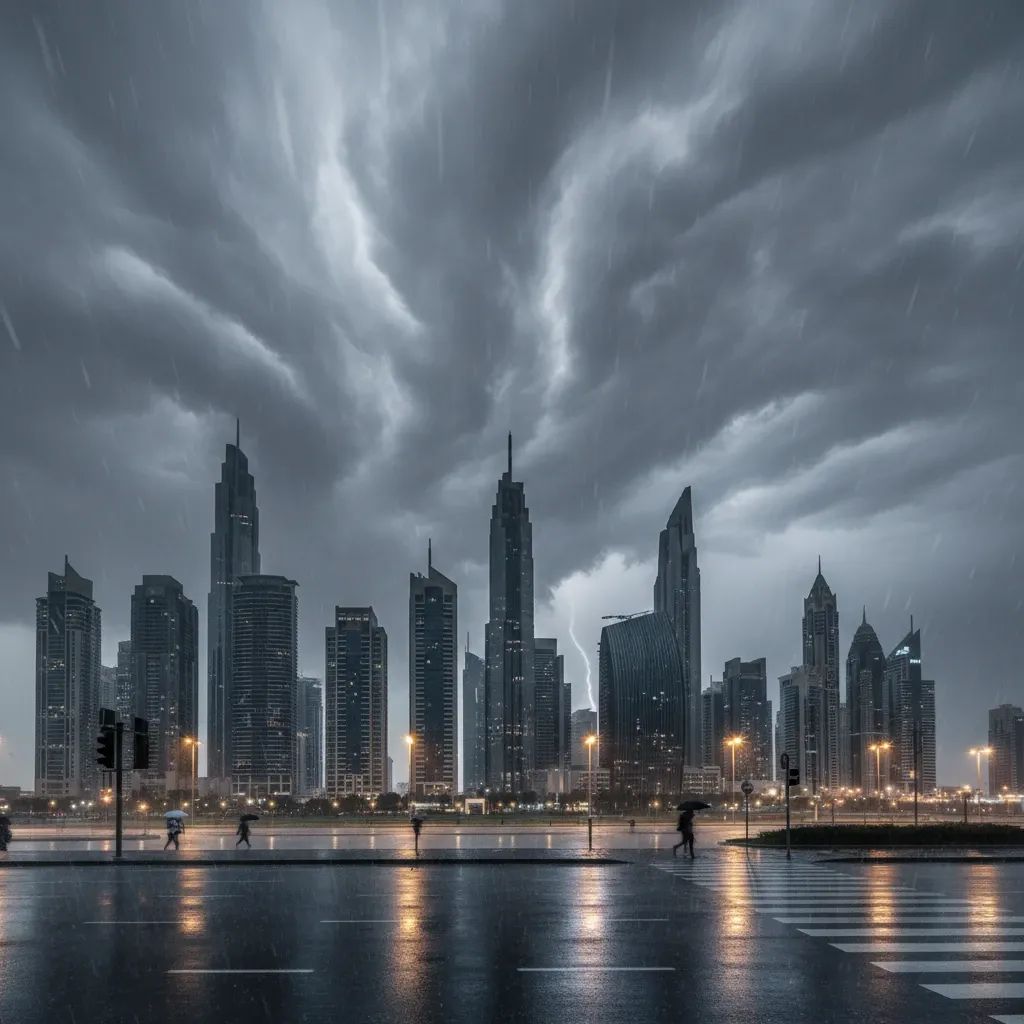
The National Centre of Meteorology (NCM) forecasts scattered showers, intensified wind activity, and rough sea conditions across the United Arab Emirates from March 18 through March 24, with the most intense period occurring March 21-24. This active weather window will disrupt transportation patterns and requires practical preparation from residents and businesses.
Key Forecast Elements
• Moderate cloud cover with scattered rainfall: Western coastal regions experienced light precipitation from March 18 onward. Peak activity concentrates between March 21-24, when cloud systems will generate widespread precipitation across inland areas, particularly Al Dhafra with 65% thunderstorm likelihood Sunday and Tuesday.
• Wind and visibility hazards on major routes: Winds will reach 40-50 km/h during peak activity, combining with dust to restrict sightlines on highways like the E11. Expect traffic slowdowns and heightened accident risk during these periods.
• Rough seas and suspended coastal activity: The Arabian Gulf and Oman Sea will transition to rough conditions with significant wave heights, making ferries and small vessels unsafe for operations.
• Temperature decline mid-week: Sunday and Monday will bring noticeably cooler conditions, departing from typical late-March warmth.
Understanding the Pattern
March typically delivers predictable weather across the Emirates—abundant sunshine, minimal precipitation, and comfortable outdoor conditions. This year's atmospheric setup disrupts that template with the Sarayat season, a well-documented transitional atmospheric pattern characterized by unstable conditions and intensified wind activity during northern hemisphere spring months. Similar multi-day weather sequences occur roughly once every 3-5 years during March according to historical records.
Regional variation matters considerably. Al Dhafra faces steeper precipitation probabilities, while Dubai's projections remain more modest with approximately 0.17 inches expected Sunday and 0.19 inches Tuesday.
Dust and Wind Mechanics
Thunderstorms typically develop with these weather systems. The NCM predicts variable winds shifting between southeasterly and northeasterly directions, beginning light but accelerating to 40-50 km/h during peak activity. At these velocities, desert dust and coastal salt particles become airborne, dramatically reducing horizontal visibility.
On critical transportation corridors like the E11 between Abu Dhabi and Dubai, dust-induced sightline reduction compounds hazards when combined with wet pavement—a combination that destabilizes vehicle traction. Traffic management authorities typically implement real-time speed advisories and, in severe cases, temporary lane closures.
The dust carries Gulf-specific properties. Salty particles from coastal areas become suspended during high-wind periods, creating airborne salinity that corrodes exposed metal surfaces, accelerates concrete deterioration, and deposits residue on air filters, solar panels, and cooling systems. Buildings with aging mechanical systems may experience accelerated maintenance cycles.
Sectoral Readiness
Construction operations: Project managers commonly reschedule outdoor tasks during high-wind periods. Unsecured materials risk becoming wind-borne debris, and heavy crane operations become destabilized by wind shear.
Aviation connectivity: Dubai International Airport and other major terminals experience flight delays when horizontal visibility drops significantly. Passengers booked for March 21-24 travel should monitor real-time flight status and arrive substantially earlier than standard protocols.
Marine operations: Smaller recreational vessels, traditional fishing boats, and coastal ferry services will suspend normal operations during rough-sea periods. Desalination infrastructure and brine discharge systems may experience operational inefficiencies.
What Residents Should Do
Practical preparation becomes immediately relevant:
• Vehicle maintenance: Ensure windshield wipers function, fill washer fluid reservoirs, and test headlights. Voluntarily reduce speeds below posted limits and maintain substantially increased following distances from adjacent vehicles.
• Indoor air quality: Residents with respiratory sensitivities should operate indoor air purification systems continuously, keep windows closed during peak dust hours, and carefully ration outdoor time. Review pharmaceutical reserves of antihistamines and bronchodilators.
• Event planning: Event planners should develop contingency scheduling. Some activities will proceed under modified conditions; others warrant postponement to post-March 25 timeframes when weather systems drift eastward.
Monitoring the Forecast
The NCM continues issuing hourly forecast refinements as atmospheric models incorporate updated satellite imagery and ground-based measurements. Real-time access through the NCM's mobile application and official website provides emirate-specific forecasts and marine-specific guidance updated throughout the forecast period. Sea surface temperatures remain stable at approximately 22°C, supporting comfortable swimming conditions once weather systems pass—anticipated March 25 onward.


