
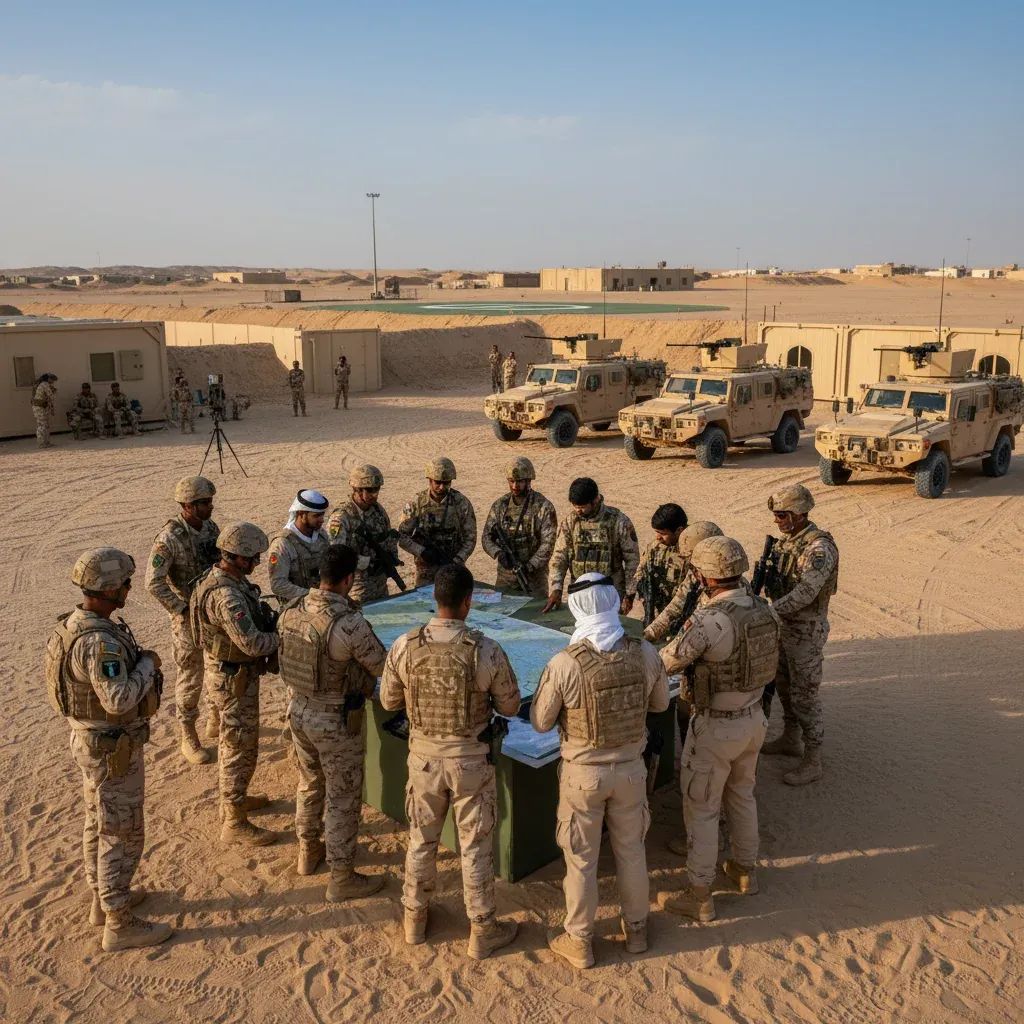
The United Arab Emirates Ministry of State has renewed its security courtship with NATO in Munich, a step that could translate into extra training slots for Emirati officers, fresh defence-tech contracts for local firms, and a sturdier regional deterrent.
Why This Matters
• More training seats: Talks point to an expanded NATO course quota for Emirati soldiers as early as Q3 2026.
• SOFA on fast-track: A long-discussed Status of Forces Agreement would give NATO trainers legal cover to deploy in Abu Dhabi—no taxes on visiting troops, clear liability rules for citizens.
• Pipeline for defence SMEs: New “security of information” protocols unlock deeper tech transfer, opening bids worth an estimated AED 1.4 B in 2027 tenders.
• Insurance for investors: A visibly tighter UAE-NATO link is read by ratings agencies as positive for risk outlook, supporting lower borrowing costs for corporates.
The Munich Conversation: More Than Courtesy
At the sidelines of the 62nd Munich Security Conference, Minister of State Lana Nusseibeh and NATO Secretary-General Mark Rutte spent 40 minutes behind closed doors. According to Emirati briefings, the pair drilled down on three items: Ukraine de-escalation, Red Sea maritime safety, and formalising a SOFA that has been in negotiation since 2004. Nusseibeh underlined the UAE’s preference for political solutions over protracted conflicts, while Rutte praised Abu Dhabi’s “operational reliability” in prior missions such as ISAF and Operation Unified Protector. The chemistry was reportedly “workmanlike,” signalling the meeting was less photo-op and more checklist review.
Where Cooperation Already Stands
The UAE joined the Istanbul Cooperation Initiative (ICI) in 2005 and has since embedded itself in NATO’s education-and-training circuit. Highlights include:
85 Emirati officers graduated from NATO defence colleges since 2018.
Annual “Desert Hawk” cyber drills run from the ICI Regional Centre in Kuwait, with Emirati units routinely topping the scoreboard.
An existing Security of Information Agreement lets Abu Dhabi and Brussels swap classified data up to NAT O Secret.
Beyond the classroom, Emirati pilots flew combat sorties under NATO command in Libya (2011) and naval crews now contribute to Combined Maritime Forces Task 152—a de-facto NATO-aligned flotilla patrolling Gulf waters against drone and mine threats.
What Could Change in 2026
The Ankara NATO summit in July is pencilled in as the decision point for several upgrades:
• Status of Forces Agreement: Would authorise rotational NATO instructors at the UAE’s Zayed Military City, cutting red tape for joint exercises.
• Joint Air Shield Concept: Emirati and NATO engineers are studying data fusion between the UAE’s THAAD batteries and Patriot PAC-3 launchers operated by several Alliance members.
• Small-and-Medium Enterprise (SME) Gateway: A pilot project to certify Emirati start-ups for NATO’s eBid procurement portal—opening a €30 B market.
Diplomats caution that intra-GCC frictions—especially Riyadh’s push for its own trilateral pact with Pakistan and Turkiye—could slow multilateral pieces of the puzzle. Still, NATO insiders frame the UAE approach as “flexible hedging” rather than bloc politics.
What This Means for Residents
For most people in the Emirates, the partnership will not change daily life overnight, yet the downstream effects are tangible:
• Safer sky routes: Closer intelligence sharing should tighten early-warning loops and keep regional flight corridors—including Dubai’s busy approaches—free from drone incursions.
• Job creation: Defence suppliers such as EDGE Group and dozens of smaller subcontractors anticipate hiring engineers, AI coders, and technicians once NATO certification requirements kick in.
• Stable premiums: Insurers have historically trimmed geopolitical-risk surcharges on cargo transiting Jebel Ali whenever international security guarantees firm up.
• Visa hurdles reduced: A SOFA usually streamlines entry procedures for visiting military families, indirectly boosting weekend tourism and retail spend.
Voices From Analysts
Security scholar Dr. Aisha Al-Marri notes that the partnership “diversifies the UAE’s strategic menu” at a time when Washington’s attention is stretched. Brussels-based think-tank FRIDE adds that NATO views the UAE as its “most capable Gulf plug-in,” praising the federation’s cybersecurity investments. However, London’s IISS warns that without a broader Gulf consensus, a two-track model—Emirati flexibility versus Saudi institutionalism—might harden rival blocs in the 2030s.
Looking Ahead
Timelines are brisk: draft SOFA text by May, legal review through Ramadan, and a signature photo in Ankara if all goes to script. Meanwhile, the ICI Regional Centre plans 31 activities this year—from counter-mine workshops to climate-security tabletop games—many already oversubscribed by Emirati officers.
In plain speak, Abu Dhabi is doubling down on a pragmatic, multi-vector security policy. For residents, that likely means greater safety, new tech jobs, and an even stronger signal to global markets that the Emirates intends to stay one of the region’s most predictable places to live, work, and invest.


