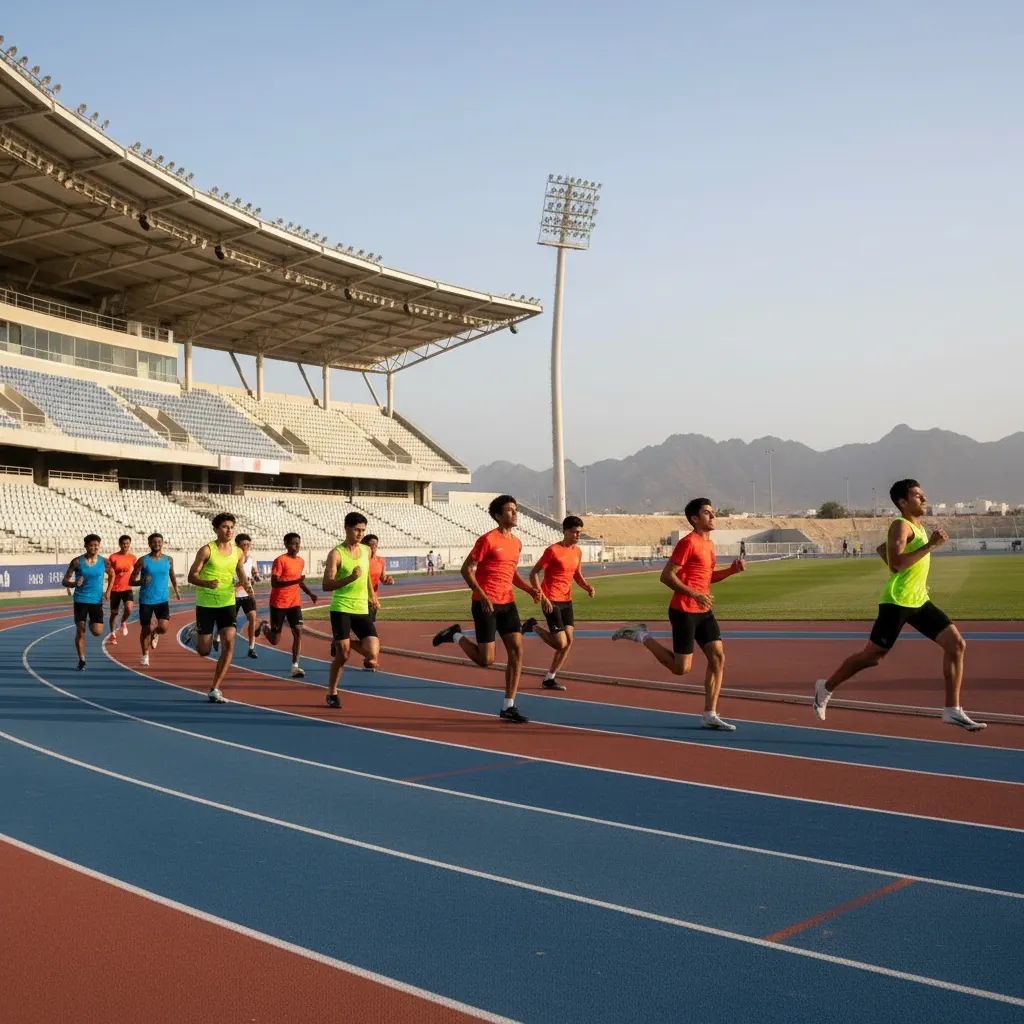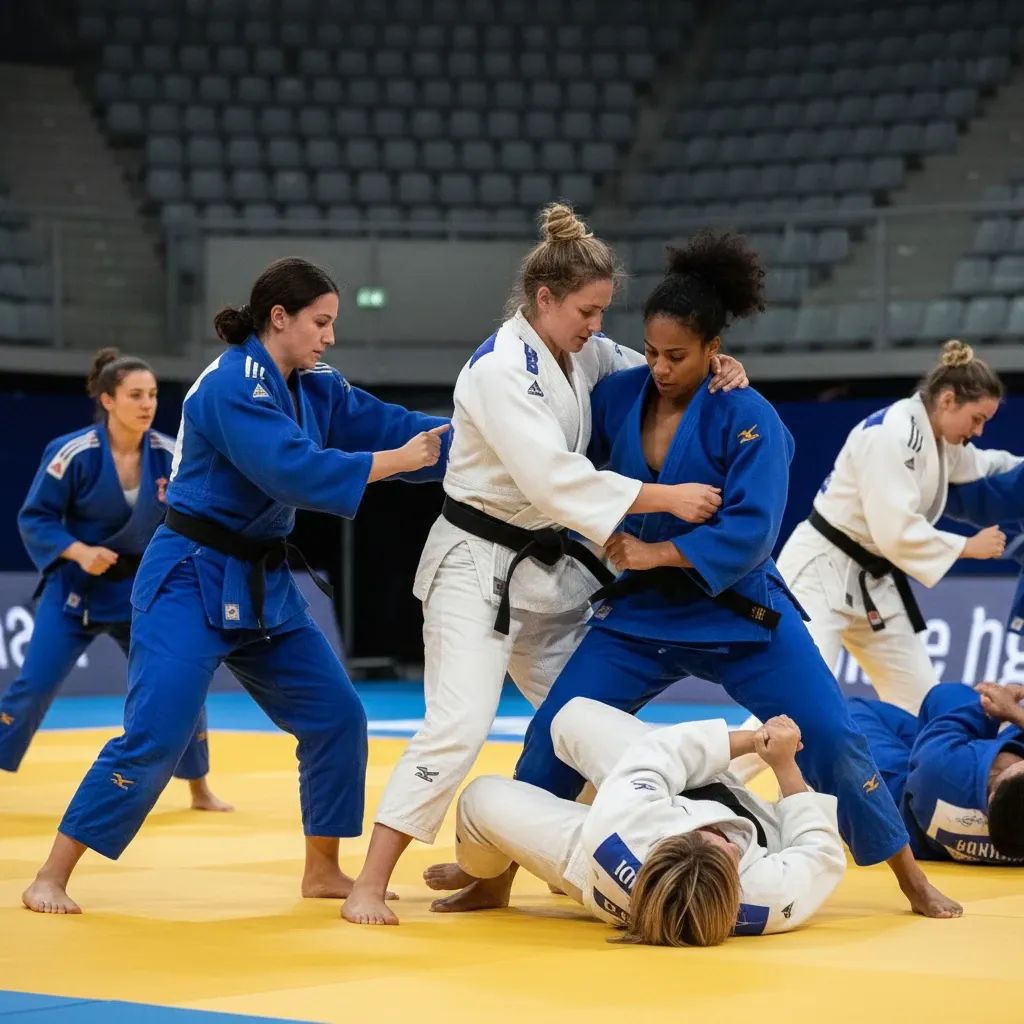
Three United Arab Emirates judokas arrive in Tajikistan this week to compete at one of Asia's most demanding international tournaments—a calculated test run before the federation brings the world championship circuit back to Abu Dhabi. The move signals something important: the national judo program is no longer content practicing at home. It's now chasing medals on the toughest stages available.
Key Takeaways
• The UAE competes in the Dushanbe Grand Slam from April 30-May 3, with athletes landing on Tuesday, April 29 for acclimatization and training camp.• The three representatives—Karim Abdel Latif (men, 73 kg), Amr Gad (men, 81 kg), and Eliza Litif (women, 78 kg)—bring competitive experience into the competition.• World ranking points earned in Dushanbe directly seed athletes higher for subsequent international championships, potentially improving bracket positioning in future competitions.
The Tournament Structure and Timing
Dushanbe's Tennis Palace will host 249 judokas representing 34 nations competing across 14 weight categories. The draw ceremony on Thursday, May 1 uses video technology to eliminate any procedural ambiguity—athletes and coaching staff will know their opening-round opponents hours before competing, allowing final tactical adjustments.
The scheduling provides the United Arab Emirates delegation with strategic advantages. The staggered competition format gives coaching staff opportunities to scout opponent tendencies, observe referee patterns at this particular venue, and adjust game plans based on how the mat plays. In elite-level judo, these marginal reconnaissance advantages matter considerably when competing against unfamiliar athletes from Europe, Asia, and the Middle East.
Why This Matters for Local Athletes
For residents following United Arab Emirates sports, Dushanbe functions as a qualifying crucible rather than a destination event. Strong medal performances boost athletes on the International Judo Federation World Ranking List—a calculation that directly determines seeding brackets at major international championships. Athletes seeded higher avoid meeting the world's top specialists (typically from Japan, France, and Georgia) until later rounds, which dramatically improves medal chances when competing internationally.
The federation isn't sending a sprawling team across multiple weight classes. This focused approach—three athletes in three specific categories—reflects strategic precision. These aren't developmental trips; these are medal hunts with coaching resources concentrated where potential exists. Viktor Sektrov, the delegation's head coach, brings Eastern European technical pedigree. His staff handles the unglamorous logistics that separate competitive athletes from medal-winning ones: precise weight management to remain legal without losing strength, injury prevention protocols, and video breakdowns of opponents' recent bouts.
The Athletes Carrying This Mission
Eliza Litif represents the federation's women's 78 kg division with competitive credentials earned through recent international appearances. She'll face technical competitors predominantly from Japan, South Korea, and Eastern European nations where judo infrastructure runs deeper than in the Gulf. Her selection for this high-level competition reflects the federation's confidence in her ability to compete at this tier.
Karim Abdel Latif and Amr Gad carry the federation's effort to develop competitive depth across multiple weight categories rather than relying on isolated success. The men's divisions at international tournaments like Dushanbe typically feature deeper competition than women's brackets, simply due to higher participation volumes and geographic coverage.
Leadership and Institutional Weight
Dr. Nasser Al Tamimi leads the delegation as both Vice President of the United Arab Emirates Judo Federation and Treasurer of the International Judo Federation—a dual position that carries institutional significance at both the national and global level. His presence signals this isn't a routine qualifying trip. It's a delegation sent with serious ambition and backed by federation leadership with direct access to international judo governance.
The United Arab Emirates National Olympic Committee oversees the delegation's accreditation and support structure. This institutional backing ensures the team operates with full International Federation compliance and receives the logistical infrastructure that modern elite judo demands—which extends far beyond simply showing up to compete.
Broader Performance Trajectory
The national judo program has shown measurable development over recent years. The federation has demonstrated a commitment to systemic improvement through structured competition participation and coaching investment. Recent international tournaments have provided the team with valuable experience competing against top-tier opposition from across Asia and beyond.
The federation's strategic focus has shifted toward developing competitive range across weight categories, concentrating coaching resources and institutional support where competitive potential exists. This approach signals a maturing elite judo program with clear competitive ambitions.
What Residents Should Anticipate
For people following United Arab Emirates sports, judo competes for attention in a crowded athletics landscape dominated by football, cricket, and motorsport. International success at high-profile competitions like Dushanbe creates momentum that flows downstream: improved world rankings attract National Olympic Committee funding, expand youth academy enrollments, and signal to talented young athletes that the sport offers genuine career pathways rather than marginal opportunity.
The federation's decision to send a compact, focused delegation to Central Asia—rather than hoping for results against lower-tier competition closer to home—demonstrates institutional confidence in this competitive cohort. The coaching staff understands the tactical calculations. The leadership structure ensures that whatever happens across four competition days will directly inform preparations for future major championships, where the region's entire judo community will be watching.
The competition begins Thursday, May 1. By Sunday, May 3, when the final matches conclude, the federation will have concrete data about whether its investment in these three athletes, this coaching philosophy, and this particular competitive calendar is producing the results that justify the infrastructure and resources deployed. For the athletes themselves, Dushanbe represents an immediate test and, if successful, a springboard toward competing on the grandest platform the sport offers: their own country's future championship hosting.