
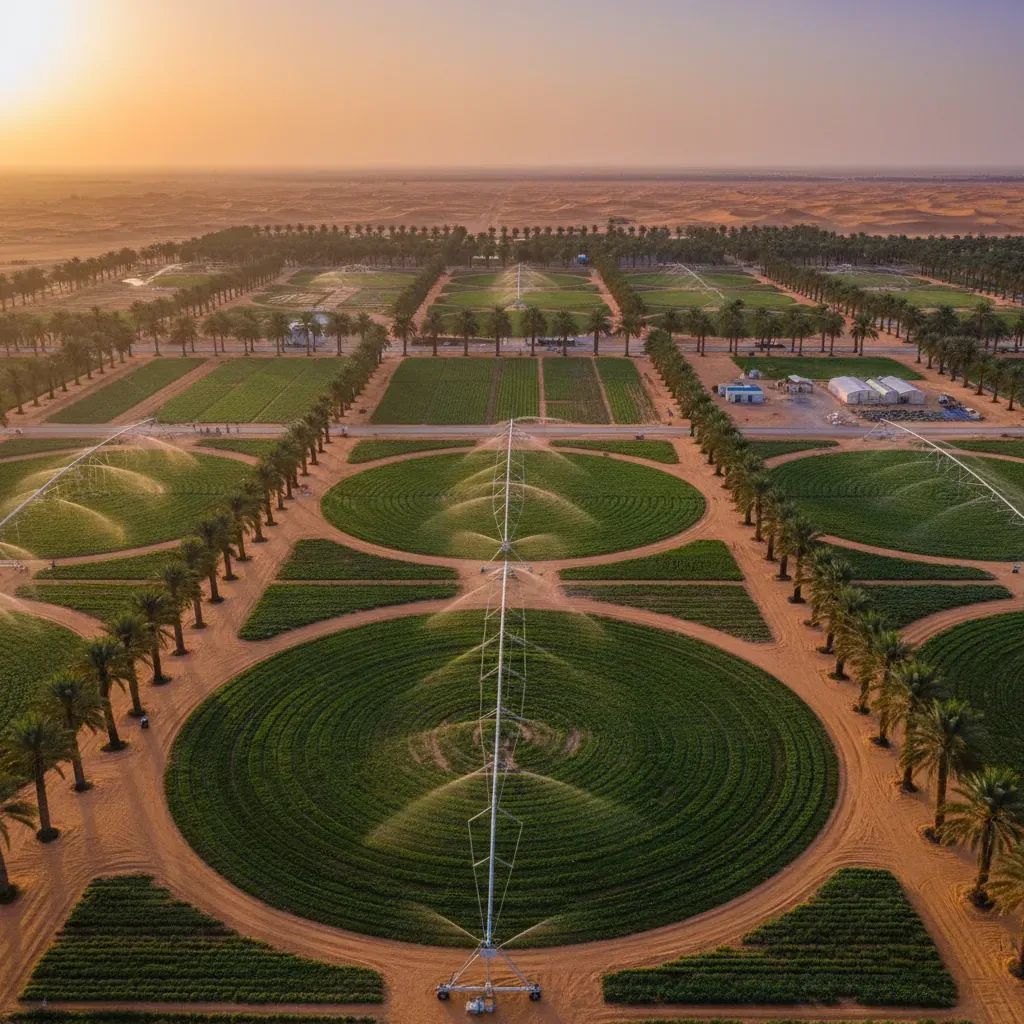
The United Arab Emirates Circular Economy Council held its first formal meeting of 2026 on April 29, convening government officials, commercial enterprises, and academic institutions to accelerate food security strategies centered on local production, waste reduction, and innovation in agricultural technology.
Minister of Economy and Tourism Abdulla bin Touq Al Marri led the meeting at Barakat Quality Plus Group, a major supplier of fresh produce and juices to hotels and restaurants across Dubai and Abu Dhabi. The venue selection underscored the council's operational focus—moving beyond climate rhetoric toward concrete implementation mechanisms and investment flows.
Focus Areas of the April 2026 Council Meeting
The council's agenda emphasized three primary objectives: strengthening governance structures for policy execution, identifying investment opportunities in circular economy sectors, and coordinating across government, commercial, and academic institutions to break implementation silos.
Unlike previous high-level forums, this gathering centered on how national policies translate into operational systems—the mechanisms that turn strategy into market reality. Attendees reviewed regulatory frameworks, compliance mechanisms, and capital deployment priorities.
The 25% Local Sourcing Initiative
The council addressed a significant regulatory requirement that has begun reshaping the hospitality and food service sectors: the mandate requiring 25% of agricultural and animal products consumed in UAE restaurants and hotel sectors to originate domestically. This represents a substantial shift in procurement requirements for hospitality operators, who must now navigate new supplier relationships and market dynamics.
For hospitality businesses, this mandate creates both compliance obligations and opportunities. Larger chains possess purchasing power to negotiate with emerging local suppliers; smaller establishments face more immediate adjustment pressures. Market competition and supply maturation should gradually normalize pricing and availability across the sector.
For residents, this localization trend typically means fresher produce with shorter supply chains reaching restaurants and retail outlets—a gradual shift in what appears on grocery shelves and dining menus across the Emirates.
Existing UAE Circular Economy Initiatives: Context for the Council's Work
To understand the council's strategic direction, it's important to recognize existing UAE programs advancing these goals. The UAE Circular Economy Policy 2021-2031 provides the overarching framework. Several operational initiatives already underway include:
• Vertical farming and controlled environment agriculture: The UAE has invested significantly in hydroponic and aeroponic systems that reduce water consumption compared to traditional cultivation methods—a critical advantage in an arid nation.
• Food waste reduction programs: The UAE has established initiatives focused on redirecting surplus food and converting agricultural residue into usable products, addressing both food security and landfill management.
• Agri-tech workforce development: Educational institutions have launched specialized programs to address the growing demand for expertise in precision agriculture, supply chain optimization, and agricultural technology—areas where the UAE currently relies on imported talent.
• Cultivated protein development: In 2023, the UAE became the first nation to authorize commercial production of cultivated meat, positioning itself as a regulatory and market leader in alternative proteins.
These existing programs provide context for the council's work in accelerating implementation and coordinating investment.
What This Means for Residents: Near-Term Shifts
Several tangible changes are likely to emerge over the coming months and years as these initiatives mature:
• Food supply chain transitions: Greater local sourcing means gradual changes in produce availability, with more items sourced domestically from vertical farms and emerging agri-businesses.
• Restaurant menu evolution: As hospitality venues adapt to local sourcing requirements, dining options will reflect available domestic products and seasonal variations in local production.
• Job market development: Growth in vertical farming, agri-tech, waste processing, and supply chain specialization should create employment opportunities across the food production and distribution sectors.
• Compliance adjustments: Food service operators will experience near-term friction adapting to new supplier networks and sourcing requirements, though market maturation should ease these transitions.
• Water and environmental considerations: Expanded use of water-efficient agricultural systems aligns with UAE's broader sustainability objectives, though operational benefits will become evident as these systems scale.
Strategic Significance and Implementation Timeline
The council's April meeting signals that the UAE government treats food security as a strategic priority alongside energy and finance. However, translating policy into operational results requires time. The outcomes of these initiatives—whether localization genuinely stabilizes supply chains, creates sustainable employment, and reduces import vulnerability—will become clearer over the next 2-3 years as pilot programs transition to operational scale and market dynamics mature.
The council's focus on governance structures, investment mechanisms, and cross-sector coordination reflects recognition that effective food security requires sustained coordination between government policy, commercial enterprise, and institutional capacity building. Success depends on how effectively these actors execute implementation strategies during the coming months and years.
Residents should expect gradual, measurable changes in local food availability, restaurant sourcing practices, and employment opportunities in food-related sectors—but realistic timelines for full system transformation remain measured in years rather than months as these initiatives mature and scale.


