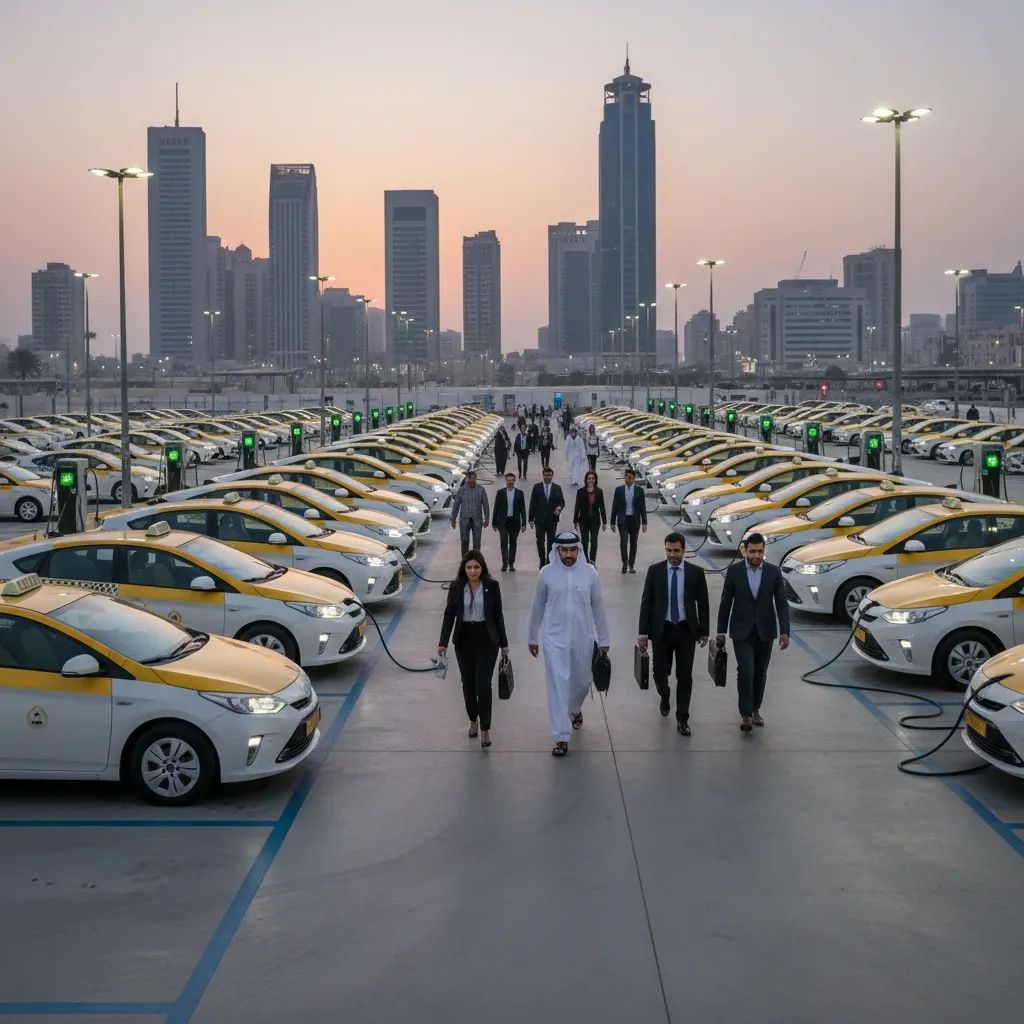
The Story Behind Sharjah's Daily Commute
In the first three months of 2026, the Sharjah Roads and Transport Authority moved approximately 23,540 people per day through the emirate—school runs to Al Qasimia School, airport trips to Sharjah International, cargo deliveries to Mina Port, medical appointments across residential neighborhoods. That daily drumbeat translates to over 2.11 million journeys completed during Q1 alone, a metric that speaks less to fleet utilization rates and more to the backbone infrastructure keeping Sharjah's economy functioning. For the roughly 1.8 million residents and workers in the emirate, the number signals something simpler: reliable ground transport remains available, regulated, and increasingly green.
Why This Matters
• Digital bookings now account for nearly one in six rides: Yango app processed 371,000 journeys in Q1, meaning smartphone-equipped residents bypass call centers and enjoy real-time tracking without app-switching friction.
• Eastern neighborhoods finally have predictable taxi access: The eastern and central zones registered 171,000 passengers, an expansion specifically designed for affordable-housing corridors where families migrated to escape central rents.
• Sustainability costs riders nothing extra: Hybrid vehicles charge the same metered rates as conventional cabs, offering emission reductions at zero passenger premium.
Suburban Expansion Addresses Housing Realities
Sharjah's urban footprint has stretched eastward over the past five years as developers built affordable residential communities in Al Dhaid, Kalba, and Khor Fakkan. That geographic expansion created a transport infrastructure gap. Residents in these corridors historically faced either hour-long taxi waits or car dependency—a structural problem that trapped lower-income households in second-vehicle ownership costs while creating congestion and parking pressure. The Sharjah Roads and Transport Authority's deliberate fleet repositioning to Eastern and Central zones acknowledges this friction point directly.
For families managing school pickups, the shortened wait times mean measurable time savings across a month. For employers operating industrial facilities or warehouses in outlying areas, improved taxi coverage reduces staff-shuttle procurement costs and cuts reliance on personal-vehicle commuting. The 171,000 Q1 passengers in eastern zones represents infrastructure catching up to housing patterns—a prerequisite for social stability and labor market efficiency.
The Yango Advantage in Mixed Markets
Three hundred seventy-one thousand Yango bookings during Q1 represents roughly 18% of total ridership, a penetration level that reflects Sharjah's demographic composition and payment preferences. The emirate has an older average age than Dubai, a substantial blue-collar workforce, and significant populations that prefer cash transactions. Yango's competitive positioning leverages three structural advantages: low driver commissions that attract more operator supply, cash-at-destination payment critical for residents without banking preferences, and integration within the regulated fleet rather than freelance-driver marketplaces.
That integration distinction matters operationally. By anchoring Yango rides to its own vehicles, Sharjah Taxi maintains uniform maintenance standards, background checks, and fare transparency. This approach prioritizes regulatory stability over rapid marketplace expansion, offering residents fare predictability but operating differently from freelance-driver platforms. For residents, the outcome is a digital booking channel embedded within regulatory guardrails rather than a marketplace algorithm optimized for surge revenue.
Competitive Terrain: When Regulation Wins
Sharjah Taxi's metered structure—AED 3 to start during day, AED 4 at night, AED 14 minimum, AED 20 cross-emirate surcharge—sits competitively against regional ride-hailing alternatives. While dynamic pricing services trigger promotional discounting and demand-based surges, Sharjah's metered system ensures consistency and protection from surge-pricing exposure.
That predictability becomes invaluable during demand spikes. Rain, weekend events, or evening rush hours trigger dynamic pricing on competing platforms—passengers report significant premiums during such windows. A metered Sharjah Taxi during identical conditions charges the standard AED 14 minimum or calculated distance. For price-sensitive residents making frequent short trips, that fare transparency eliminates the mental friction of checking multiple apps before committing to a journey. Cash acceptance remains another structural advantage in a market where not all residents maintain credit-card relationships or welcome ride history logging in proprietary ecosystems.
The Hybrid Transition: Infrastructure Lock-In
By mid-2024, 83% of the Sharjah Roads and Transport Authority fleet operated on hybrid powertrains. The target of 100% conversion by end-2027 is essentially locked in through procurement policies and charging-depot construction—not aspirational rhetoric. For passengers, the benefit is tangible: quieter cabins during short urban trips and lower respiratory exposure to diesel particulates. For drivers, hybrid engines flatten fuel-cost volatility; when crude oil prices spike globally, electric-motor assist dampens per-kilometer operating costs and reduces pay-period income unpredictability.
Sheikh Dr. Sultan bin Muhammad Al Qasimi's administration has backed this transition with depot charging infrastructure, preferential procurement terms, and alignment to the UAE's carbon-neutrality roadmap targeting carbon-free transport by 2050. The authority has piloted various electric vehicle models as part of broader fleet modernization, validated technology across different use cases, and trained maintenance crews. The pragmatic scale path remains hybrid—a middle ground between incumbent diesel and full electrification. That staging acknowledges range limitations and charging-network gaps while advancing emission reductions incrementally. Residents booking a taxi encounter no passenger-side cost differential; hybrid and conventional cabs charge identical meters, making the environmental preference a free choice rather than a premium feature.
Safety Systems as Behavioral Nudges
In February 2025, 4,850 taxis received AI-driven cameras from the Sharjah Roads and Transport Authority, embedding real-time monitoring for driver behavior, passenger interactions, and lost-item recovery. The system flags harsh braking, distracted driving, and sudden lane changes, feeding alerts to dispatch centers for driver coaching rather than automatic punishment—a behavioral-modification approach that reduces collision rates and insurance claims without heavy-handed enforcement.
Companion technology, a "Brake Plus" safety system deployed in 2023, warns drivers of rapid deceleration ahead, meaningfully cutting rear-end accidents on congested routes. Combined with real-time telematics and dispatch optimization, these layers allow the fleet to process 23,540 daily trips with measurable reductions in passenger complaints and insurer payouts. For solo women travelers and elderly passengers particularly, the camera presence signals accountability and reduces isolation anxiety. The broader Sharjah Digital Transformation Strategy 2026-2028 allocates resources toward data analytics, IoT sensor integration, and autonomous-vehicle feasibility—future-focused infrastructure planning that distinguishes Sharjah from reactive service management.
Making Sense of the Q1 Numbers
The 2.11 million Q1 2026 passengers represents sustained demand for regulated taxi services despite competitive pressure from ride-hailing alternatives. This quarterly performance demonstrates that Sharjah Taxi continues serving as a critical mobility backbone for residents prioritizing fare predictability. The Q1 data provides a baseline for comparing future quarters as they arrive; when Q2 2026 figures become available, analysts can assess whether demand remains stable, grows, or reflects seasonal fluctuation.
The interpretation matters strategically: sustained or growing ridership despite expanded competition validates the regulated taxi model, while flat or declining ridership could signal market saturation, increased personal-vehicle ownership, or ride-hailing cannibalization. Structural advantages favor regulated taxi services during surge-pricing windows. A metered Sharjah Taxi often undercuts dynamic-pricing services when demand triggers premium rates. Residents making intentional choices between personal car ownership and daily taxi subscriptions can model their commute costs with mathematical precision—not algorithm surprise. That cost predictability appeals to households managing tight budgets or employers coordinating staff transport.
What Residents Should Know Now
If you commute regularly in Sharjah, Q1 outcomes translate into actionable intelligence. Yango bookings have become reliably available during morning and evening congestion, reducing "no drivers available" frustration. Eastern-zone residents can reasonably expect shorter wait times as coverage expands outward. Cross-emirate fares to Dubai remain premium due to AED 20 surcharge, making ride-hailing apps or pre-booked private transfers economically superior for airport runs—shopping between services pays off.
Most significantly, sustainability carries zero passenger cost: hybrid vehicles charge identical regulated meters, meaning choosing an eco-conscious cab is a free environmental choice. For employers managing staff transport or families weighing car ownership versus taxi subscriptions, Sharjah Taxi's combination of digital convenience, regulated pricing, and geographic coverage positions it as daily-commute reliable—particularly if you value fare predictability over promotional discounts that vanish when demand rises.
The Broader Mobility Shift
Ride-hailing services dominate the super-app ecosystem through promotions and delivery bundling. International platforms attract professionals through global brand recognition and seamless payment integration. Competing services undercut competitors through low commissions and aggressive promotions. Traditional taxi services maintain advantages on booking reliability and operational accountability but face pricing pressure from dynamic-pricing competitors. Sharjah Taxi's decision to keep Yango rides within its regulated fleet rather than opening to freelance-driver marketplaces maintains fare consistency and labor-market stability—an approach reflecting the emirate's emphasis on predictable infrastructure.
For cross-emirate travel beyond Sharjah's boundaries, pre-booked private transfers or ride-hailing services sometimes prove more reliable than traditional taxis, as some drivers hesitate about multi-emirate routes and hotel-to-airport efficiency. That operational friction represents an underexploited opportunity for integrated mobility platforms.
The Quiet Resilience of Regulated Transport
The 2.11 million Q1 passengers represent a mature service managing competitive pressure, environmental transition, and geographic expansion simultaneously. Infrastructure investments—hybrid engines, AI safety systems, eastern-zone coverage expansion—position the fleet to absorb demand volatility without sacrificing service quality or climate commitments. As Sharjah's population continues growing and urban corridors stretch outward, reliable, affordable ground transport remains operational necessity for hundreds of thousands without personal vehicles or unwilling to navigate traffic stress.
The Q1 message is straightforward: Sharjah Taxi moved nearly 24,000 people daily through the quarter, maintained regulated transparent fares, advanced its green transition, and embedded digital booking into standard operations. In a rapidly shifting mobility landscape dominated by dynamic pricing and algorithmic surge rates, that combination of stability and incremental innovation positions regulated transport as a durable option for commuters valuing predictability.
For residents navigating Sharjah's neighborhoods, the transport system continues functioning as a reliable service—predictable, regulated, and increasingly green.