
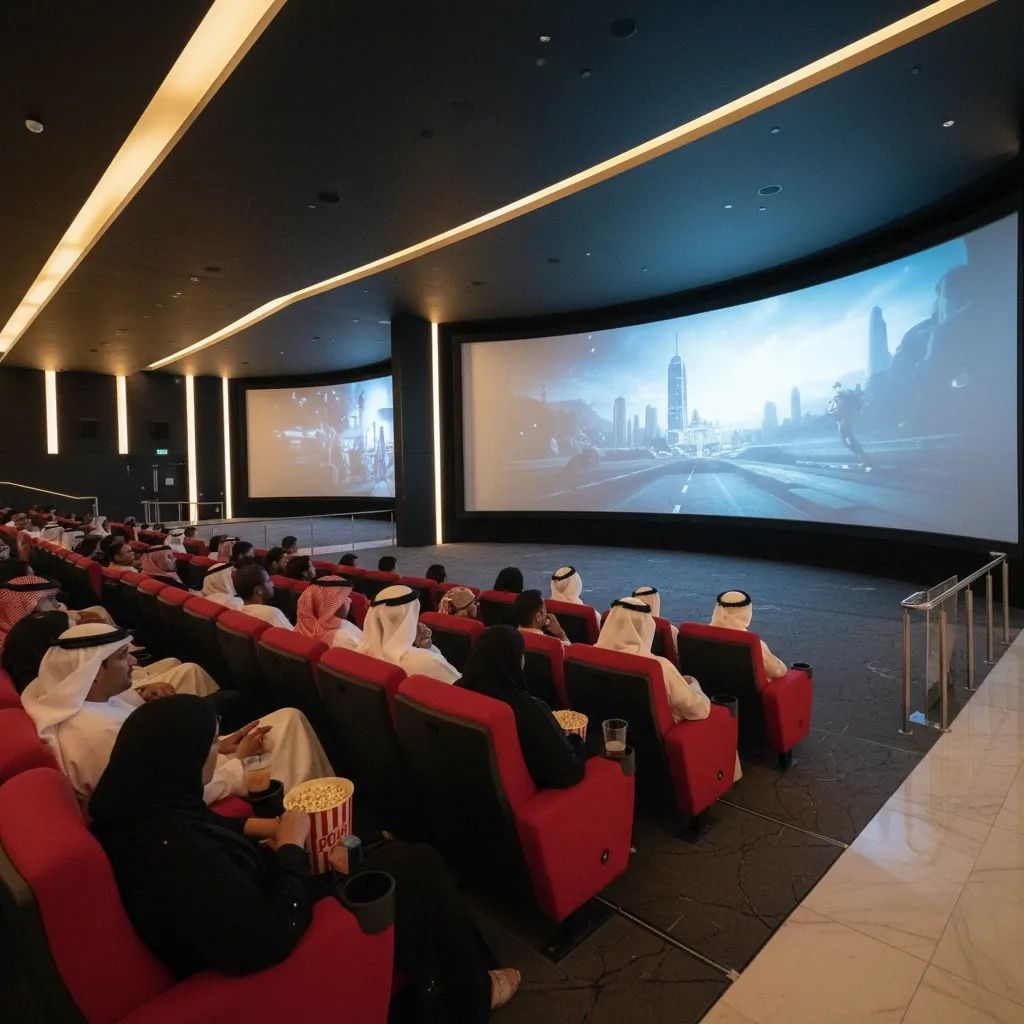
Cinema lovers across the United Arab Emirates are about to experience one of the year's most crowded theatrical weekends. With Eid Al Fitr arriving around March 19, multiplexes will screen nine major films simultaneously—a deliberate industry strategy to recapture audiences who stayed home throughout Ramadan. The concentration of blockbusters and regional crowd-pleasers marks a calculated bet that post-fasting viewers are hungry for the big screen.
Why This Matters
• Ramadan's box office toll: During the holy month (February 17 to March 18, 2026), cinema attendance typically crashes by 50% to 70% as family time and religious obligations take precedence.
• Eid as a release valve: Distributors cluster premium titles immediately after Ramadan, treating the four-day holiday as the year's most valuable theatrical window in the Middle East.
• Diverse programming: The lineup reflects the UAE's fragmented audience—Pixar for families, South Indian action for Indian expatriates, Egyptian comedies for Arab viewers, and prestige indie films for art-house crowds.
The Animation Heavyweight: Pixar's Hoppers
Pixar Animation Studios is banking on childhood wonder to kickstart the Eid rush. Hoppers, arriving two weeks after its March 6 US debut, marks the studio's return with an original concept rather than a sequel. The film has been constructed around an audacious premise: a young girl uploads her consciousness into a robotic beaver to observe wildlife from the inside.
The premise masks darker complications. Her intrusion destabilizes ecosystems she meant to protect, forcing the narrative into ethical territory that separates this from typical family fare. The voice ensemble includes Meryl Streep as an Insect Queen and Jon Hamm as a corrupt mayor, suggesting character-driven voice work rather than celebrity casting for marketing alone.
The film's release timing is textbook studio strategy. Pixar avoids the Ramadan period when home viewing dominates household entertainment, opting instead for the Eid window when families reunite and entertainment consumption surges.
Horror Returns: Scream 7 Meets Legacy Trauma
Paramount Pictures continues the Scream franchise with veteran filmmaker Kevin Williamson directing. Rather than introducing fresh victims, the narrative circles back to Sidney Prescott, the series' emotional anchor, as another Ghostface rampage unfolds. Neve Campbell and Courteney Cox return to roles they've inhabited for decades, bringing psychological weight to characters still processing earlier violence.
This installment represents a genre evolution. The slasher formula—random victims, masked killers, whodunit structure—gradually yields to something more introspective: survivors living with permanent trauma, confronting not just a killer but the cyclical nature of violence itself. For audiences seeking genuine scares over self-aware horror comedy, Scream 7 positions itself as the more psychologically grounded entry.
Space Opera with Substance: Project Hail Mary
Ryan Gosling anchors a space survival narrative that blends hard sci-fi concepts with character-driven storytelling. Project Hail Mary, adapted from Andy Weir's bestselling novel by directors Phil Lord and Christopher Miller (the filmmakers behind The Lego Movie), follows an astronaut who awakens aboard a spacecraft with amnesia. As memory fragments surface, he discovers his mission involves saving Earth from a solar-draining microorganism.
The plot's genuine hook lies in its second act: Gosling's character encounters an alien intelligence facing parallel extinction, forcing interspecies cooperation to solve an existential crisis. It's a premise that resonates in an era of climate anxiety, wrapped in the spectacle audiences expect from science fiction blockbusters. The film targets viewers fatigued by superhero fatigue but still hungry for expensive, high-concept storytelling.
South Indian Cinema's Eid Dominance
The March 19 slate demonstrates the unmistakable clout of South Indian film industries within UAE multiplexes. Yash, the Kannada superstar elevated by the KGF franchise, leads Toxic: A Fairy Tale for Grown-ups—a period gangster drama anchored in 1940s Goa, directed by Geethu Mohandas. The film rolls out in IMAX and Dolby Cinema, capturing premium-format revenue alongside multiplexes.
Toxic explicitly targets the massive Yash fanbase developed post-KGF, but its multilingual release—Kannada, Telugu, Tamil, Hindi—signals intent to reach beyond regional strongholds. The timing aligns with Hindu festivals (Ugadi and Gudi Padwa), creating cultural momentum across Indian diaspora communities throughout the UAE and broader Middle East.
Aadu 3 represents a different regional powerhouse. The Malayalam franchise continues with Jayasurya as Shaji Pappan, a comedic antihero navigating increasingly absurd situations. The series has cultivated a devoted following among Malayalam-speaking audiences across the UAE, particularly among expatriate communities. The third installment continues the comedy formula that has defined the franchise's success.
What This Means for UAE Residents
The Eid cinema glut creates both opportunity and logistical friction for UAE audiences. Families with children will gravitate toward Hoppers—a safe choice for younger viewers and a genuine theatrical event. Parents seeking escape may choose Project Hail Mary's cerebral sci-fi or Scream 7's familiar terrors. Indian expatriates—a significant demographic within the UAE—face genuine choices between Toxic and Aadu 3, both of which will demand opening-weekend ticket allocation and sell premium showtimes rapidly.
The four-day Eid window typically includes discount bundles and premium-format promotions at major venues like Dubai Mall and Yas Mall (Abu Dhabi). Standard ticket pricing hovers around AED 35–50, while IMAX and Dolby Cinema formats command AED 70–100 per seat. The disparity incentivizes viewers toward premium formats, pushing multiplexes to prioritize Hoppers, Project Hail Mary, and Toxic across their largest screens.
Parking and concession queues represent hidden friction. Mall-based cinemas—the dominant format in the UAE—see peak congestion during evening slots, particularly Thursday and Friday nights when families congregate. Friday morning showtimes, by contrast, offer relief for viewers prioritizing speed over social engagement.
How the Box Office Window Works
The UAE cinema sector plays a significant role in Middle Eastern box office economics. Ramadan's cultural rhythms—Iftar meals running late, family gatherings extending into evening hours, premium television specials competing for attention—systematically redirect discretionary spending away from multiplexes.
Ramadan's revenue impact compounds when timing coincides with expatriate travel seasons. Many workers return home, particularly across Indian, Pakistani, and Filipino communities, further depressing attendance. Distributors respond rationally: compress major releases into narrow corridors, flood the market with varied content, capture opening-weekend spikes before word-of-mouth separates winners from casualties.
This Eid slate—spanning animation, horror, sci-fi, and South Indian action cinema—reflects the competitive mathematics of UAE theatrical distribution. No single film can satisfy all demographics. Instead, studios and distributors mount simultaneous campaigns targeting distinct audience fragments, knowing attrition rates remain high regardless of aggregate marketing spend.
Navigating Scarcity During Peak Demand
With nine films competing across a four-day window, strategic scheduling becomes essential. Multiplexes will rotate showtimes, prioritizing premium-format screens for revenue-driving titles: Hoppers (family draw), Toxic (South Indian box office engine), and Project Hail Mary (sci-fi spectacle). Scream 7 and Aadu 3 claim secondary screens based on their respective demographics' attendance patterns.
Peak evening slots—6 PM to 11 PM—remain fiercely contested, with allocation favoring proven commercial performers. Early booking remains critical. Premium-format tickets for Toxic and Hoppers typically sell out 48 hours before Thursday evening showtimes. Friday morning remains the strategy for crowds seeking convenience over peak social hours. By Sunday (day four of Eid), secondary titles may rotate into different time slots as earlier releases complete their opening-weekend run.
The cinema concentration during Eid reflects calculated orchestration—each studio positioning its title within specific audience segments, each distributor timing release corridors to capture maximum opening-weekend revenue before attention fragments across competing narratives. For viewers, the abundance masks a constraint: scarcity of showtimes, parking, and concession capacity during peak demand.


