
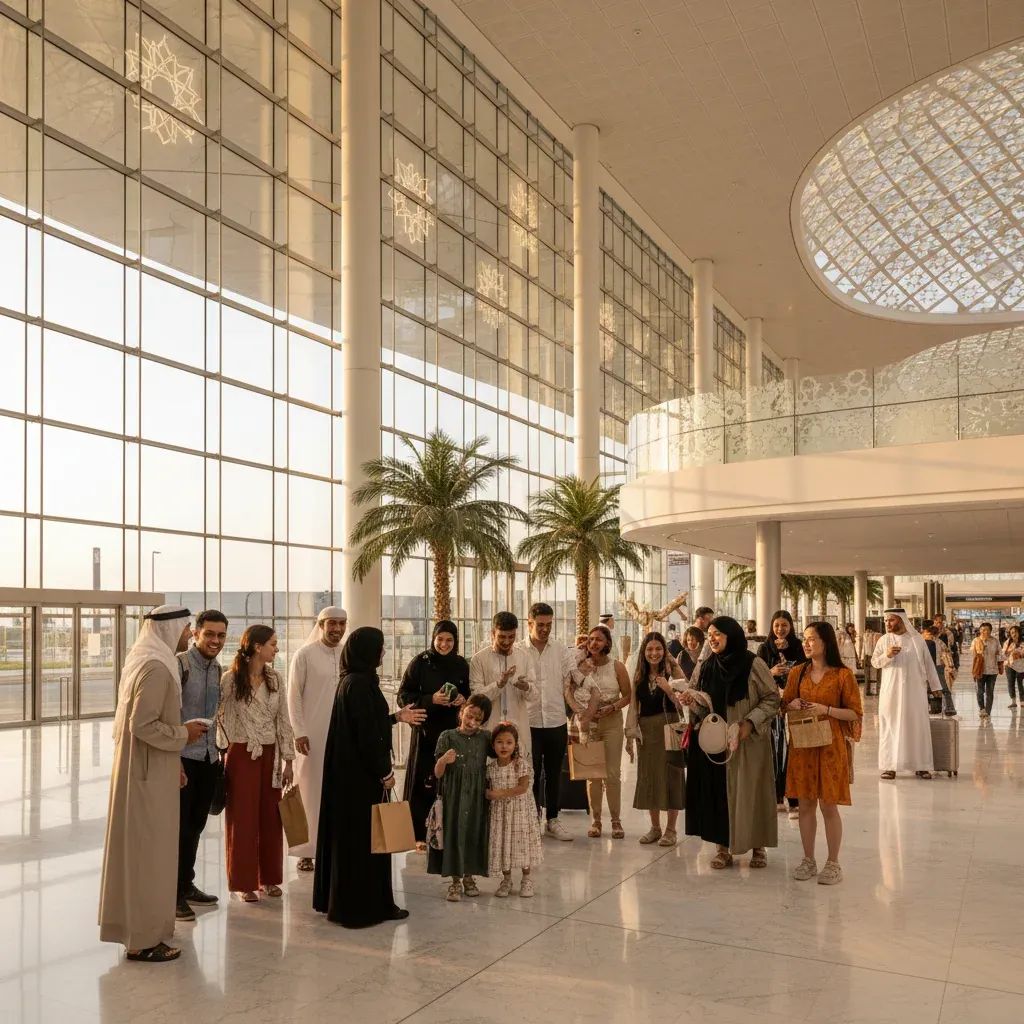
Why This Matters
Across the United Arab Emirates, government work grinds to a halt for four days as Eid Al-Fitr arrives in mid-March 2026. Sharjah's government institutions, mirroring federal entities nationwide, will lock their doors from Thursday, March 19, through Sunday, March 22, with operations resuming the following Monday. The practical consequence for government employees is absolute: a guaranteed break from work duties, though the timing hinges on a lunar observation scheduled for the evening of March 18.
This holiday period ripples far beyond office buildings. Family travel surges dramatically, retailers prepare for a final Ramadan spending rush, and the entire hospitality sector braces for near-capacity occupancy across resort properties. The four-day break arrives at a critical moment in the Islamic calendar, creating one of the most predictable economic events in the UAE annually.
Key Takeaways
• Government closure: Thursday, March 19 through Sunday, March 22; resumed Monday, March 23
• Private sector: Three guaranteed days (March 19–21); potentially four if Ramadan runs 30 days
• Shift workers exempted: Nurses, utilities staff, and emergency personnel maintain regular rotations
• Airfare surge expected: International tickets to popular destinations typically peak significantly during this window
The Workforce Divide: What You Get Depends on Your Employer
Government employment in the United Arab Emirates carries a distinct advantage during religious holidays. Sharjah's Department of Human Resources has confirmed that all departments, authorities, and public institutions will observe the full four-day break without exception—except for those on shift rosters. Private-sector employees face a different calculus. Their statutory entitlement is three paid days: Thursday through Saturday, March 19–21. A fourth day materializes only if the lunar month reaches 30 days, which the UAE Moon-Sighting Committee will determine on the evening of March 18.
In practice, the distinction between private and public sectors matters most for compensation calculations and planning. A Sharjah government accountant will definitely enjoy four consecutive days away from the office. A private-sector retail manager will secure three with certainty, though the actual calendar positioning of the fourth day depends on lunar confirmation. Where the gap becomes sharp is in wage treatment. If a private employer mandates attendance on Eid itself—a rare scenario—they must either provide compensatory leave or pay 1.5 times the employee's regular daily wage for work performed on that specific day. Government workers face no such tension; they are simply off.
The Federal Authority for Government Human Resources and Emiratisation, which oversees public-sector labor standards across the United Arab Emirates, established this framework through recent regulations. The rules apply uniformly across all seven emirates, eliminating regional surprises for workers transferring between Abu Dhabi, Dubai, Sharjah, or the Northern Emirates.
The Moon-Sighting Moment: Why March 18 Matters for Planning
Every Eid date in the Islamic calendar hinges on a single astronomical event: the appearance of the crescent moon marking the end of Ramadan. On Wednesday evening, March 18, 2026, observers stationed at designated locations across the United Arab Emirates will scan the western horizon as the sun sets. If the crescent is visible, Eid arrives the next morning and workplaces close their doors. If the moon remains hidden, Ramadan extends to 30 days, pushing Eid to Friday, March 20.
This ancient ritual controls modern calendars in the UAE, where the Moon-Sighting Committee holds legal authority over religious holiday timing. Yet the announcement by the Sharjah Department of Human Resources and parallel federal declarations have already locked in March 19 as the opening date for most practical purposes. A public holiday law permits some Islamic Hijri dates to shift if they fall on weekends, but Eid Al-Fitr and Eid Al-Adha remain fixed exceptions—they cannot be rescheduled. This legal architecture means the March 19 start is effectively guaranteed; what genuinely remains uncertain is only whether private-sector employees receive a fourth day as an additional paid day.
For residents planning travel or events, the distinction carries real weight. Book flights and accommodations confidently for March 19–22. Private-sector workers who depend on a potential fourth day should wait for the committee's announcement on March 18 before finalizing Sunday bookings, though the odds of that day falling outside the holiday period vary depending on Ramadan's length.
Shift Workers: The Exceptions Who Become Essential
Essential-services staff operating under rotational schedules will not experience the blanket closure. Nurses in Sharjah's government hospitals, utilities engineers managing water and electricity grids, and emergency responders at civil defense stations will maintain their regular shifts throughout the March 19–22 window. The government institutions that close for Eid simultaneously generate heightened demand for these very services: family gatherings place strain on electrical systems; holiday injuries and food-related illnesses create emergency-department surges; utilities usage spikes as air conditioning runs longer during daytime festivities.
This creates a staffing paradox. Shift workers often seek time off during Eid to celebrate with families or travel, but the holiday magnifies their operational importance. Hospitals cannot suspend emergency departments; power stations cannot pause generation. For these workers, securing Eid leave requires strategic timing and early submission of requests. Employees in shift-system roles should file leave requests before the end of February to maximize approval odds. Competing requests accumulate rapidly closer to the holiday; waiting until March reduces the likelihood that your supervisor can accommodate your absence without dipping below minimum coverage thresholds.
Alternative strategies include scheduling time off before Ramadan begins—a quieter period for many services—or immediately after Eid concludes, using annual leave to create an extended break without competing for shift-holiday overlap slots.
The Retail Final Sprint: Last-Minute Ramadan Spending and Preparation
The four-day break arrives at the tail end of Ramadan, when consumer behavior peaks. Retail operations across the United Arab Emirates prepare for a final surge in late March, concentrating on essentials and discretionary spending simultaneously. Households stock supplies for Eid meals: rice, flour, sugar, cooking oil, fresh produce, meat, poultry, and dates move in high volume. Simultaneously, gifting purchases accelerate—clothing, electronics, luxury goods—reflecting Eid's cultural significance as a celebration tied to gift-giving.
Authorities intensify supply-chain monitoring during this window to prevent artificial scarcity or price manipulation. Retailers strategically deploy discounts and promotions on essentials to capture volume; prices on discretionary items also drop as merchants compete for consumer spending concentrated into a compressed timeframe. Savvy shoppers know to expect peak selection and available pricing in the final week of Ramadan, roughly March 12–18, before the rush overwhelms inventory systems.
For businesses managing retail operations, staffing becomes a critical variable. Extended opening hours in the days before Eid help distribute customer flow and prevent checkout line congestion. Back-office teams must ensure inventory systems remain updated in real time, preventing overselling or stock-outs that frustrate customers during peak-demand periods.
Hospitality Capacity and the "Staycation" Phenomenon
The United Arab Emirates' hospitality sector experiences its most predictable surge during Eid. Hotels across Abu Dhabi, Dubai, Ajman, and Ras Al Khaimah brace for near-capacity occupancy, particularly at beachfront and resort properties. Average daily room rates climb measurably; revenue projections for the March 19–22 window often represent the strongest four days of the entire quarter.
A peculiar feature of the UAE's labor market—its reliance on expatriate employees—drives this trend. International workers often cannot justify flying home for a mere three or four days given ticket costs and travel time. Instead, they opt for domestic retreats: families book resort accommodations within the emirate, seeking all-inclusive experiences, children's activities, and a break from routine without the logistical burden of international travel. This creates massive demand for staycation packages.
Cruise operators benefit equally. Three- to four-night voyages departing from Dubai or Abu Dhabi ports attract families seeking comprehensive entertainment and dining without the need to manage multiple hotel bookings or restaurants. These ships typically operate at or near full capacity during Eid holidays.
For hotel operators and travel agencies, the challenge is not filling rooms but managing expectations around premium pricing and last-minute booking limitations. Properties often sell out weeks in advance; standby lists form. Early bookers—those locking in reservations by late February—secure more favorable rates than those booking closer to the holiday. Hospitality businesses must staff adequately across the March 19–22 period and into the following week, as post-holiday checkout surges and the subsequent influx of next guests arriving create operational intensity.
The Airfare Reality: International Travel at Peak Pricing
International airfare pricing creates the most visible economic friction during Eid. Tickets on routes to South Asia, the Horn of Africa, the Levant, and Southeast Asia typically surge significantly during this period. Long-haul travelers face a strategic choice: book well in advance at standard cost, accept premium pricing closer to departure, or skip international travel altogether in favor of staycations.
This pricing dynamic pushes residents toward an economic optimization: they extend holiday trips beyond the four-day break, consuming annual leave days to amortize the high-season ticket costs across a longer absence. A resident who books a roundtrip to South Asia might take an additional five or six days of annual leave, transforming a four-day holiday into a ten-day trip. The benefit is cost efficiency per day traveled; the cost to employers is extended staff absence and contingency staffing requirements.
Businesses with employees holding passports from countries with significant expatriate populations in the UAE—India, Pakistan, Bangladesh, Egypt, Philippines—should expect significantly higher leave requests around Eid. Workforce planning should account for elevated absence rates during the March 19–30 window compared to typical weeks. Management should approve request timing flexibly and line up temporary coverage or project delays for critical functions.
For residents planning to travel internationally, ticket purchases should finalize no later than early March. Waiting until mid-March means accepting premium pricing; booking in the final week before departure virtually guarantees elevated rates.
Home Services Surge: Preparation and Timing
As families prepare for Eid gatherings and entertaining guests, demand for home services spikes. Deep cleaning services, air conditioning maintenance contractors, plumbing specialists, and home repair professionals experience schedules filling rapidly. Property owners know that Eid often brings extended family members staying overnight or visiting; homes must be refreshed and systems must function reliably before guests arrive.
This creates a tactical planning moment for residents. Service providers' schedules will be strained March 12–18, the final week before the holiday. Booking for late February or early March secures appointments at standard pricing and avoids wait times. Post-Eid, March 24–31, also sees elevated demand as homeowners catch up on maintenance they postponed before the holiday.
For home service businesses, pre-positioning crews and scheduling efficiently across the March 12–22 window prevents revenue loss to unmet demand. Transparent communication about booking windows and potential service delays helps manage customer expectations during this predictable surge.
Post-Eid Returns and Service Demand
The week following the March 23 return to work brings a secondary economic surge: returns, exchanges, and after-sales service requests. Travelers who booked accommodations or purchased goods during the holiday period file complaints or seek refunds for service gaps. Retail customers return items purchased impulsively during the holiday rush. Airlines process complaints about flight disruptions or baggage issues from peak-travel days.
Retailers and hospitality businesses must staff adequately during the March 23–30 reintegration week to process these transactions efficiently and maintain customer satisfaction. Customer-service teams, returns counters, and administrative units will face above-average volume. Pre-positioning temporary staff or authorizing overtime helps absorb the surge without service degradation.
Restaurants and food delivery platforms experience similar backlog demand. Residents who deferred dining out or service bookings during the holiday catch up in the days immediately following, creating operational intensity in hospitality and service sectors.
Bonus Culture and Compensation: What's Required and What's Discretionary
Eid bonuses are pervasive in the United Arab Emirates' private sector but remain entirely discretionary under law. Employers are required to pay salaries for public holidays and shift holidays to normal-wage levels; they face no statutory obligation to distribute additional cash gifts or salary supplements. Yet competition for talent in sectors like hospitality, finance, technology, and retail has normalized bonus-giving as an expectation in many organizations. Typical practices range from modest gift vouchers to substantial salary supplements, depending on the company's financial performance and tenure-based policies.
If an employee is required to work on an Eid day and no compensatory leave is available, the employer must pay 150% of the employee's regular daily wage for that specific work. Few private employers enforce working on Eid itself; instead, they adjust operating models—reduced hours, limited services, modified staffing—to maintain basic operations without full duty.
For employees, clarity on bonus eligibility and timing prevents post-holiday disappointment. Employment contracts should specify whether an Eid bonus is guaranteed or discretionary, whether it appears before the holiday or as part of regular salary, and whether eligibility is contingent on performance metrics or tenure thresholds. Clarifying these details with your employer in February prevents misunderstandings.
Planning Actions: What You Should Do Now
The March 19–22 window is approaching. Time to act is compressed.
For travelers: Finalize international flight bookings immediately. Airfare prices will peak as the holiday approaches; securing tickets now saves considerably compared to last-minute purchases. If traveling internationally, book accommodations concurrently to lock in pricing before demand surges.
For shift-system workers: Submit leave requests this week if seeking time off during Eid. Approval odds decline sharply as the date approaches and competing requests accumulate. Late February submissions yield better outcomes than March requests.
For businesses: Brief staff on operational hours during the holiday, confirm inventory levels to meet anticipated demand surges, and ensure customer-service capacity for both the Eid period and the post-Eid returns wave. Retail and hospitality operations should finalize staffing schedules by early March.
For managers: Communicate public holiday pay policies, bonus timelines, and compensatory leave protocols clearly to your teams now. Preventing morale issues or misunderstandings during the holiday requires proactive clarity in the weeks beforehand.
For employers: If you manage shift-based teams, anticipate heightened difficulty in staffing essential services during March 19–22. Plan coverage strategies, approve leave requests strategically to maintain minimum thresholds, and consider temporary staffing augmentation or overtime authorizations to meet operational demands.
The UAE Moon-Sighting Committee will deliver its final determination on March 18, confirming whether Ramadan runs 29 or 30 days. But practical planning should proceed now without waiting for this confirmation. The four-day break is effectively locked in across the United Arab Emirates for government employees; what remains conditional is only the private sector's fourth day. For all operational and personal planning purposes, treat March 19–22 as confirmed. The alternative—delaying decisions until mid-March—guarantees premium pricing, sold-out availability, and competition for scarce resources as millions of other residents mobilize for the same week.


