
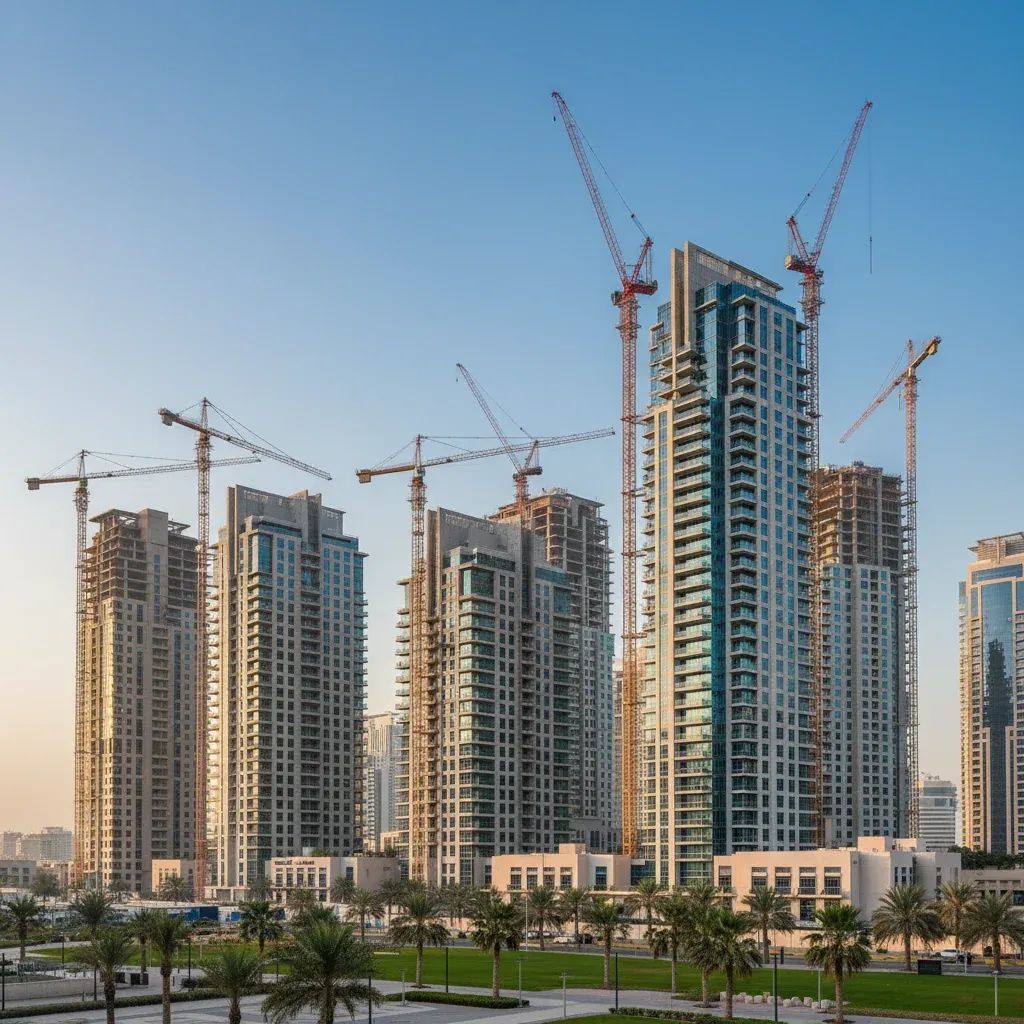
Dubai's September Real Estate Conference: Understanding Market Shifts and Opportunities
The International Property Show returns to Dubai from September 7 to 9, 2026, at a pivotal moment for the emirate's real estate sector. For investors, expats, and professionals involved in property, the event offers concentrated access to market decision-makers and insights into how Dubai's real estate landscape is evolving. This 22nd edition of IPS arrives as the market transitions from rapid acceleration to more measured consolidation—a shift that creates both challenges and opportunities for buyers, sellers, and property professionals.
Why This Moment Matters
• 38% expansion in booth space shows developers remain confident, even as transaction activity has normalized from 2025's record levels.
• Dubai Land Department's direct partnership means attendees will gain clarity on regulatory changes—particularly the REES initiative, which uses blockchain technology to speed up property title transfers and improve underwriting processes.
• Institutional investors now significantly influence purchasing patterns. Understanding how large-scale investors make decisions helps retail investors and expats position themselves more effectively in secondary markets.
Understanding Market Maturation
Dubai's real estate sector posted strong 2025 figures: over 200,000 residential transactions worth AED 541.5 billion. By mid-2026, activity has moderated to a more sustainable pace. According to available market data, the first half of 2026 recorded approximately 79,281 sales, compared to higher volumes in the same period of 2025. This isn't market decline; it's market maturation—a normalization after exceptional growth.
For expats and investors, this shift has practical implications. Rental price increases that reached 6.2% in late 2025 have slowed to around 1.5% by mid-2026, but rental yields remain attractive at approximately 6.58%—higher than comparable international cities like London, Singapore, or Frankfurt (typically 3-4%). The United Arab Emirates economy is forecast to expand around 5% in 2026, supported by ongoing business activity and immigration, which means underlying demand for residential property remains structurally strong.
What has genuinely changed is how buyers approach purchases. Speculative quick-sale strategies have largely disappeared. Off-plan properties—properties sold before construction is completed, representing roughly 60% of transactions—are now typically held for rental income rather than quick resale. Mortgage activity increased 16.1% in Q1 2026, but lenders have tightened approval requirements, meaning favorable financing now often requires either institutional relationships or established connections with developers. IPS 2026 provides concentrated access to both.
What to Expect at the Conference
Housed in Halls 4-8 at the Dubai World Trade Centre (directly accessible via the Red Line of Dubai Metro), IPS 2026 operates across several distinct platforms:
Main Conference Sessions address regulatory developments affecting property transactions, including how international capital is sourced and how sustainability requirements are reshaping project timelines.
The Institutional Investors Conference is where large-scale capital allocation happens—family offices, pension funds, and sovereign wealth entities discussing portfolio strategy and investment criteria. For retail investors, observing these conversations provides valuable insight into how institutional buyers evaluate properties and communities.
PropTech Workshops showcase how blockchain technology is being applied in Dubai real estate—specifically through the REES initiative. For those unfamiliar with this: REES uses blockchain to create tamper-proof property records and speed up title transfers, addressing a longstanding pain point in UAE property transactions. These sessions also cover AI-powered property valuation and fractional ownership platforms that are creating new investment pathways.
Sustainability and Smart Cities Track explores how environmental standards and smart building technology affect property values. Developers increasingly market properties with community amenities—co-working spaces, educational facilities, wellness centers—not just for luxury appeal, but because long-term resident satisfaction now drives asset appreciation more than speculative velocity.
Business Matching Zone pre-arranges investor-to-developer meetings, accelerating introductions that would typically require months to arrange through conventional channels.
A dedicated Women's Conference recognizes that Emirati women hold approximately 30% of senior real estate positions, yet female-led investment networks remain underrepresented. This session surfaces capital allocation priorities that may differ from traditional institutional frameworks.
Key Speakers and What They Signal
The speaker roster reflects current market priorities. Developers emphasizing branded residences (properties affiliated with international luxury brands), mixed-use developments that combine retail, residential, and hospitality, and ESG compliance all indicate where institutional capital is flowing. Banking partners like RAKBANK represent lender appetite—in Dubai's market, where roughly 60% of transactions depend on developer-backed or bank financing, understanding current lending terms is operationally important.
Speakers from materials suppliers and mid-market developers indicate a shift away from pure land speculation toward design quality and housing affordability.
Communities Worth Monitoring in 2026
Three emerging areas merit attention at IPS 2026: Jumeirah Village Circle (JVC), Dubai South, and Dubai Creek Harbour.
JVC has matured from a speculative opportunity into a stabilized community with established schools, retail, and dining. Rental returns are now predictable, attracting institutional capital seeking stable yield.
Dubai South benefits from proximity to Al Maktoum International Airport and regional logistics facilities. This positioning makes it particularly relevant for professionals in aviation, logistics, and supply-chain sectors.
Dubai Creek Harbour combines contemporary amenities with proximity to heritage areas, creating income-diverse communities that buffer single-demographic risk. This positioning appeals to families seeking both modern conveniences and historical character.
Attendance Logistics
Registration is available online in advance or onsite during the event. Early registration (typically closing one week before) provides priority for B2B meeting scheduling.
The venue is fully air-conditioned and accessible via Dubai Metro's Red Line. Onsite parking is available, though morning slots fill quickly; Uber and Careem are alternatives at Gate 3. September daytime temperatures average around 30-32 Celsius, so comfortable footwear and hydration are recommended.
IPS Awards 2026 (submissions close August 15) recognize excellence in sustainability, innovation, and community impact. For developers and service providers, award participation carries qualification value and professional visibility.
What IPS 2026 Offers Different Attendees
For wealth-preservation investors: Access to institutional investment structures—such as sukuk-backed funds and professionally-managed portfolios—that are typically available only through high-net-worth advisory relationships. Observing which communities attract institutional capital, which payment structures activate professional investors, and which sustainability certifications command price premiums informs negotiating leverage for independent purchases.
For professionals in adjacent sectors (law, accounting, project management, technology): The event concentrates potential clients and partnership opportunities—developers, institutions, and government entities—creating consultative positioning opportunities.
For Golden Visa holders (expats on extended residency visas): The emphasis on integrated lifestyle hubs—combining residential spaces with work facilities, education, wellness, and leisure options—reflects developer reorientation toward long-term resident satisfaction. Properties marketed with this positioning tend to command secondary-market stability and hold their value better.
For those new to Dubai property: IPS 2026 provides educational sessions, regulatory clarity, and direct access to professionals who can explain market dynamics in real-time.
The Strategic Value
IPS 2026 compresses months of market research and relationship-building into three concentrated days. In a market where institutional capital increasingly sets pricing anchors, where regulatory infrastructure is reshaping how transactions work, and where information accessibility varies significantly between connected and independent buyers, the event offers measurable value for serious participants in Dubai's property sector.


