
The United Arab Emirates Presidential Court has confirmed a fresh phone conversation with Türkiye’s presidency, a move that safeguards billions in joint projects and signals business as usual despite a postponed Ankara-to-Abu Dhabi visit.
Why This Matters
• No disruption to flights, visas or cargo: all scheduled services between the UAE and Türkiye continue uninterrupted.
• Tariffs on 96 % of goods already slashed under the 2023 CEPA remain intact, protecting import prices from any political turbulence.
• Trade target of $40 B by 2030 stays on track, offering Emirati exporters a rapidly expanding market three hours away.
• Defense-tech co-production opportunities—especially unmanned systems—advance, opening tenders for UAE engineers and SMEs.
Diplomatic Chemistry, Minus the Photo-Op
The call—confirmed by the United Arab Emirates Presidential Protocol Department late on 15 February—lasted roughly 30 minutes, according to officials familiar with the briefing. President Recep Tayyip Erdoğan’s planned appearance in Abu Dhabi the next day was quietly rescheduled; Turkish media hinted at “health considerations,” while Emirati outlets merely noted “calendars.” Images released hours later of Sheikh Mohamed bin Zayed greeting local dignitaries effectively quashed the rumor mill.
Behind the optics, both leaders reiterated four priorities: investment acceleration, supply-chain integration, financial-market plumbing, and joint humanitarian outreach in conflict zones. That agenda mirrors the inaugural High-Level Strategic Council blueprint signed in Ankara last July.
Money on the Table: Trade & Investment Snapshot
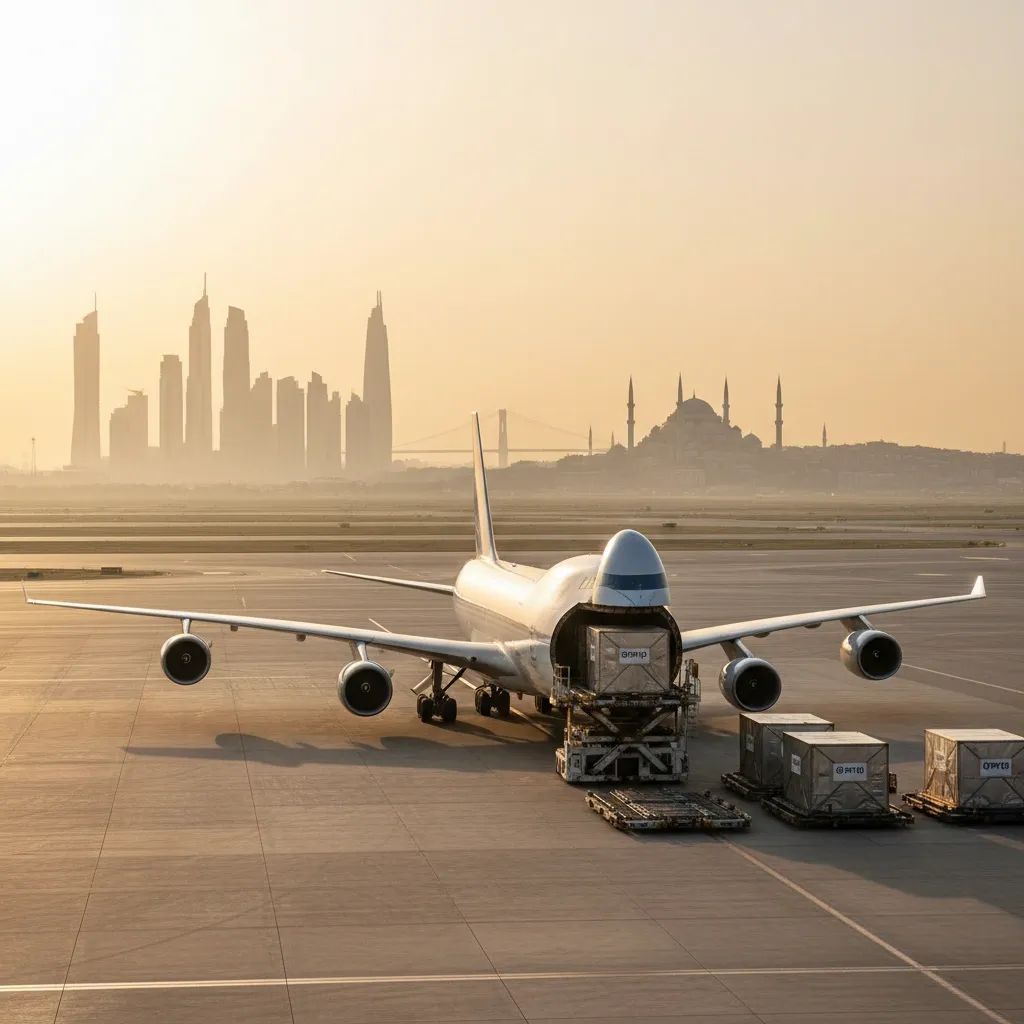
Commercial traffic between the Gulf’s second-largest economy and the G20’s manufacturing powerhouse has exploded since the CEPA entered force. Non-oil exchange hit $19 B in 2025, and customs data for November alone show $1.24 B in bilateral goods. The ambition is to double that figure “well before 2030,” according to the United Arab Emirates Ministry of Economy.
On the capital side, Emirati funds have already parked $6 B+ in Turkish assets—from port concessions on the Aegean to fintech stakes in Istanbul. The reciprocal flow climbed past $3 B, with Turkish contractors winning 149 UAE projects valued at $17.7 B. Central-bank swap lines worth AED 18 B keep liquidity flowing while the two sides test instant-payment links between Aani and FAST.
From Bayraktar Drones to AI Labs
Security cooperation, once unthinkable, is morphing into a pragmatic supply-chain marriage. The United Arab Emirates Armed Forces last year confirmed a batch order of Turkish-built UAVs, citing rapid deployability in desert conditions. Sources in Ankara say talks now cover co-production and classified data protocols, backed by a July 2025 agreement on safeguarding defense secrets. For Emirati tech firms, that opens seats at the table on sensor fusion, autonomy software, and composite materials—areas already subsidised by Abu Dhabi’s offset programme.
A New Axis in a Fractured Region
Strategists at the Emirates Policy Center describe the UAE-Türkiye pairing as a “risk-containment mechanism” that boxes in flashpoints from the Horn of Africa to the Eastern Med. The two capitals have trial-run a division-of-labour: the UAE acting as financial convenor, Türkiye providing logistics muscle. Analysts caution, however, that parallel blocs—such as a potential Saudi-Pakistan alignment—could complicate matters. For now, the shared calculation is clear: economic interdependence beats ideological rivalry.
What This Means for Residents
Cheaper consumer goods: Tariff cuts already cover electronics, white goods, and most food imports. Retailers predict a 2-4 % price buffer even if global shipping rates wobble.
Job openings in advanced manufacturing: Abu Dhabi’s Tawazun and Turkish Aerospace are quietly recruiting UAE-based engineers for joint drone and missile programmes.
New investment channels: The Aani-FAST linkage will soon allow real-time dirham-to-lira transfers under AED 150,000—useful for SMEs settling invoices.
Travel convenience: Over 340 weekly flights connecting Dubai, Abu Dhabi, and Sharjah with six Turkish cities remain untouched, sustaining tourism packages starting at AED 1,200.
Outlook: No Drama, Just Deadlines
Barring unforeseen shocks, diplomats expect Erdoğan’s rescheduled visit before the second Strategic Council session in Abu Dhabi later this year. Negotiators are racing to finalise an $800 M green-energy fund and push non-oil trade past $22 B for 2026. For companies and residents in the United Arab Emirates, the message is straightforward: keep exporting, keep hiring, and keep your boarding passes handy—this corridor is only getting busier.


