Why This Matters
• Early-morning road closures becoming normalized: Jumeirah Beach Road shut partially until 8:30 AM on race weekends—residents should expect recurring traffic delays through spring and autumn racing seasons.
• Health screening integrated into fun: On-site BMI and blood pressure checks mean wellness assessments reach participants during leisure activity, removing the friction of booking separate clinic appointments.
• Government backing signals policy permanence: Minister Abdullah bin Touq Al Marri ran the 10 km category, underscoring that the United Arab Emirates government views active lifestyles as economic and public health infrastructure, not peripheral messaging.
The Tadawi Healthcare Group, a Dubai-based medical services provider, has quietly embedded itself into the United Arab Emirates wellness landscape through an unconventional strategy: merge commercial healthcare operations with the city's explosive community athletics boom. Last weekend's inaugural "Tadawi Run" in Jumeirah demonstrated the model in action—nearly 2,000 participants across two distance categories, integrated health screening at the finish line, ministerial participation, and a prize pool exceeding AED 99,000. The event arrived as part of a broader acceleration in government-backed sports participation targets, where the Dubai Sports Council is attempting to lift active residents from 1.6 million to 2.6 million by 2033.
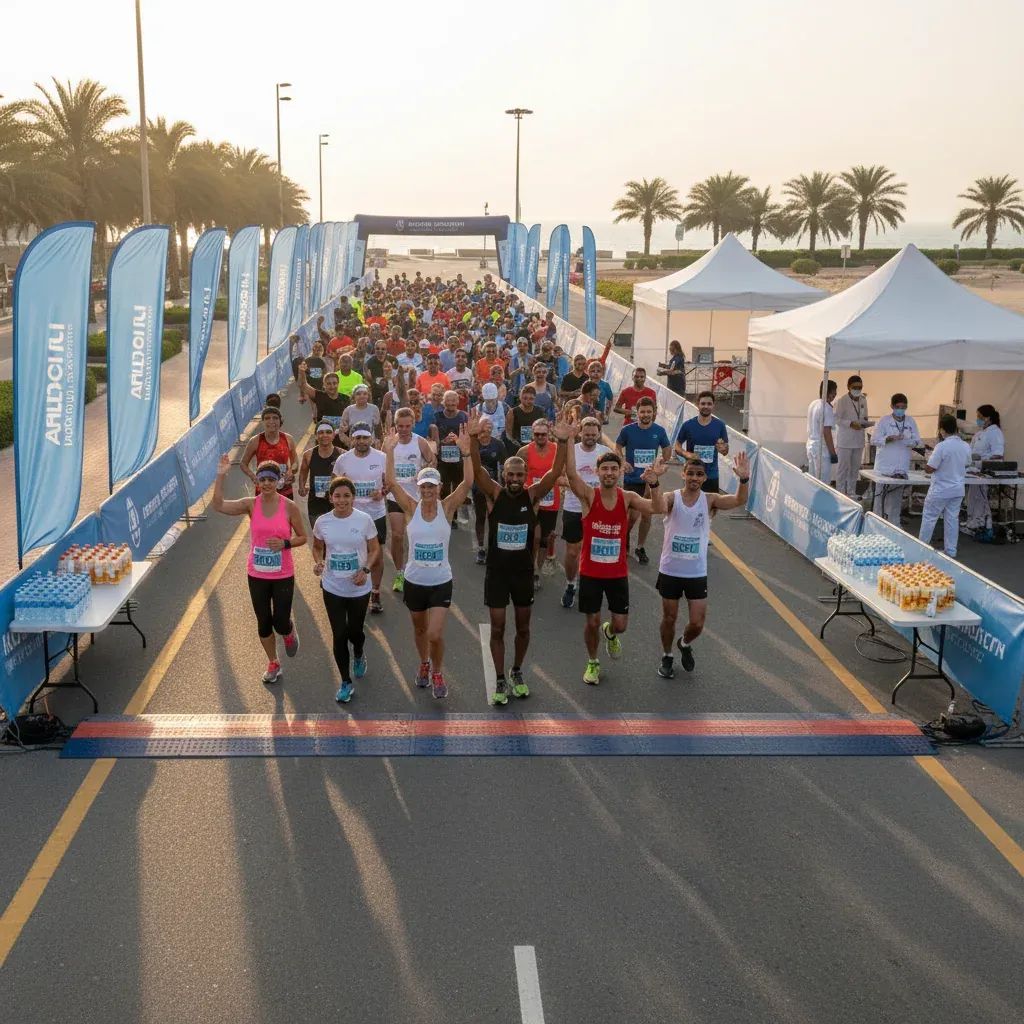
What distinguishes this run from the dozen other community races cluttering Dubai's weekend calendar is architectural simplicity: participants did not simply collect medals at the finish line. Instead, they queued for immediate health screening. Blood pressure monitors and BMI assessments operated at dedicated stations, with results printed on-site and logged into participant records. This integration reflects how Tadawi Healthcare positioned itself since expanding operations. The group inaugurated an on-site clinic at Dubai Media Incorporated headquarters in June 2025. In February 2026, it partnered with Dubai SME to strengthen procurement pathways for Emirati healthcare suppliers. The run represents a natural extension into outdoor recreation—treating participatory athletics as a normalized touchpoint for health conversations.
The Numbers Tell a Geographic Story
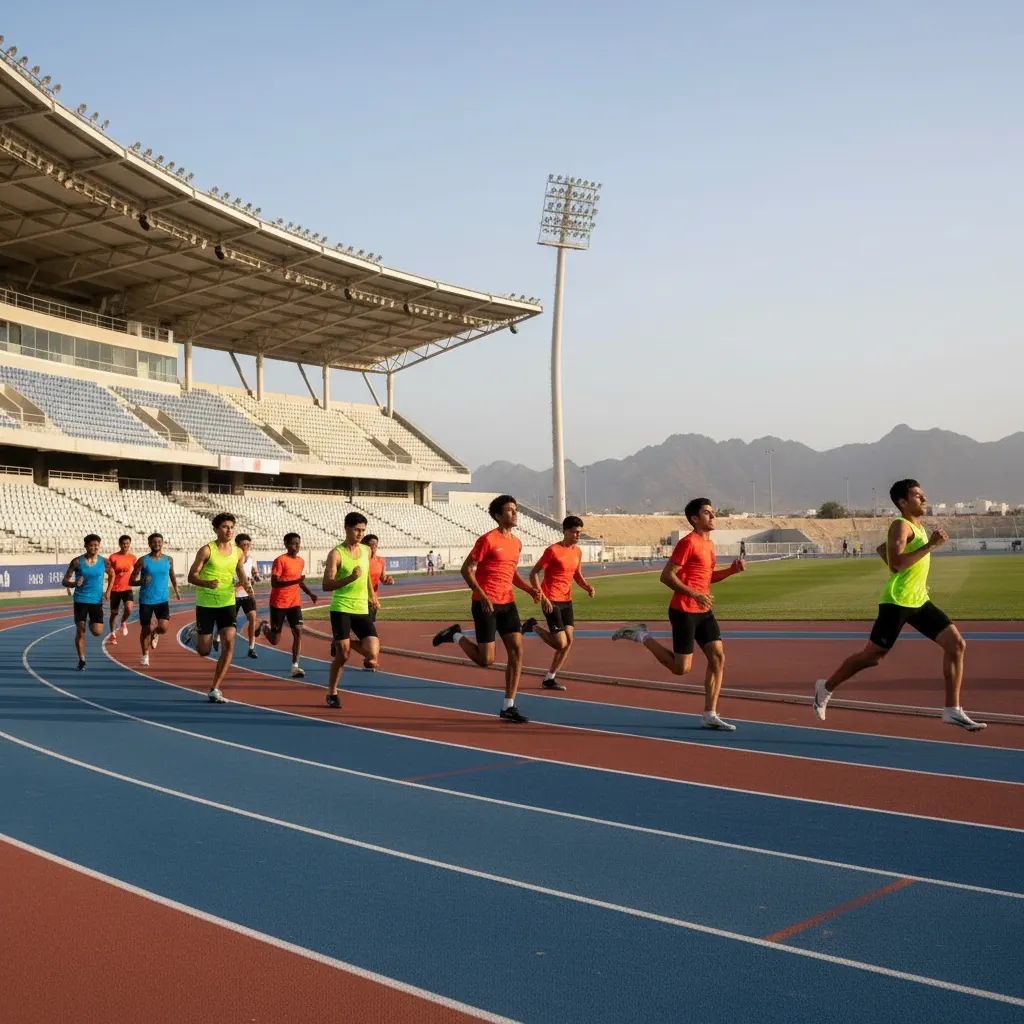
The 10 km route began at Union House near La Mer, tracing Jumeirah Beach Road southbound before terminating on the track behind Sunset Mall. The 5 km wave started from Jumeirah Beach 2, opposite the Four Seasons Hotel, converging at the same finish zone. Both categories commenced simultaneously at 6:00 AM—a deliberate scheduling choice that compressed road closure to 8:30 AM and minimized disruption to weekend traffic patterns. This operational constraint increasingly shapes how the Dubai Sports Council approves community events. Over 150 volunteers and medical personnel orchestrated operations beginning at 5:00 AM, with shuttle transport arranged for residents affected by partial closures and hydration stations dotting both courses.
The race results reveal Dubai's gravitational pull for talent across East Africa and the Gulf. Abu Salim Mayanja from Uganda dominated the 10 km overall in 31 minutes 29 seconds, followed by Obaid Al Nuaimi from the United Arab Emirates (31:54) and Paul Komo from Kenya (31:57). The women's field saw Morocco's Rkia El Moukim post 33:48, finishing seventh overall—a pace that illustrates the caliber competing in Dubai's road-running ecosystem. A total of 374 entries appeared in the official results ledger, suggesting healthy participant depth in both distance categories.
Secondary podium positions reveal the diversity: Noaman El Assaoui (Morocco, 32:12), Saeed Mohamed (United Arab Emirates, 33:01), and Gwido Okadapawo (Uganda, 33:09) completed the men's tier. Ethiopia's Sena Diba clocked 34:34 in the women's category, with Uganda's Godfrey Segule and Kenya's Geofry Kiplagat rounding out the top ten at 35:03 and 35:06.
What This Means for Residents
For fitness enthusiasts in the United Arab Emirates, calendar density is accelerating. More than a dozen 5 km and 10 km races now run between January and June, creating both opportunities and scheduling friction. Corporate teams benefit from group-registration discounts, a feature that increasingly incentivizes employers to sponsor wellness programs as employee benefits. Residents who travel through the Jumeirah area should anticipate that weekend morning road closures will intensify as the Dubai Sports Council accelerates its participation targets. The trade-off is explicit: a city aspiring to become the world's most active necessarily reserves public space for recurring athletic events.
The embedded health screening model also offers practical utility for United Arab Emirates residents: participants can establish baseline BMI and blood pressure measurements without booking a separate clinic appointment, though results should not replace regular medical consultation. The normalization of health checks within recreational settings removes procedural friction and potentially broadens screening reach to populations less likely to proactively seek medical services.
Connecting to Broader Policy Infrastructure
The event cannot be disconnected from the Dubai Sports Sector Strategic Plan 2033, which frames athletic participation as a public-policy lever. The Dubai District Games, launching in December 2025, will stage football, 3x3 basketball, volleyball, and badminton tournaments across neighborhoods. The expanded Sheikha Hind Women's Sports Initiative aims for 200,000 participants over two years. The School Games Programme targets 70,000 annual student entries across 26 sports.
Community road races such as the Tadawi Run form the recreational backbone of this infrastructure. Each event generates participant demographics, repeat-entry data, and health metrics that flow into Dubai Sports Council decision-making around facility investment, early-morning road-closure windows, and volunteer-management protocols. The Dubai Sports Council maintains a centralized volunteer registry, awarding recurring participants points redeemable for race-entry discounts and merchandise—a gamification approach borrowed from Singapore's ActiveSG ecosystem that simultaneously solves labor-cost challenges and builds civic engagement infrastructure.
Financial Reality and Sustainability Questions
The Tadawi Run's operational benchmark—simultaneous-start waves, integrated health screening, ministerial participation, and six-figure prize pools—is ambitious for a debut event. More than AED 30,000 in cash and voucher prizes were distributed, with a total allocation of AED 99,000 when elite finisher bonuses were factored in. This financial commitment positions the event among the more lucrative debut community races in Dubai. The prize tier structure—with separate awards across age brackets, genders, and overall categories—creates realistic pathways for age-group runners in the 40–49 and 50–59 brackets to compete for cash, a rarity in Dubai's recreational landscape where many events cap awards at top-three overall finishers.
Financial sustainability depends on sponsor renewal rates and whether participant growth can offset rising logistics costs, particularly road-closure fees and medical-personnel expenses. For now, the event succeeded in delivering its stated objectives: raising preventative healthcare awareness, attracting ministerial-level endorsement, and integrating clinical touchpoints into recreational infrastructure. Whether it becomes an annual fixture depends on Tadawi Healthcare's commitment to subsidizing participation growth and whether the Dubai Sports Council continues reserving premium weekend-morning road-closure slots for health-branded community events.
The Family-First Model
The finish-line precinct featured an ancillary family entertainment zone with inflatable structures, face painting, and food vendors—reflecting Dubai's deliberate positioning of community sport as multi-generational social infrastructure rather than niche athletic pursuit. The volunteer corps of 150-plus comprised university students fulfilling service-hour mandates, corporate-responsibility teams, and running club members seeking event-production experience. This reflects a deliberate policy choice: the United Arab Emirates government treats sports participation as civic infrastructure, not peripheral activity. Registration, handled through the Premier Online platform, closed on race day or when capacity sold out—a model increasingly adopted across Dubai's saturated community-race calendar.
The race demonstrates that Dubai's wellness agenda is not abstract policy—it manifests in closed roads, volunteer brigades, and the expectation that residents will increasingly dedicate weekend mornings to organized athletics. The next wave of similar events, including the DXB Snow Run scheduled for May 17th at Ski Dubai, will test whether this momentum sustains or whether Dubai's community sports calendar simply experiences saturation fatigue.